Compensation is rarely just about money. It is a signal — about what the company values, who it rewards, and how seriously it takes fairness. Employees read those signals constantly, and they compare notes. A pay program that is internally inconsistent or out of step with the market does not just cost you in turnover; it costs you in trust, productivity and the candidates you never even hear from because your offer was eliminated in the first round.
This guide walks through how to design a pay and benefits program that holds up under scrutiny — from the philosophy that anchors it, to the structures and benchmarks that operationalise it, to the variable pay and benefits that make the whole package competitive.
Start with a pay philosophy, not a spreadsheet
Most compensation problems are downstream of a missing or unspoken philosophy. Before you design structures or run benchmarks, decide three things:
- Where you want to sit in the market. Are you paying at the median, the 60th percentile, the 75th? Different positions are defensible — but only one of them can be true at a time.
- What you reward. Tenure, performance, scarcity of skills, scope of responsibility — these are not the same thing, and a good pay program is explicit about which it leans on.
- How transparent you intend to be. With managers? With employees? On job ads? The answer shapes how disciplined your structures need to be.
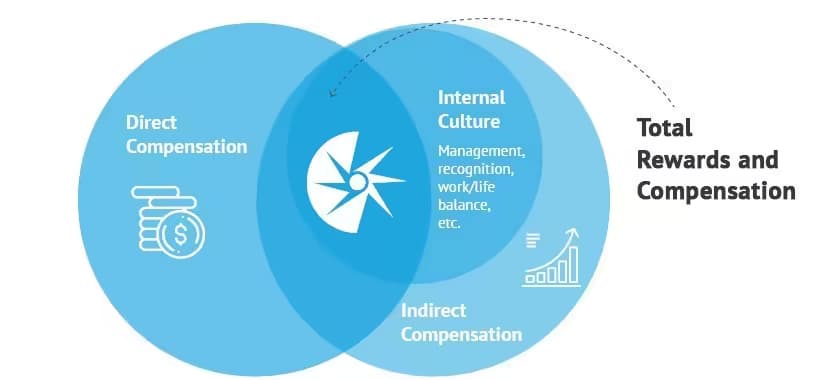
A philosophy is not a paragraph in a policy document. It is the test you run every time someone asks for a raise, every time you make an offer, and every time a manager wants to make an exception. A useful frame here is the total rewards perspective, which forces you to think about the package, not just the line item.
Build salary structures that actually structure something
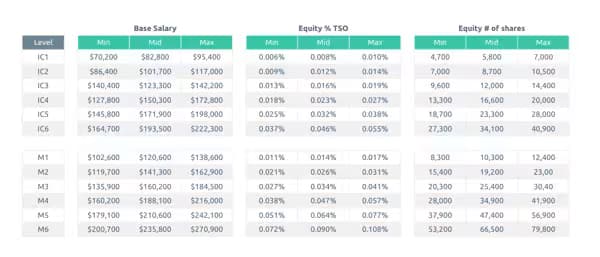
A salary structure groups roles into bands or grades, each with a minimum, midpoint and maximum. Done well, it gives you a defensible answer to "why does this person earn this?" Done badly, it becomes a paper exercise everyone routes around.
Grades and bands
Smaller companies can usually run on 6 to 10 grades. Larger ones tend to need more granularity, but resist the temptation to create a grade for every role — that is how you end up with politics about whether a role is a 7 or a 7B. A step-by-step walkthrough of how to create a pay structure is worth reading before you finalise the grade count.
Range width and overlap
Wider bands give managers flexibility but blur progression. Narrower bands force discipline but create promotion pressure. Most healthy structures have 30 to 50 percent spread between minimum and maximum, measured as (maximum − minimum) ÷ minimum, with meaningful overlap between adjacent grades.
Where to anchor pay within a band
The midpoint should represent a fully competent performer in the role. New hires usually land between the minimum and midpoint; high performers move toward the maximum over time. If everyone in a band is bunched at the top, your structure is out of date. The compa-ratio is the cleanest single number for spotting that bunching early.
Benchmark to the market that actually competes for your people
Benchmarking is where most companies either over-engineer or under-invest. The principle is simple: you need to know what comparable employers are paying for comparable work, and you need to update that knowledge regularly.
A few rules that save a lot of grief:
- Match by job content, not job title. Two "marketing managers" can be paid 40 percent apart because the work is genuinely different.
- Compare to the right peer group. A small startup competing against large enterprises for engineering talent is going to lose if it benchmarks against other small startups.
- Use multiple sources. A single survey tells you one story. Two or three sources triangulate to something closer to the truth.
- Refresh annually at minimum. In hot segments — engineering, data, specialist clinical roles — quarterly is closer to right.
For the mechanics of doing this well, see the guide to understanding salary surveys and how to read them without being misled.
Get variable pay right or leave it alone
Bonus schemes and incentive plans are powerful when they work and corrosive when they don't. The most common failure mode is a plan that is too complicated to understand, too disconnected from what the employee can influence, or too small to change behaviour.
Bonuses that work
A good bonus plan answers four questions clearly: what triggers a payout, who it applies to, how it is calculated, and when it is paid. If any of those is fuzzy, employees will assume the worst — and they will usually be right.
Sales commission
Sales pay is its own discipline. The rules of thumb: keep the formula simple enough to calculate on the back of an envelope, pay quickly after the result is locked in, and protect against perverse incentives — discounting, sandbagging, channel stuffing — by design rather than by policing. The trade-offs between OTE and base salary are usually where the design goes wrong first.
Long-term incentives
Equity, deferred bonuses and retention awards belong to a different conversation. They are about aligning a small group of people to multi-year outcomes, not about month-to-month motivation.
Design benefits as a coherent package, not a pile of perks
Benefits do most of their work quietly. Employees rarely thank you for great medical cover until they need it — but they remember forever if it failed them. Build the package with that in mind.
The core four
- Health. Medical cover that actually pays out when used, with clear limits and easy claims.
- Retirement. A pension or savings plan with a meaningful employer contribution. The contribution rate matters more than the provider's brand.
- Leave. Annual, sick, parental and bereavement leave that meet the relevant labour law as a floor, not a ceiling.
- Flexibility. Where the work allows, how, when and where someone works is now part of the package — not an HR concession.
The optional extras
Wellness programs, learning budgets, life cover, transport allowances, employee assistance programs — these can differentiate, but only after the core four are solid. A learning stipend does not compensate for thin medical cover. There is a separate body of evidence on how employee perks influence job satisfaction that helps weight which extras are worth funding.
Get serious about pay transparency
Pay transparency is no longer a philosophical question — it is a tightening regulatory and cultural reality. Whether or not you publish ranges externally, employees increasingly know what their peers earn, and they will judge your fairness on the gaps they find.
The transparency you need internally is non-negotiable: managers should be able to explain why someone earns what they earn, in language the employee accepts. The transparency you offer externally is a strategic choice — but the trend is one-directional.
Audit for equity, regularly
Pay equity is not the same as pay transparency. It is the question of whether two people doing the same work, with similar experience and performance, are paid similarly — regardless of gender, background or how hard they negotiated on the way in.
Run a structured pay equity review at least annually. Look at gaps you cannot explain by role, performance or tenure. Fix the unexplained gaps. Document what you did. The legal exposure of getting this wrong is rising in most markets, but the bigger risk is internal: nothing erodes trust faster than employees discovering inequity you did not act on. The playbook in pay equity is a big issue and here is how to fix it is a sensible starting point.
Common compensation and benefits mistakes to avoid
- Designing pay structures around the people you have rather than the roles you need.
- Confusing market data with internal equity — being competitive externally does not mean you are fair internally.
- Letting the bonus plan accumulate special cases until no one understands it, including the people running it.
- Treating benefits as a cost line rather than part of the value proposition.
- Promising pay transparency and then refusing to explain individual decisions.
- Skipping pay equity reviews because you are confident there is no problem — that confidence is usually unearned.
Where to go next
Compensation is not a project you finish; it is a discipline you maintain. A few places to dig in next:
For the structural backbone, the salary range guide covers how to set, manage and update bands in practice.
When you start questioning whether your structure has drifted, how to combat pay compression is the most concrete read on a problem most companies have but few diagnose properly.
For variable pay design, how to develop an effective monetary incentive policy walks through the decisions that determine whether the plan motivates or annoys.
If executive pay is on your agenda, long-term incentives for executives covers the mechanics most boards underestimate.
And to widen the lens beyond pay, the employer's guide to perks and benefits is a practical complement.
Get more guides like this
One email a week with the latest HR guides, frameworks, and templates. Unsubscribe anytime.




























































































































.avif&w=3840&q=75)






















.avif&w=3840&q=75)













.avif&w=3840&q=75)