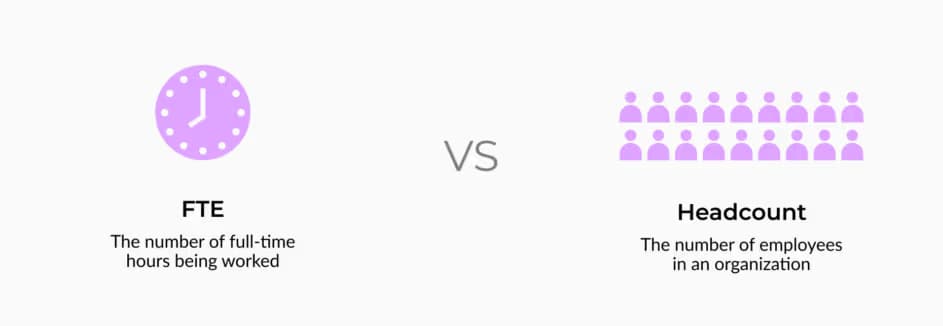
Most organisations treat revenue per FTE as the definitive measure of workforce productivity. Divide total revenue by the number of full time equivalent employees and you get a ratio that is supposed to tell you whether your people are pulling their weight. The assumption is that a higher number means a more productive workforce. A lower number means something needs fixing. This belief is so widely held that revenue per FTE appears in board reports, investor presentations, and HR dashboards as though it were settled science.
It is not. Revenue per FTE is an arithmetic outcome, not a productivity measure. It tells you the result of dividing one number by another. It does not tell you why the ratio is what it is, whether the workforce is healthy, or whether the current level of output is sustainable. The evidence on this metric reveals a pattern of serious blind spots that can lead organisations to celebrate decline and punish investment. What follows is an examination of what revenue per FTE actually captures, what it misses, and what the research says about using it well.
What Revenue Per FTE Actually Measures
The formula itself is simple. Take net revenue for a given period and divide it by the average number of full time equivalent employees during that period. Cross industry data puts the median at roughly $350,000 per employee as of 2024, but the range is enormous. Energy and natural resource companies routinely exceed $1 million per employee. Financial services firms land between $500,000 and $1.5 million. Technology companies cluster around $400,000 to $700,000. Retail sits at $80,000 to $150,000, and leisure and hospitality falls below $100,000.
These numbers already expose the first problem. Revenue per FTE is dominated by industry structure, not workforce quality. An oil refinery and a consulting firm can produce the same ratio through entirely different mechanisms. In the refinery, revenue flows from capital equipment. In the consulting firm, it flows from billable hours. The metric treats both as identical. A review of productivity determinants published in the Journal of Economic Literature documented that within the same industry, firms at the 90th percentile of productivity produce two to four times more output per unit of input than firms at the 10th percentile. But those differences come from management quality, technology adoption, and workforce capability, not from the simple ratio of revenue to headcount. Revenue per FTE cannot distinguish between a firm that is genuinely productive and a firm that simply operates in a capital intensive sector.
Revenue Per FTE Benchmarks Vary So Widely They Lose Meaning Across Industries
The benchmarking problem is not just theoretical. A study of more than 1,000 private software companies found that the median revenue per employee was approximately $130,000, but this figure scaled sharply with company size. Firms at the $1 million to $3 million revenue stage averaged about $100,000 per employee, while larger firms were significantly higher. Bootstrapped companies outperformed equity backed companies at the same revenue level, producing around $110,000 per employee compared to $94,000 for venture funded firms. The difference had nothing to do with workforce quality. It reflected different growth strategies and spending patterns.
A separate analysis of 77 publicly traded enterprise software companies found an almost perfect correlation of 0.975 between revenue and employee headcount. In other words, as these companies grew revenue, they added employees at almost exactly the same rate. This finding challenges a core assumption behind using revenue per FTE as a productivity signal. If revenue and headcount move in near lockstep, the ratio stays roughly constant regardless of how productive the workforce is. The metric becomes a reflection of the business model, not of the people within it.
The Outsourcing Distortion That Inflates Revenue Per FTE
Revenue per FTE counts only employees who appear on the payroll. Contractors, freelancers, outsourced teams, and temporary workers are excluded from the denominator. But these workers often contribute directly to revenue generation, and their output counts in the numerator. The result is a ratio that overstates the productivity of the internal workforce by hiding the people who helped produce the revenue.
Research on what has been described as the fissured workplace showed that large corporations have systematically shifted work away from direct employment and into subcontracting, outsourcing, and franchise arrangements. A study from the Bureau of Labor Statistics found that jobs filled by outsourced workers are never included in official tallies of job creation and destruction, which significantly underestimates actual labour market flows. Research from the Federal Reserve Bank of Richmond established that domestic outsourcing accounts for almost 40 percent of the measured decline in aggregate labour market dynamism. When a company outsources its logistics, customer service, or IT function to a third party, its revenue per FTE improves immediately. The revenue stays the same. The headcount drops. The metric rises. But the work still requires the same number of human beings to perform.
This is not a minor distortion. Industry guidance on the metric now explicitly recommends that organisations include full time equivalents of all workers contributing to revenue, including contractors, to avoid artificially inflating the ratio. Yet most organisations continue to calculate revenue per FTE using payroll headcount alone, making the number look better than reality.
Cutting Headcount Raises Revenue Per FTE While Destroying Productivity
If the goal is to push revenue per FTE higher, the fastest route is laying people off. Revenue takes time to fall after a workforce reduction, so the ratio improves in the short term even when the underlying business is weakening. This creates what might be called the productivity illusion: a rising metric masking a declining organisation.
The evidence against using headcount cuts as a productivity strategy is substantial. An analysis of Fortune 500 companies found that for every $1 of cost saving achieved through layoffs, companies spent $1.27 on severance, lost productivity, and inflated attrition. Only 4 percent of companies managed to genuinely do more with less over two consecutive years. Companies that recorded year on year headcount increases delivered 14 percent revenue growth over two years, while companies that cut their workforces by 10 percent saw revenues decline by 4 percent over the same period.
Research on the effects of downsizing has consistently found that surviving employees experience productivity drops of up to 20 percent, with morale and engagement effects lasting 12 to 18 months. One study found that 74 percent of employees who survived a layoff reported that their own productivity declined. The mechanism is straightforward: fewer people absorb the same workload, leading to exhaustion and disengagement that erode the very output the headcount reduction was supposed to improve.
Revenue per FTE captures none of this. It rises when people are cut. It says nothing about whether the remaining workforce can sustain its output, or whether the organisation has just traded a short term ratio improvement for long term capability loss.
When High Revenue Per FTE Signals Burnout, Not Excellence
There is a ceiling to how much revenue a given workforce can generate before the human costs become unsustainable. Research on occupational burnout, published in World Psychiatry, established that excessive workload is the primary driver of burnout, a syndrome characterised by exhaustion, cynicism, and reduced professional effectiveness. When organisations run lean to keep revenue per FTE high, the risk of crossing this threshold rises sharply.
Data from the American Psychological Association showed that 76 percent of employees have experienced burnout, with 28 percent reporting it as a frequent occurrence. The National Academies of Sciences estimated that burnout related healthcare spending alone costs between $125 billion and $190 billion annually in the United States. None of these costs appear in the revenue per FTE calculation. An organisation that squeezes record revenue from a shrinking workforce will show an impressive ratio right up to the point where attrition, errors, and healthcare costs overwhelm the supposed gains.
What the Evidence Says Actually Improves Revenue Per FTE
The research on what genuinely improves output per employee points in a consistent direction, and it is not headcount reduction. A meta analysis of 92 studies found that organisations implementing coherent systems of selective hiring, training, performance linked compensation, and employee participation showed a meaningful positive effect on performance. The effect was stronger when these practices were bundled together rather than applied in isolation.
A separate meta analysis synthesising 65 studies and 239 effect sizes confirmed that bundles of empowerment enhancing, motivation enhancing, and skill enhancing practices had significantly larger effects on operational and financial outcomes than any individual practice. This is directly relevant to revenue per FTE because it means the ratio is an output of upstream conditions: how people are selected, developed, rewarded, and managed. Changing the ratio by changing the denominator ignores the upstream conditions entirely.
An empirical study of 1,572 employees across 100 small firms, published in the Journal of Business Research, directly measured the relationship between employee human capital and revenue productivity. The findings showed that task specific experience had a significant positive effect on firm revenue productivity, and that this relationship was amplified in firms where employees also had higher levels of education. Revenue per employee was not an abstract ratio in these firms. It was a tangible output of measurable workforce capabilities. The firms with the highest revenue per employee were not the ones with the fewest workers. They were the ones whose workers had the deepest relevant experience and knowledge.
A meta analysis of 66 studies on the relationship between human capital and firm performance found a strong positive association, particularly when the human capital was firm specific, meaning it could not be easily hired away or replicated by competitors. Two organisations with identical revenue per FTE ratios could have vastly different levels of this firm specific capability, and the one with deeper embedded expertise is far better positioned to sustain and grow its revenue over time.
A large scale analysis of more than 1,800 companies across 15 countries found that organisations balancing people investment with financial performance achieved roughly 30 percent higher revenue growth per dollar invested in human and organisational capital. These companies also had attrition rates nearly five percentage points lower than firms focused primarily on financial metrics. During the disruption of 2019 to 2021, they grew revenue twice as fast as companies that prioritised cost efficiency above workforce investment.
Revenue Per FTE Versus Human Capital Return on Investment
If revenue per FTE is a blunt instrument, is there a sharper one? The metric that most directly addresses its limitations is human capital return on investment. Where revenue per FTE divides total revenue by headcount, HCROI divides revenue minus non people operating costs by total workforce costs. This strips out the capital intensity distortion because it isolates the value generated by the workforce from the value generated by equipment, technology, and infrastructure.
The ISO 30414 standard for human capital reporting, originally published in 2018 and updated in 2025, includes HCROI as a required metric across its 58 core workforce indicators. The standard was developed precisely because single ratio metrics like revenue per FTE fail to capture the complexity of workforce contribution. ISO 30414 organises human capital reporting across 11 areas including productivity, workforce composition, turnover, skills development, and employee wellbeing. Revenue per FTE appears as one data point within a much broader measurement framework, never as the sole productivity indicator.
The practical difference is significant. A company with $100 million in revenue, $60 million in non people costs, and $30 million in total workforce costs has a revenue per FTE that depends entirely on headcount. But its HCROI is ($100 million minus $60 million) divided by $30 million, producing a ratio of 1.33. This means for every dollar spent on people, the company generates $1.33 in value. Ratios above 1.0 indicate positive returns, with 1.3 to 1.5 considered healthy and above 2.0 considered exceptional. Unlike revenue per FTE, this number moves in a meaningful direction when workforce investment pays off.
What This Means for You
If you track revenue per FTE, you are looking at a number that reflects your industry structure, your outsourcing strategy, and your headcount decisions far more than it reflects the actual productivity of your people. A rising ratio after a layoff is not proof that productivity improved. It is proof that you divided the same revenue by a smaller number. A falling ratio after a hiring round is not proof that productivity declined. It may be proof that you are investing in capabilities that will generate returns over months and years, not weeks.
The research consistently shows that the organisations with the strongest sustained output per employee are the ones that invest in selecting the right people, building their skills, giving them meaningful autonomy, and keeping workloads at levels that allow people to do excellent work without burning out. Revenue per FTE measures none of those inputs. It only measures the output, and it does so in a way that conflates workforce contribution with capital investment, outsourcing choices, and headcount manipulation.
Key Takeaways
- Revenue per FTE is an arithmetic ratio that reflects industry structure, capital intensity, and outsourcing strategy more than it reflects the actual productivity of the workforce.
- Cross industry benchmarks range from under $100,000 in hospitality to over $1 million in energy, making comparisons across sectors largely meaningless without contextual adjustment.
- Excluding contractors and outsourced workers from the denominator artificially inflates revenue per FTE, and research shows this distortion is growing as organisations shift work to external providers.
- Headcount reductions raise revenue per FTE in the short term, but evidence from Fortune 500 companies shows that every $1 saved through layoffs costs $1.27 in severance, lost productivity, and higher attrition.
- High revenue per FTE can signal understaffing and burnout risk. Research indicates 76 percent of employees have experienced burnout, with excessive workload identified as the primary driver.
- The practices that genuinely improve output per employee, including selective hiring, skill development, performance linked rewards, and reasonable workloads, are invisible to the revenue per FTE formula.
- Human capital return on investment, which isolates workforce generated value from capital generated value, is a more accurate productivity metric and is now a required indicator under ISO 30414.
Implications for Practice
Never present revenue per FTE as a standalone measure of workforce productivity. When reporting it to boards or investors, always pair it with at least one metric that captures workforce health, such as voluntary turnover among top performers, and one that captures capability building, such as training investment per employee or internal promotion rates.
Before acting on a change in revenue per FTE, diagnose the cause. If revenue grew while headcount held steady, the signal is positive. If headcount was cut while revenue held flat, investigate whether the remaining workforce is absorbing unsustainable workloads. The evidence on burnout and post layoff productivity decline is clear enough that any headcount driven improvement in the ratio should be treated as a warning, not a celebration.
Build a total workforce view that includes contractors, freelancers, and outsourced teams in the denominator. If external workers contribute to revenue generation, excluding them from the count produces a number that flatters the organisation without reflecting reality. Consistent inclusion of all contributors makes the metric honest and benchmarking meaningful.
Adopt human capital return on investment alongside or in place of revenue per FTE for productivity measurement. HCROI removes the capital intensity distortion by isolating the financial value generated by the workforce from value generated by technology and infrastructure. It responds meaningfully to genuine improvements in workforce capability rather than to headcount manipulation or industry structure.
Invest in the upstream conditions that the evidence consistently links to higher output per employee. Meta analyses covering hundreds of studies and thousands of firms converge on the same finding: organisations that build coherent systems of selective hiring, skill development, fair compensation, meaningful autonomy, and manageable workloads see sustained improvements in productivity. Revenue per FTE is an output of those conditions. Managing the output without managing the inputs is like adjusting a thermometer and expecting the room temperature to change.
Related Reading on The Human Capital Hub
For the calculation formula and basic benchmarks, see Revenue Per Employee: What You Need to Know. For a broader view of workforce metrics, read HR KPIs: Metrics for Driving Organisational Success. Those tracking the relationship between labour costs and financial output will find useful context in Tracking Payroll to Revenue Ratio.