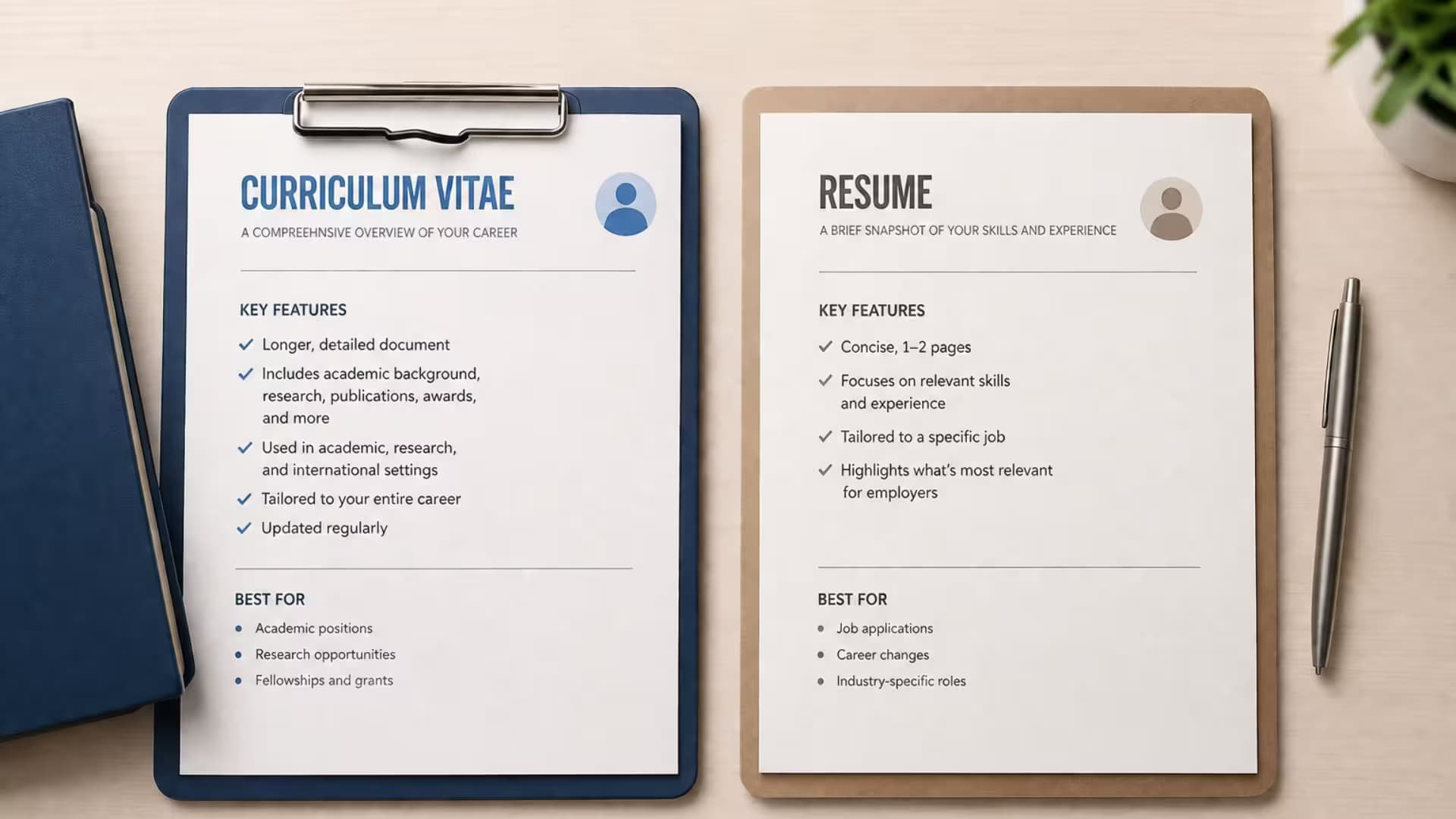
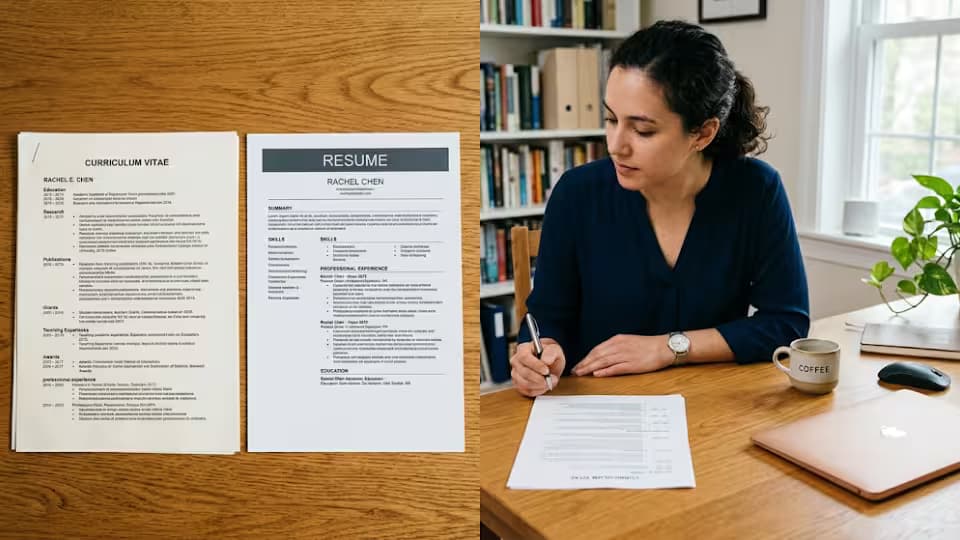
A resume should be as long as it needs to be to show, quickly and clearly, that you can do the job, which for most people is one or two pages. No peer reviewed study has ever found a magic page count. What predicts an interview is the relevance and readability of your content, not the number of pages it fills.
Almost everyone carries a few firm beliefs about resume length. One page is a rule. Recruiters spend only a few seconds, so shorter must always be safer. More pages signal more experience. Length is the lever that decides whether you get the call. These ideas feel obvious because they get repeated so often. The trouble is that the research on how recruiters actually screen applicants points somewhere else entirely.
When you strip those beliefs back and ask what the evidence can really support, the page count question turns out to be the wrong question. The real question is whether the most job relevant proof of your ability reaches the reader fast, before a busy person forms a judgment and moves on.
Where the one page rule actually comes from
The one page rule is folklore, not a finding. It survives on repetition and on widely shared statistics about recruiters spending six or seven seconds per resume. Those numbers come from vendor marketing studies and eye tracking demonstrations, not from peer reviewed research, and they were never designed to tell you the ideal length of your own resume.
The gap is easy to miss. Acting on the rule feels responsible. You trim, you cram, you fight to fit everything onto a single page. But if length were the thing driving interview decisions, you would expect the science of recruiter screening to say so. It does not. It points to content and to how that content is read.
Related: Rate My CV
What actually drives a recruiter's decision to interview you?
Employability judgments are the conclusions a recruiter reaches about whether you can do the job, and the evidence shows they rest on the relevance of your content rather than its volume. A 2007 study in the journal Applied Psychology had 244 experienced recruiters evaluate 122 real resumes from recent graduates. What shaped how employable each applicant looked was the relevance of their qualifications, work experience, and activities, with the strongest weight falling on credentials that matched the role. The recruiters were responding to fit, not to page count.
Read that finding against the page count debate and the lesson is plain. A resume earns an interview when the reader can see relevant capability quickly. Extra pages do nothing for you unless every additional line is more relevant evidence of fit. Padding is not neutral. It buries the very content that the research says matters.
Should a resume be one page or two pages?
Use one page if you are early in your career and a single page already carries your strongest, most relevant proof of ability. Use two pages if, and only if, the second page is filled with material that is genuinely relevant to the role rather than filler. The evidence rewards relevance and clear fit, so the right length is whatever lets your best, most job related content surface first.
Does the length of a resume affect getting an interview?
Length itself is not what moves the decision. Screening research shows recruiters react to how well your qualifications and experience match the job and to how easily they can see that match. A longer resume helps only when the added content is more relevant. A shorter one helps only when trimming sharpens focus. The page count is a side effect of good editing, not the cause of the result.
Related: AI Resume Reviewer
Does a longer, more detailed resume help or hurt?
Resume quality is the degree to which your content matches what the job requires, and a stronger resume helps, but the size of that help depends on factors well outside your control. A landmark field experiment published in the American Economic Review sent nearly 5,000 fictitious resumes to about 1,300 job advertisements and varied their quality. A stronger resume produced roughly 30% more callbacks for some applicants, yet far less for others, because the same experiment found the read was already shaped by bias before quality was even weighed.
The takeaway for length is direct. Quality is the lever, and quality means relevance and clear evidence of fit. Stretching to a longer resume does not raise quality. It often lowers it by diluting your strongest material with content that does not earn its place.
What should you leave off a resume?
What you omit can matter as much as what you include, because recruiters read certain signals as risk. A Swedish field experiment in the American Economic Review found that employers penalized current long gaps in employment, attaching a negative value to ongoing unemployment lasting at least 9 months, while gaps that sat in the past did not hurt once later work experience was present.
This reframes the length question once more. The aim is not to document every month of your history. It is to present a focused, current, and relevant picture. Long stretches of old, low relevance detail do not strengthen a resume. They lengthen it while inviting the reader to dwell on the wrong things.
Why page count is the wrong thing to optimize
Screening is the fast first pass in which a recruiter decides whom to reject, and the evidence shows it is noisy, inconsistent, and easily swayed by signals that have nothing to do with length. Research in the Journal of Business and Psychology asked 244 recruiters to read the same resumes and judge applicants, and found that two recruiters reading the identical document often disagreed sharply. Their inferences about personality were largely unreliable, yet still fed their employability ratings.
More pages do not fix a noisy process. They add more raw material for inconsistent, snap judgments. The wider hiring literature underlines how fragile that first pass is. A meta analysis in the Proceedings of the National Academy of Sciences pooled the available field experiments and found that bias at the callback stage has not declined since 1989, with white applicants receiving on the order of 36% more callbacks than equally qualified Black applicants. A separate and more recent meta analysis confirms that the screening stage stays inconsistent across countries and years.
Set against all of this, page count is a rounding error. The strongest move you can make is to reduce the noise, by leading with relevant, verifiable evidence of fit, not by winning or losing an argument about one page versus two.
Related: Free AI Resume Builder
What this means for your own resume
Stop choosing a length and then forcing your life into it. Start from the role. List the proof a reader needs to believe you can do this specific job, then arrange that proof so the most convincing items come first. If it fits on one page, you have a one page resume. If genuinely relevant material fills a second page, you have a two page resume. Either way, you optimized the right variable.
If you are a hiring manager or recruiter reading this from the other side, the same evidence should change how you screen. The applicant who trimmed to one page is not more disciplined than the one who used two. Judge the relevance of the content and the clarity of the fit, and build a process that holds every reader to the same criteria.
Key takeaways
- Resume length has no evidence based ideal. One or two pages works for most people, decided by how much genuinely relevant content you have.
- Recruiter decisions track the relevance and fit of your content, with the strongest weight on qualifications and experience that match the role.
- A stronger resume can lift callbacks meaningfully, but quality means relevance, not volume, and stretching to extra pages tends to dilute quality.
- What you leave off matters. Current long gaps draw a penalty, while old, low relevance detail simply lengthens a resume without helping.
- Screening is noisy and biased. Two recruiters reading the same resume often disagree, and adding pages adds more material for inconsistent snap judgments.
- The right length is a side effect of good editing. Lead with relevant, verifiable proof of fit and the page count will take care of itself.
Implications for practice
For job seekers, write the role first, then the resume. Before drafting, list the five to eight pieces of evidence that prove you can do the advertised job, and place the most persuasive of them in the top third of the first page, where the fastest readers look. Cut any line that does not help a reader judge fit. Keep current employment visible and resist the urge to narrate every month of an old, unrelated history.
For recruiters and hiring managers, treat page count as irrelevant to your scoring. Define the knowledge, skills, and abilities the role demands before you open a single resume, score every applicant against those criteria, and anchor each score to specific evidence on the page rather than a general impression. Because the same resume produces different judgments from different readers, use more than one screener for shortlisting decisions that matter, and keep a written record of why each candidate advanced or did not.
Related reading on The Human Capital Hub
For the science behind what predicts performance once someone is hired, see our guide to recruitment and selection methods. For practical pointers on the document itself, read our piece on lesser known resume advice. And if you are searching for a role, our overview of proven job search methods puts the resume in its wider context.