If you are looking for work, someone has almost certainly asked you for your curriculum vitae. You may have sent one already without ever stopping to ask what it really is or what the person on the other side does with it. I have read tens of thousands of them as a recruiter, and I can tell you that most people misunderstand the document they are sending. They treat it as a form to fill in, when it is really a sales tool. Let me walk you through the whole thing in plain words, so that the next CV you send does the job it is meant to do.
Get this document right and doors open. Get it wrong and you may never hear back, even when you can do the job well. That is the hard truth of job hunting. The best person does not always get the interview. The person whose CV makes the case clearly and quickly does. So it is worth spending an hour understanding what a curriculum vitae is before you write another line of yours.
So what is a curriculum vitae?
A curriculum vitae, usually shortened to CV, is a short written summary of your education, your work history, your skills and your achievements. The name comes from Latin and means the course of your life. You can read the formal definition at Merriam-Webster. In practice it is the one page or two that an employer reads before deciding whether you are worth a conversation. It is the first impression you make, and unlike a handshake, it is made while you are not in the room.
Think of it as your personal advertisement. An advertisement does not tell you everything about a product. It tells you the few things that make you want to buy. Your CV works the same way. It is not there to tell your whole story. It is there to do one job, and one job only, which is to earn you an interview. Once you hold that idea in your head, a great many decisions about what to include and what to leave out become easy.
A curriculum vitae is also a living document. It is not something you write once and file away. As your career grows, it grows with you. The version you send at twenty two, fresh out of study, looks very different from the version you send at forty with a department reporting to you. The skill is not writing it once. The skill is keeping it sharp and shaping it for the job in front of you.
Where the word comes from
The phrase is old, and knowing its roots helps it stick. Curriculum means a course or a running, the path you have travelled. Vitae means of life. So a curriculum vitae is the course of your life, which is a rather graceful way to describe a job document. For centuries the long version was used mainly by scholars and physicians to record their learning and their published work. Wikipedia traces this history if you enjoy that sort of detail. What matters for you is that the word still carries that sense of a record. Your CV is the record of what you have done and what you can do.
The one thing your CV is trying to do
When your CV lands on my desk, I do not read every word straight away. On the first pass I scan it for a handful of seconds to see whether you fit the role. Hundreds of others have applied and I cannot read all of them slowly. This is not laziness. It is arithmetic. If two hundred people apply and I give each one five careful minutes, that is more than sixteen hours of reading before I have even started the interviews. No recruiter has that time, so we scan first and read closely later, only for the CVs that survive the scan.
That first scan lands on a few places. The top third of your first page. Your most recent job title. The dates beside your roles. The words that match what the advert asked for. If those spots make your case, I slow down and read properly. If they do not, I move to the next file. This is the single most important thing to understand about a curriculum vitae, and it shapes everything else in this guide. Your CV has to make its case fast, near the top, in clear language, because the reader is moving quickly.
So the mindset to keep as you write is simple. Every section should help a busy stranger see, quickly, that you can do the work they need doing. If a line does not help with that, it is taking up space that a better line could use.
What a curriculum vitae is not
Just as useful as knowing what a CV is, is knowing what it is not. A CV is not your life story. It is not an application form where you must fill every box. It is not the place to list every task you have ever performed. And it is not a certificate of honesty that improves the more you cram in. Many people hurt their chances by trying to include everything they have ever done, believing that more equals better. The opposite is true. A strong CV leaves things out on purpose so the important parts stand out.
A CV is also not a cover letter. The cover letter is where you speak directly to one employer and explain why you want this particular role. The CV is the evidence behind that letter. Keep the two separate in your mind and each will do its own job better.
The parts of a curriculum vitae
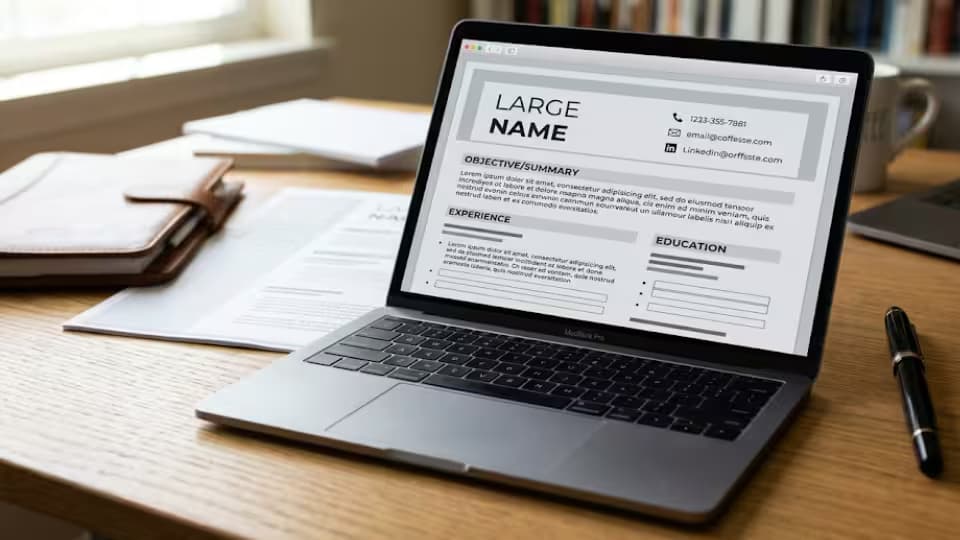
Most CVs are built from the same familiar sections. Once you know them, a blank page stops being frightening. The picture below shows how they usually sit on the page, and then I will explain what belongs in each one.

The main sections of a standard curriculum vitae
Header and contact details
At the very top go your name, the job title you are aiming for, and your contact details. Keep the contact details simple and current. A phone number, a professional email address, your city, and a link to your professional profile online are enough. Use an email address that is your name, not a nickname you made at fifteen. A recruiter who sees an address like partyboy2001 forms an impression before reading a single achievement, and it is not the impression you want.
Personal profile
Below the header comes a short profile, three or four lines that say who you are and what you are looking for. This is the most read and most wasted part of a CV. Most people fill it with empty phrases such as hard working team player seeking a challenging role. That tells me nothing. Compare these two. Weak: a motivated professional looking for growth. Strong: a finance officer with six years in manufacturing who has cut monthly closing time from ten days to four. The second one makes me want to read on, because it is specific and it shows a result.
Work experience
This is the heart of your CV. List your roles starting with the most recent, and under each one show results rather than a dry list of duties. There is a world of difference between the two. A duty is what you were told to do. A result is what changed because you were there. Weak: responsible for handling customer complaints. Strong: resolved customer complaints and reduced repeat calls by a fifth over one year. Numbers turn a vague claim into proof, and proof is what earns interviews.
Education
Your education section gives your qualifications with dates. When you are early in your career, this section sits high on the page because it is your strongest card. Once you have several years of work behind you, it moves below your experience, because by then what you have done matters more than where you studied. List your highest qualification first, and do not feel you must include every short course you have ever attended.
Skills
Your skills section names the abilities the job asks for. Keep it honest and specific. There are hard skills, such as bookkeeping, welding or writing in a particular software, and there are softer skills, such as leading a team or handling difficult conversations. Both matter, but the softer ones mean more when you can point to a moment they were used, which is why your experience section should carry the weight of proof.
Achievements, and references
An achievements section gathers awards, certificates or standout results that do not fit neatly under a single job. It is optional, but it can lift a good CV into a strong one. References usually just say that they are available on request. You do not need to list your referees on the CV itself, and doing so can even expose their contact details to more people than you intend. Keep them ready to share when they are asked for.
How long should a curriculum vitae be?
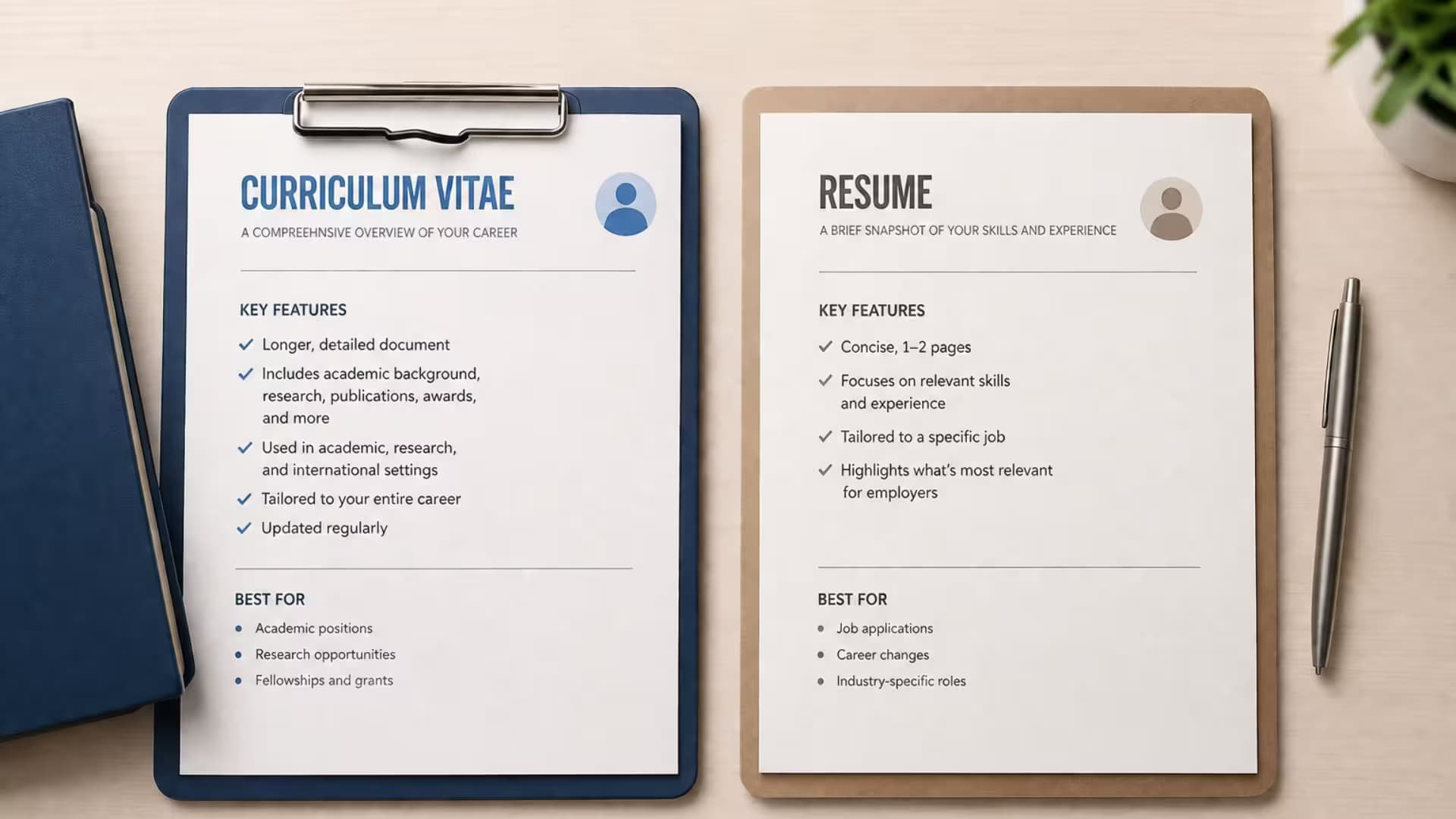
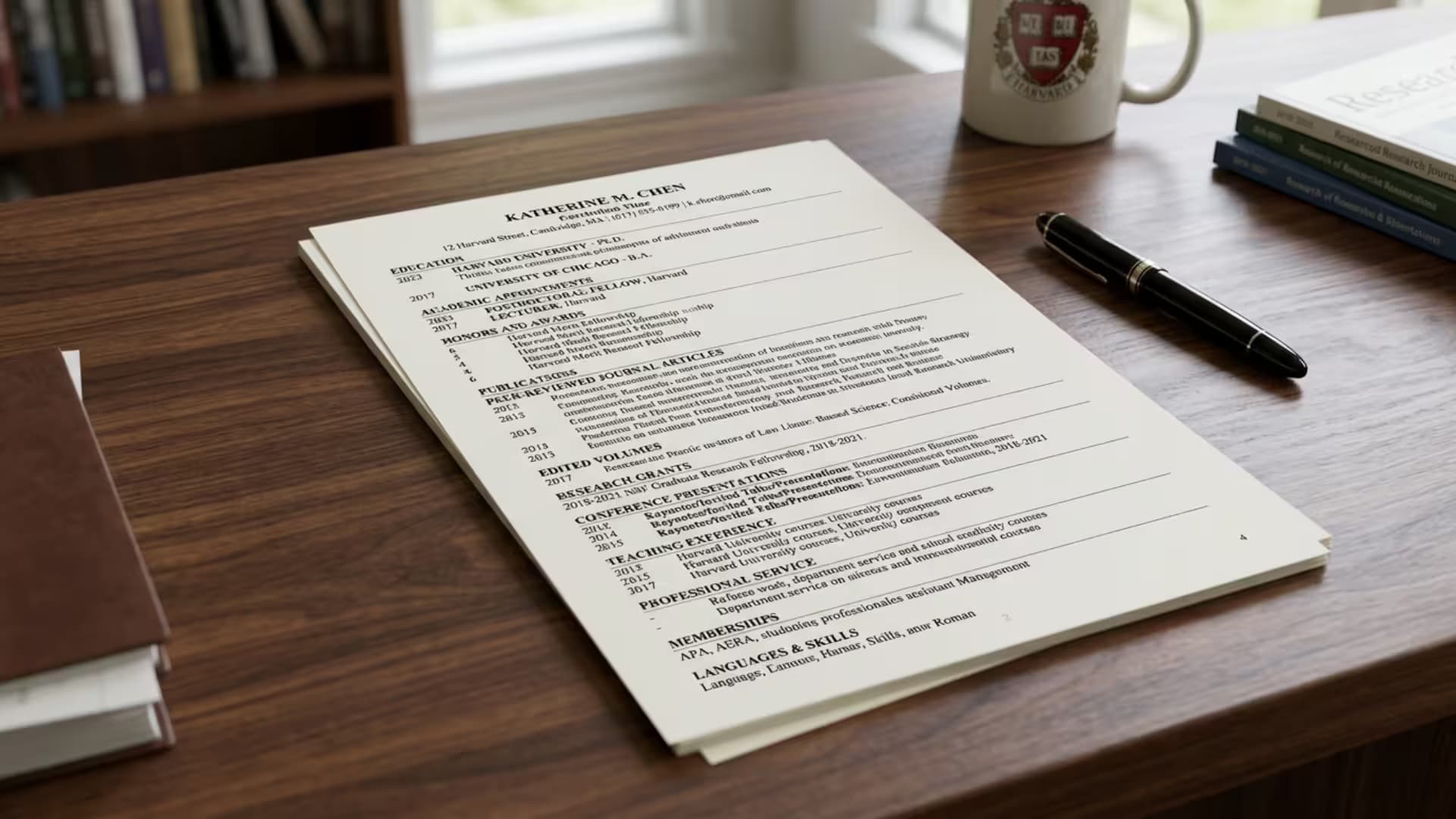
For most jobs, two pages is the sweet spot. One page is fine, and often better, when you are early in your career and do not yet have much to say. The long CV that runs to many pages belongs to academic, medical and research roles, where people are expected to list every publication, grant and talk. If you are applying for a normal job and your CV is six pages long, you are making the reader work too hard, and the reader will not thank you for it.
Think of length as a promise you are asking the reader to keep. Every extra page asks for more of their time. Two pages is a fair request. Five pages for a shop floor supervisor role is not, and it signals that you cannot tell what matters from what does not, which is itself a mark against you. When in doubt, cut. A shorter, sharper CV almost always beats a longer, fuller one.
How recruiters actually read your CV
I have mentioned the quick first scan. There is a second thing happening that many job seekers do not know about. Before a human being ever sees your CV, many larger employers run it through software that reads and sorts applications. This software looks for the words and requirements in the job advert. If the advert asks for stock control experience and your CV never uses those words, even though you have the experience, the software may score you lower and a human may never reach your file.
This is why you should read the job advert closely and use its language where it honestly applies to you. If the advert says project planning and you have planned projects, use the phrase project planning, not a clever synonym. This is not about tricking a machine. It is about describing your real experience in the words the reader is looking for, so that both the software and the human find what they need.
Keep your layout simple for the same reason. Text hidden inside images, heavy tables and unusual columns can confuse this software. A clean, plainly formatted CV is not only easier for a person to read. It is far more likely to be read correctly by the machine that often stands in front of the person.
The difference a good CV makes
Let me give you a picture of why this matters. I once had two applicants for the same junior role. On paper they had almost identical experience. The first sent a CV that opened with a wall of duties copied from a job description, no numbers, no shape. The second opened with a three line profile that named a real result, then showed under each job what had changed because she was there. I interviewed the second and barely paused on the first. The difference was not ability. It was that one person made her case and the other made me hunt for it. You do not want to be the CV that has to be hunted through.
Common mistakes people make on a curriculum vitae
Over the years the same errors come up again and again. Avoid these and you are already ahead of most of the pile. People list duties instead of results, so their CV reads like a job description rather than a record of what they achieved. They write long, vague profiles full of phrases that could describe anyone. They let spelling mistakes through in their own document, which quietly tells a recruiter they do not check their work. They send the same CV to every job without shaping it to each one. They stretch the truth on a skill they cannot actually demonstrate, which falls apart the moment an interviewer asks a follow up question. And they bury their best material on page two, where the quick first scan never reaches it.
A simple way to start today
You do not need to write it in one sitting. A simple order takes the fear out of the blank page.
1. Write down every job, qualification and skill you have, without worrying about wording yet.
2. Put your jobs in order, most recent first, and add the months and years.
3. Under each job, write two or three lines about what you achieved, not just what you were told to do.
4. Add a short, specific profile at the top once the rest is in place.
5. Cut anything that does not help you get this particular job.
6. Read every line aloud, fix the wording that does not sound like you, and check the spelling.
Do that and you already have a working curriculum vitae. From there it is a matter of tidying the layout, checking every word, and saving it in a format employers can open. Other guides in this series walk you through each of those steps in detail.
Keep your CV ready before you need it
One habit will save you many stressful evenings. Keep a full master version of your CV that holds everything you have ever done, and update it whenever something changes, a new role, a new qualification, a project you are proud of. Do it while the details are fresh, not two years later when you are trying to remember dates the night before a deadline. When a job appears, you copy from the master and cut it down to fit. Building down from a complete record is far easier than building up from a blank page under pressure.
Questions job seekers ask about the curriculum vitae
Should I put a photo on my CV?
It depends on where you are applying. In much of Europe a photo is normal and sometimes expected. In the United States, Canada and the United Kingdom, employers are usually advised not to consider photos, to avoid bias, so a photo can work against you. When you are unsure, leave it off. Your results should carry the CV, not your face.
Should I include my age, marital status or religion?
In most countries, no. These details do not tell an employer whether you can do the job, and in places with strong anti discrimination rules they can make an employer uncomfortable. Leave them out unless you are applying somewhere that clearly expects them. Focus the space on what you have done.
How far back should my work history go?
As a rough guide, the last ten to fifteen years is plenty for most roles. Older jobs can be summarized in a line or two, or left off if they add nothing. Nobody hiring for a role today needs three paragraphs about a job you left in the year two thousand.
Do I need a different CV for every job?
You do not need to start from scratch each time, but you should shape your CV for each job. Move the most relevant experience up, match the language of the advert, and trim what does not apply. Ten minutes of shaping often makes the difference between a CV that fits and one that feels generic.
Is a curriculum vitae the same as a resume?
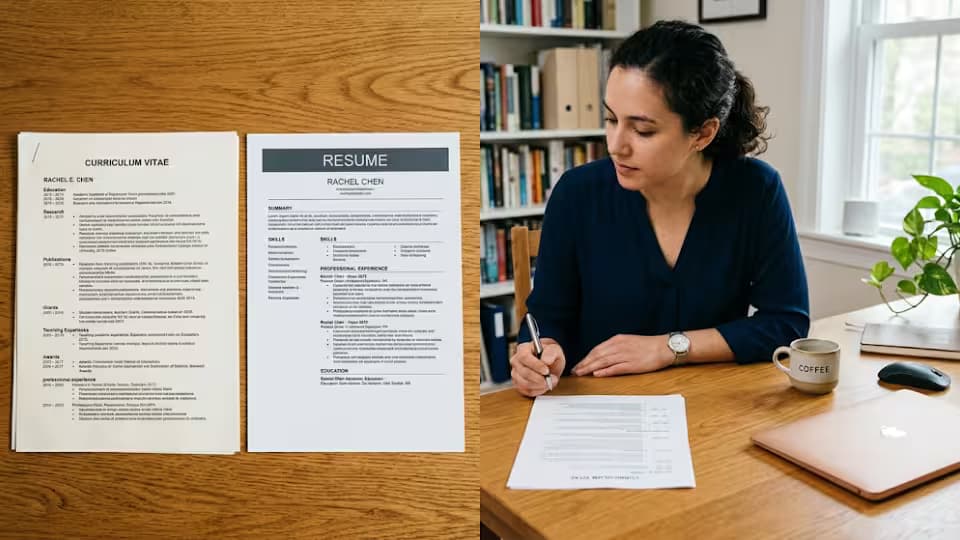
Sometimes yes, sometimes no, depending on where you live. In much of the world the words mean the same everyday document. In the United States they mean different things, with the resume being short and the CV being a long academic record. There is a separate guide in this series that explains the difference in full.
A final word
A curriculum vitae is not a form and it is not a chore. It is the one tool that speaks for you when you are not there to speak for yourself. Treat it as the advertisement for the best version of your working life, keep it honest, keep it clear, and shape it for the reader. Do that, and it will open the doors your talent deserves.
Recruiter tip: Before you send your CV, read only the first third of the first page and ask yourself, would a stranger know what I do and why I am worth meeting? If not, fix that part first, because that is the part the reader sees before deciding whether to keep reading.
Sources
• Merriam-Webster, definition of curriculum vitae
• Indeed Career Advice, resume and CV basics