One job advert asks for your curriculum vitae. The next asks for your resume. You have one document, so which do they want, and are they even asking for different things? This trips up job seekers every day, and it matters more than it looks. Send the wrong one and you can seem out of place before anyone reads a word. I have watched strong candidates weaken their chances simply by sending a document that felt foreign to the reader, too long here, too thin there, or carrying details that the local market frowns upon. Let me make the choice simple, so you always send the right thing to the right person and never lose ground before your experience has even been read.
The good news is that the decision comes down to two questions. Where is the job, and what kind of job is it? Answer those two and you will know which document to send almost every time. Everything else in this guide is simply the detail behind those two questions, laid out region by region and situation by situation, and finished with the practical habits that make switching between a curriculum vitae and a resume quick and painless. Read it once and you will never have to guess again.
Why the same document has two names
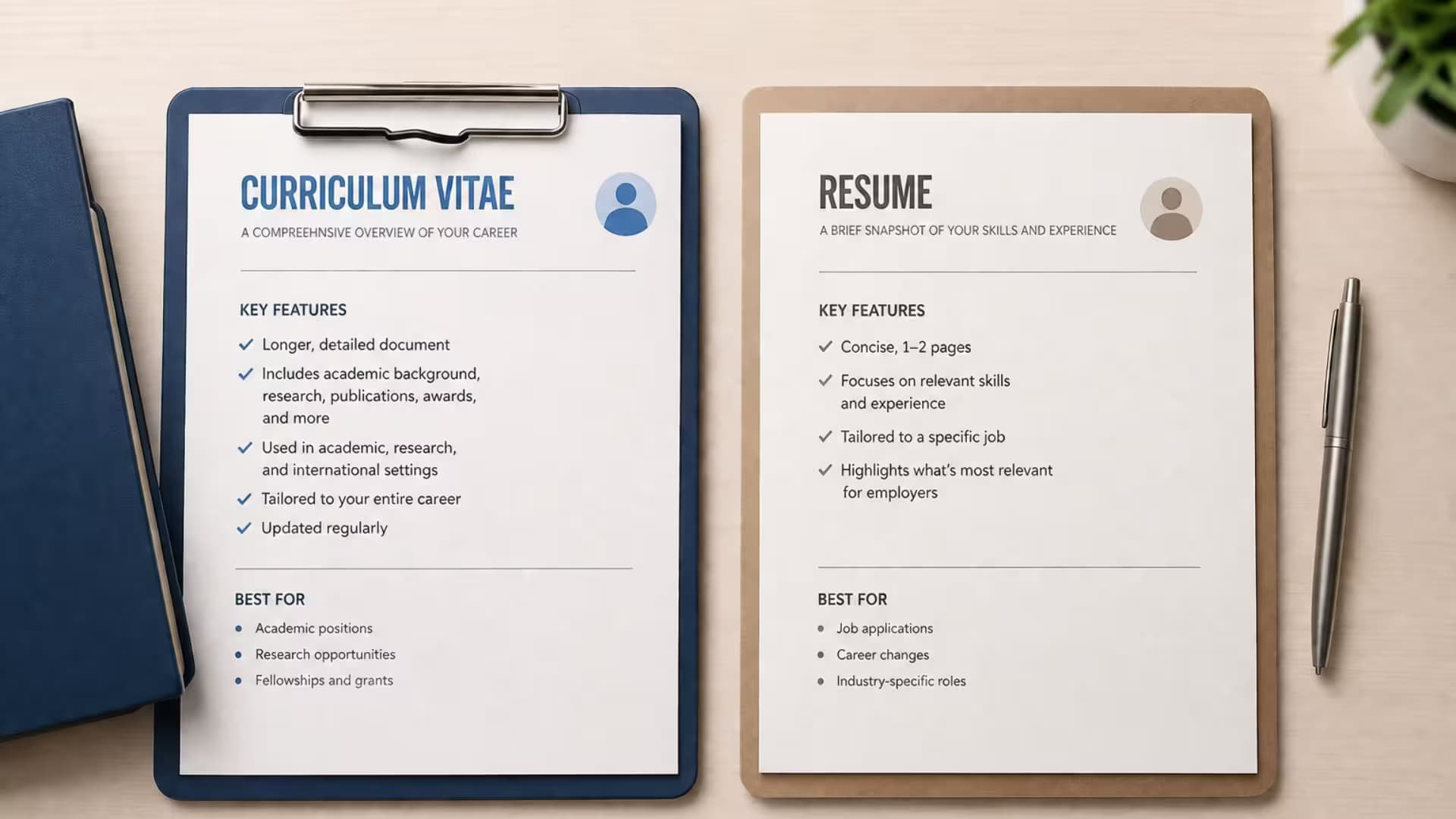
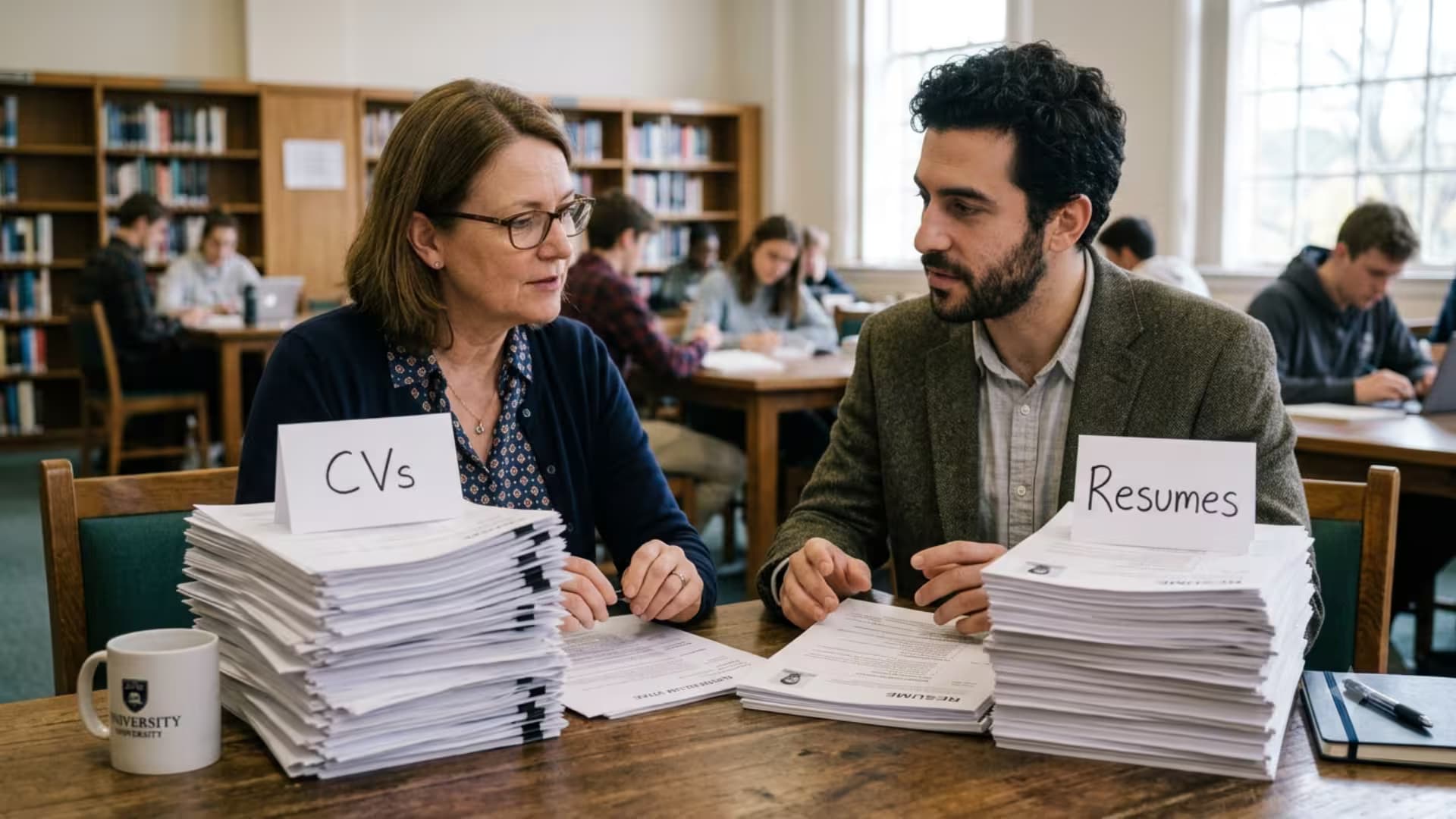
In a great deal of the world, curriculum vitae and resume mean the same everyday document, the short summary you send to get a job. The words are used as if they are interchangeable, and nobody blinks whichever you use. The important exception is the United States and Canada, where a curriculum vitae means something quite different from a resume. There, a resume is the short, sharp document for normal jobs, and a curriculum vitae is a long academic record that lists publications, grants and research. So the same two words can point to the same thing in London and to very different things in New York. Indeed sets out this split clearly, and there is a companion guide in this series that unpacks the difference in full.
Hold that idea in your head, because it is the key to everything that follows. The document underneath is largely the same summary of your working life, whichever name it goes by. What changes from place to place is the name the reader expects, and sometimes the length, the detail and the personal information they expect to see with it. Get the name and the shape right for the reader, and you are most of the way to an application that feels native rather than foreign.
Let your country decide
For a normal job, the country you are applying in usually decides the word and the shape. The map below is the quickest way to see which term your part of the world uses, and then I will take each region in turn, because the small local habits matter just as much as the name on the document.

Which word to use, by region and situation
United States and Canada
For a normal job, send a resume of one or two pages. Keep it short, sharp and tailored to the role, leading with the results that matter most to this particular employer. In these two countries the word curriculum vitae is reserved for long academic documents, so an advert asking for a CV almost always means a research, teaching or medical post. Leave personal details such as age, marital status and photographs off entirely, because employers there are advised not to consider them, and including them can actually make a hiring manager uncomfortable and expose the company to concerns about bias. A clean, one page resume that proves you fit the role is what these markets reward.
United Kingdom and Ireland
Send a CV, and two pages is completely normal and expected. Here the word CV is the everyday term for a job application, used for almost every role from the shop floor to the boardroom, and nobody will think you mean an academic document. You do not need a photo, and you would usually leave off your date of birth and marital status. A clean two page CV that opens with a short profile and then leads with results under each job is exactly what a British or Irish employer expects to receive, and anything much longer will be seen as a failure to edit.
Europe
Across most of Europe, the CV is standard, and the words CV and resume are often treated as the same thing. The important difference from North America is personal detail. Some European countries still expect a photograph and a date of birth, which you would never add in the United States, and several favor a standard, structured style known as the Europass, which lays out your details in a common format that employers across the region recognize. When you apply in a European country, it is worth a quick check of what is normal there, because habits differ noticeably from one country to the next even within the same region.
Africa and the Middle East
In much of Africa and the Middle East, the CV is the common term, and two pages is a safe length for most roles. You may still meet the older bio data style in some places, which leads with personal details such as date of birth and marital status before it reaches your experience. A modern CV that leads with your skills and results serves you far better in almost every case, because it puts what you can do ahead of who you are on paper. When an employer asks specifically for a CV, give them a clear, well ordered two page document, and hold any longer version in reserve for academic or senior roles that genuinely call for it.
Asia
Across Asia the picture varies a great deal by country, but CV is widely understood and widely used as the everyday term. In some markets a photo is expected and in others it is discouraged, and in a few, personal details that would be unusual in the West are still common, so a little local checking pays off before you send. As a safe default, a clean two page CV that puts your strongest and most recent experience near the top will be understood and respected almost everywhere in the region, and you can add or remove a photo depending on what the local market expects.
Australia and New Zealand
Here both words are used for the same everyday document, so you can relax about which one appears in the advert. One to three pages is acceptable, depending on how much experience you have, with two pages being the comfortable middle for most people. Whether the advert says CV or resume, send the same well made summary of your working life, led by your results, and you will have answered the request. The relaxed attitude to the word does not extend to the content, though, so keep it sharp and relevant whichever name it carries.
When the job type overrides the country
Country is not the only thing that matters, and there is one situation where it is overruled entirely. Some jobs call for a full curriculum vitae no matter where in the world you are. Academic posts, medical roles and research positions expect the long version that lists your publications, grants, presentations and teaching in detail, and this is true even in the United States, where a CV means exactly that kind of document. If you are applying for any of these, send a complete CV and do not worry about keeping it to two pages. In that world, completeness is the whole point, and a short document reads as an empty record that undersells you.
So the rule has a clear order. First ask what kind of job it is. If it is academic, medical or research, send a full CV wherever in the world you are. If it is a normal job, then and only then let the country decide the word, the length and the personal details. Get that order the right way round and you will not send a two page summary to a research panel or a ten page record to a shop that wanted a one page pitch.
Applying to another country
If you are applying across borders, follow the word the advert uses and match the local habit as closely as you comfortably can. When you are genuinely unsure, a clean two page CV is understood almost everywhere and rarely counts against you, which makes it a safe default for international applications. The one place to be careful is a normal job in the United States, where a long CV in place of a short resume can make you look as though you did not understand the market you are applying to. When in doubt there, send a short resume. Everywhere else, a tidy two page document is a dependable bet that will not raise an eyebrow.
It also helps to match the small local courtesies. If you are applying to a country where photos are normal and you are comfortable including one, do so. If you are applying to a country where they are discouraged, leave it off. If a market expects a date of birth and you are willing to share it, include it, and drop it where it is unwelcome. These small adjustments signal that you understand and respect the place you are applying to, and that quiet signal works in your favor at the very moment a reader is deciding whether you belong.
The software reads your CV first, whatever it is called
There is one thing that stays the same whichever word the advert uses and whichever country you are in. Many employers now run applications through software that scans and sorts them before a human being reads a single one. This software looks for the words and requirements in the advert, so whether your document is called a CV or a resume, it needs to use the real language of the role and keep a simple, clean layout that the software can read. A clever design that hides your experience in columns or images can sink you before a person ever sees your name, no matter how well you chose between the two words. So keep the layout plain and the wording honest and specific, and let both the software and the human find what they need.
How to switch between a CV and a resume
Because the two documents share the same building blocks, moving between them is easier than it sounds once you set yourself up properly. Keep one full master document that holds everything you have ever done, and treat it as your complete curriculum vitae. When a role calls for a short resume, copy the master, then cut it down hard, keeping only the roles, skills and one or two achievements that fit the job in front of you and dropping the rest without regret. When a role calls for a full CV, you already have it ready. Building down from a complete record is far quicker and less stressful than trying to remember your history each time, and it means you are always only minutes away from the right document in the right shape for any advert that appears.
A short checklist before you send
Before any application goes out, run through a few quick questions and you will rarely send the wrong thing. What country is the job in, and which word does that country use? Is the role academic, medical or research, which would call for a full CV wherever it is? Does the advert name a word, and if so have you matched it? Is the length right for the market, roughly one page in the United States and two pages in most other places? And have you removed or added personal details to match local habits? Five questions, a minute of thought, and your document will land as though it belongs.
What to do when the advert uses both words
Sometimes an international employer will write curriculum vitae or resume in the same advert, and this can feel like a trick question. It is not. It usually means they simply want your career summary and are covering both words so that no applicant anywhere is confused. Send a well written two page CV, led by your results, and you have answered the request completely. Do not agonize over which of the two words to match or read hidden meaning into the phrasing. The reader has told you plainly that they will accept either, so give them a clear document and move on.
Common mistakes people make
A few errors come up again and again, and each one is easy to avoid once you see it. People send a long, complete CV to a normal job in the United States, where a short resume was wanted, and lose the reader on the first page. They send a thin one page resume to an academic panel that expected a full record, and look as though they have nothing to show. They add a photo and personal details in a country where those are discouraged, or leave them off where they are expected. They send the exact same document to every country without shaping it to local habits. And they focus so hard on choosing the right word that they forget the content, which is what actually decides the outcome. Avoid these and you will already be sending the right thing, in the right shape, more often than most of the people you are competing against.
Questions job seekers ask
Are a CV and a resume ever exactly the same thing?
Yes. In the United Kingdom, Europe, much of Africa and Asia, and in Australia and New Zealand, people use the words for the same everyday document. The clear split only appears in the United States and Canada, where a CV means a long academic record and a resume means the short document for normal jobs.
I am applying to the United States. Which do I send?
For a normal job, send a short resume of one or two pages, tailored to the role. Send a full curriculum vitae only if the position is academic, medical or research, which is what the word CV means in that country.
The advert does not say which. What is safest?
A clean two page document that leads with your results is safe almost everywhere. In the United States lean toward a shorter resume, and in most other places a two page CV is exactly what the reader expects.
Should I include a photo?
It depends on the country. Some European and Asian markets expect one. The United States, Canada, the United Kingdom and Ireland generally discourage it. When you are unsure, leave it off, because a missing photo rarely hurts while an unwelcome one can.
Do I really need two versions?
Keeping one full master and one short tailored version saves you time and lets you respond to any advert in minutes. It is well worth the small effort to set up once, and it spares you from rewriting your whole history under pressure the night before a deadline.
A final word
Read the advert, use the same word the employer used, match the length they are likely to expect, and adjust the personal details to local habit. Do that and you will almost never get this wrong. The document underneath is largely the same summary of a working life. You are simply giving it the name and the shape the reader expects to see, which is a small courtesy that makes a real difference to how your application lands and whether it feels like it belongs on the reader's desk.
Recruiter tip: When an international employer uses both words in the same advert, they are usually not being fussy. They just want your career summary. Send a well written two page CV and you have answered the request.
Sources
• TopCV, resume versus CV differences by country