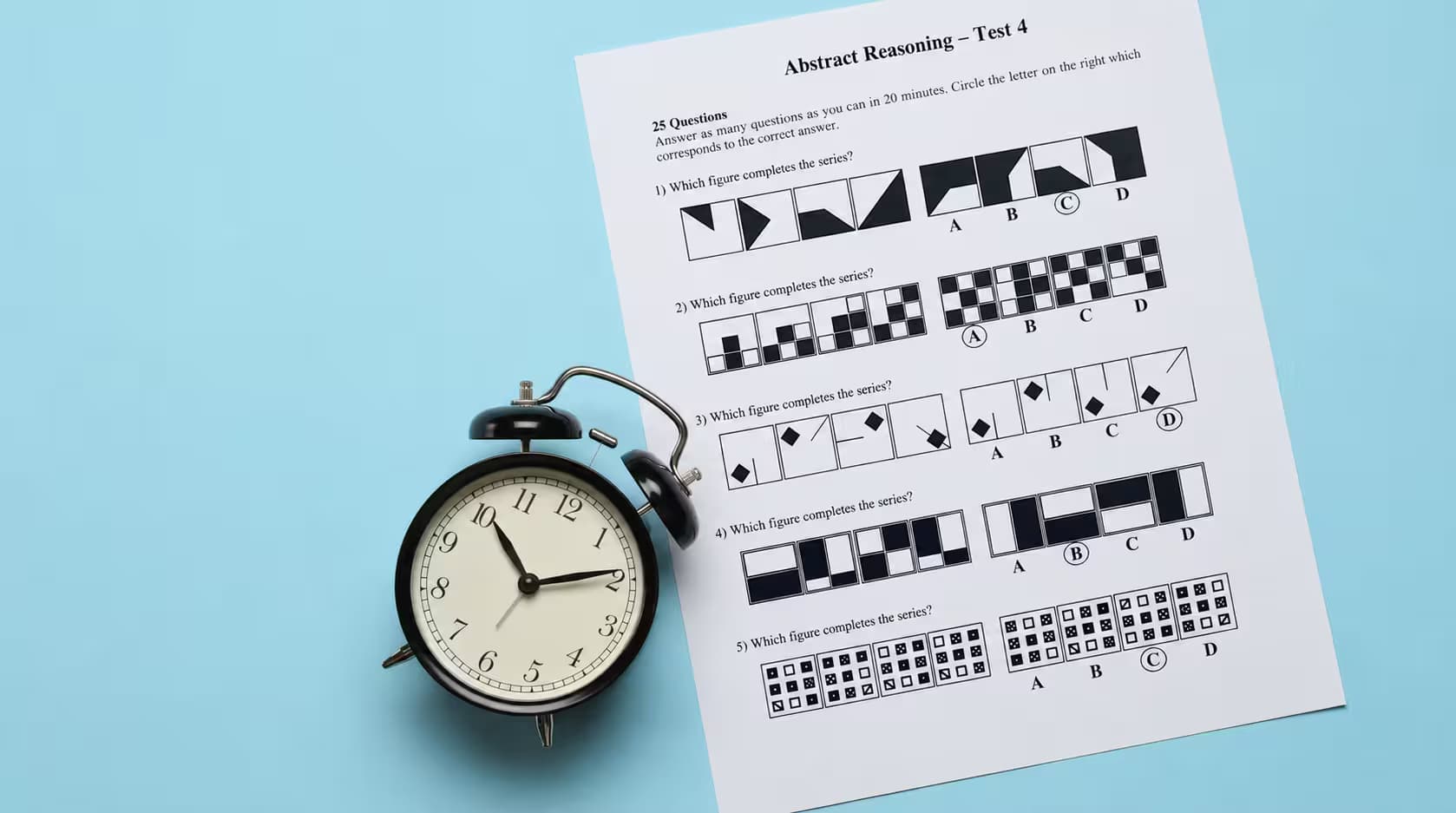
Abstract thinking works with ideas, patterns, and principles that are not tied to specific objects, while concrete thinking works with the literal, physical, and immediate. Most real thinking moves between the two. Knowing when to step back to the abstract and when to return to the concrete is a practical skill you can develop.
Abstract and concrete are often treated as a verdict on a person, as though one were clever and the other simple. That is a misreading. They are two modes of thought, each suited to different tasks, and strong thinkers move between them with ease. Whether you are in a frontline role or a senior position, both modes are part of your daily work, and the skill that matters is switching between them at the right moment. This article explains the difference, asks whether one is better, and shows how to strengthen both.
Related: Psychometric Practice Tests
What is the difference between abstract and concrete thinking?
Concrete thinking deals with what is directly in front of you, the specific, the literal, and the here and now. Abstract thinking deals with what is general, with the patterns, principles, and possibilities that lie beyond any single instance. One handles the particular case; the other handles the category it belongs to.
Psychology gives this a useful frame. Work on levels of mental construal describes a steady relationship between distance and abstraction. The closer something is to your immediate experience, the more concretely you represent it, in terms of how it looks and how you do it. The farther away it is, in time, place, or possibility, the more abstractly you represent it, in terms of why it matters and what it means. Abstract thinking is, in effect, the mind stepping back from the immediate to see the larger shape. Concrete thinking is the mind staying close to the detail.
What are examples of abstract versus concrete thinking?
Concrete thinking sees this chair, this invoice, this customer complaint. Abstract thinking sees furniture, cash flow, and the pattern across many complaints. At work, a concrete thought is the production figure for this shift. The matching abstract thought is the trend the figure belongs to and what it implies for the plan. Concrete asks what happened and how to handle it now. Abstract asks what it means and what principle connects it to everything else. You need both readings of the same event.
Related: Abstract Reasoning Examples-The Common Rule Types, Worked One by One
Is abstract thinking better than concrete thinking?
No. The idea that abstract thinking is the higher form and concrete thinking the lesser one is a long running assumption, and the evidence does not support it. Each mode does work the other cannot.
Concrete thinking keeps you grounded in reality, accurate about detail, and able to act. Abstract thinking lets you generalize, plan, and carry a lesson from one situation to another. A review of the concrete and abstract debate in how people learn reached a clear conclusion. The most effective approach is not to choose between them but to combine them, beginning with the concrete and moving deliberately toward the abstract. The lesson reaches well beyond the classroom. Detail without principle is busywork. Principle without detail is empty theory. The strength is in holding both, and in knowing which one a moment calls for.
How do you move from concrete to abstract thinking?
The bridge from concrete to abstract is comparison. When you place two specific cases side by side and ask what they share, the shared structure stands out and the irrelevant detail falls away. That shared structure is an abstraction.
Research on analogy and abstraction describes abstraction as reducing the specifics of a concept so that its scope widens. It also shows that comparing concrete examples is one of the most reliable ways people reach it. Each comparison strips away surface features and leaves the relationship that matters. The practical method follows directly. Start with concrete instances you understand well. Compare them, and ask what stays the same across them. Name the common principle, then test it against a fresh case. This is how a series of particular experiences becomes a general rule you can carry anywhere.
Related: Verbal Reasoning Practice Test: What the Science Says About Practice
Why does abstract thinking matter at work?
Abstract thinking matters because most valuable work depends on seeing past the single case. Strategy, planning, and judgment all require lifting your eyes from the immediate task to the pattern and the principle behind it.
The link between distance and abstraction explains why this scales with responsibility. The further ahead you must think, and the more situations your decisions touch, the more you must reason in abstract, why focused terms rather than concrete, how focused ones. A frontline employee applies a principle to the case in hand. A manager sets the principle that many cases will follow. An executive shapes the strategy from which the principles flow. None of this replaces concrete thinking, which remains essential for execution and for staying honest about the facts. It is the ability to move up to the abstract and back down to the concrete that marks strong judgment, and it is one of the qualities employers value.
Can you develop abstract thinking?
Yes. Like most cognitive skills, abstract thinking strengthens with deliberate practice. The habit to build is comparison followed by a simple question: what is the principle here, and where else does it apply?
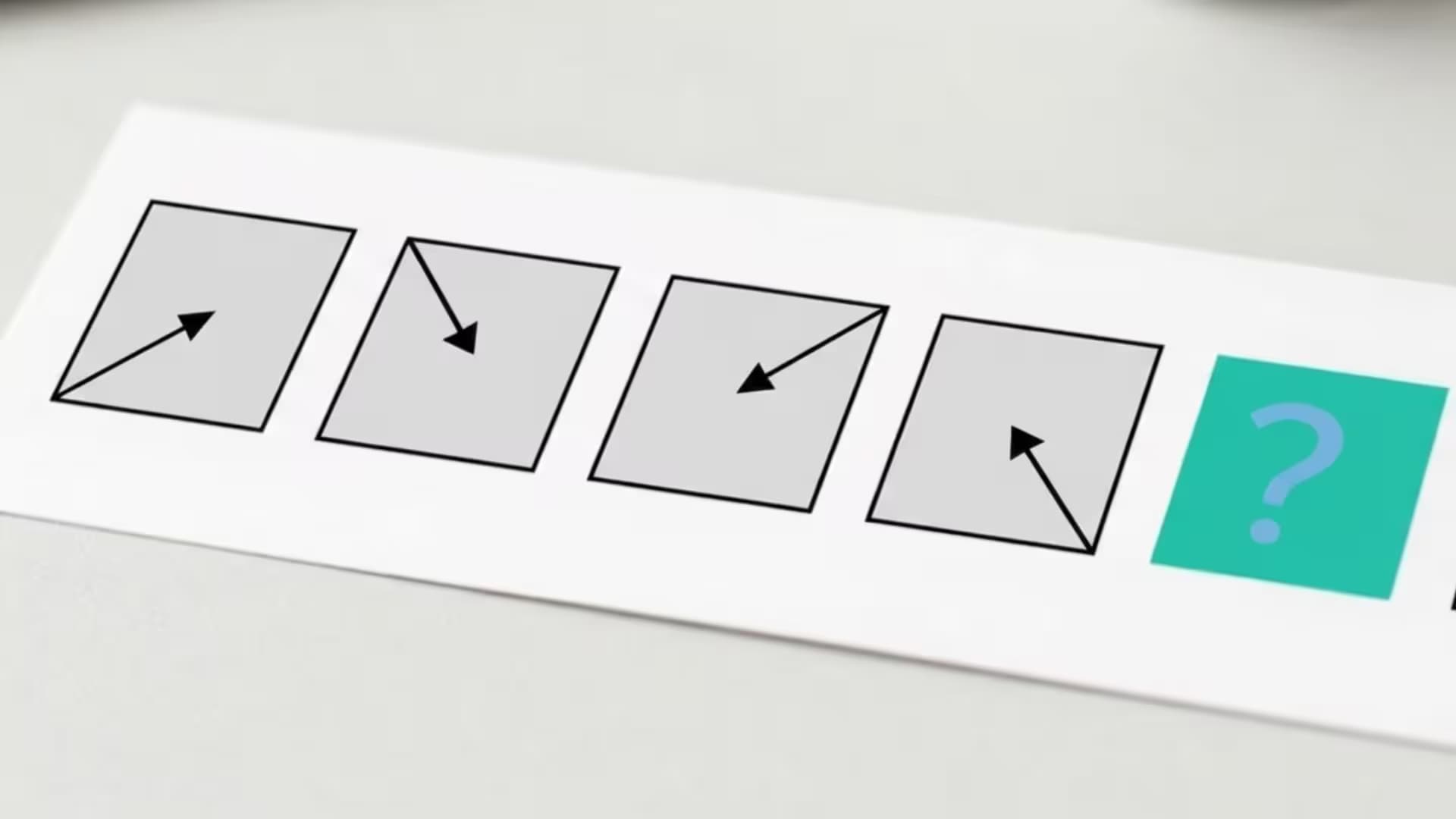
Practical ways to develop it include comparing cases to find what they share, asking why something works rather than only how, and summarizing a situation in a single principle before applying it somewhere new. Moving from concrete examples toward the abstract idea, in that order, is the pattern that learning research consistently favors. The same habit underlies performance on abstract reasoning tests, which simply ask you to find a general rule inside particular figures. Strengthen the habit of stepping back to the principle, and you strengthen both your thinking and your performance on the assessments that measure it.
Key takeaways
1. Concrete thinking works with the specific, literal, and immediate. Abstract thinking works with patterns, principles, and possibilities beyond any single case.
2. The closer something is to immediate experience, the more concretely you represent it. The farther away, the more abstractly.
3. Neither mode is better. Concrete keeps you accurate and able to act; abstract lets you generalize, plan, and transfer lessons.
4. The most effective approach combines them, beginning with the concrete and moving deliberately toward the abstract.
5. Comparison is the bridge. Placing cases side by side reveals the shared structure, which is the abstraction.
6. Abstract thinking scales with responsibility, because strategy and planning require seeing past the single case.
7. You can develop abstract thinking by comparing cases, asking why rather than only how, and applying the principle somewhere new.
What this means for you
Stop treating abstract and concrete as a label for what kind of thinker you are. Treat them as two tools you can pick up at will. When you are lost in detail, step back and ask what principle connects it. When a plan feels vague, come back down and ask what it looks like in practice. The skill is the switch, not a permanent home in one mode.
This balance is worth building, because it serves you in every role and improves with practice. It also underlies the reasoning that aptitude assessments measure, part of the wider story of why reasoning ability matters for work and for life. The strongest thinkers are not the most abstract or the most concrete. They are the most fluent at moving between the two.
Related reading on The Human Capital Hub
If your interest in abstract thinking is partly about an assessment ahead of you, our psychometric tests guide explains how reasoning tests work and how to approach them. It will help you prepare for the whole process with confidence.