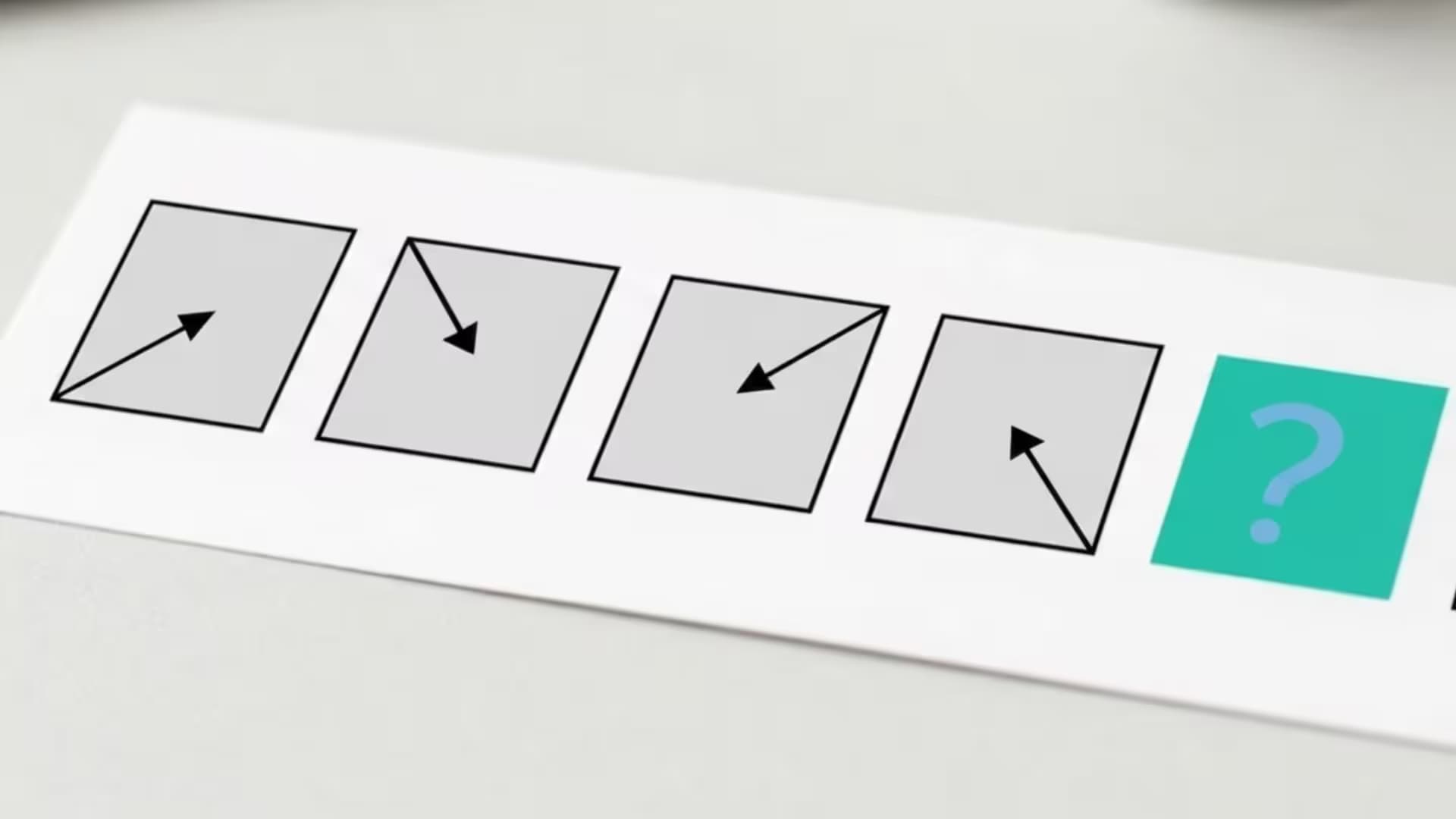
An abstract reasoning sample test is a practice set you use to get familiar with the format, timing, and rule types before the real thing. Practicing sample tests does raise your score, mostly by building familiarity and strategy rather than by raising your underlying reasoning ability. Used well, a sample test calms nerves and sharpens your method.
Most people use sample tests badly, racing through them and checking only the final score. That wastes their value. This article explains what a sample test is for, what the evidence says practice really changes, and how to use sample tests so the benefit is real. The honest picture matters whether you are preparing for a first job or a senior appointment, because it tells you where preparation pays and where it cannot.
What is an abstract reasoning sample test, and how should you use it?
A sample test is a representative set of practice questions, ideally timed and similar in style to the test you will face. Its purpose is preparation, not assessment, so the value is in what you learn from it rather than the score it returns.
Use it as a rehearsal, not a quiz. Sit it under realistic conditions, timed and without interruption, so the pressure of the real test becomes familiar. Then spend most of your time afterward on review, not on the score. Go back through every question you missed, work out the rule you failed to see, and name the rule type so you recognize it next time. A sample test you review carefully teaches far more than three you rush through and forget.
Related: Psychometric Practice Tests
Do sample tests really raise your score?
Yes, practice with sample tests does tend to raise scores, and it is worth being clear eyed about why. The rise is real, but most of it comes from becoming familiar with the format and quicker at the strategy, not from a leap in reasoning ability itself.
A careful study asking whether practice helps found that scores on figural reasoning tests rise with repeated exposure. But much of that gain reflects improved test taking strategy and comfort with the format, rather than a genuine increase in the underlying ability. This is good news for you, not bad. It means a meaningful part of a low cold score is just unfamiliarity, which practice removes. It also means you should not expect a sample test to transform the ability the test is built to measure. Practice releases the score you can already reach. It does not manufacture a new one.
Related: Numerical Questions: How to Approach Them and the Traps That Cost Marks
Do you really get smarter from sample tests?
Not in the deep sense, and that is fine. Sample tests make you faster, calmer, and more familiar, which lifts your score toward your true level. They do not noticeably raise the broad reasoning ability that the test is designed to capture, because that ability is general and slow to change. The useful way to think about it is that practice removes a disadvantage rather than adding a new strength. Reaching your real level is exactly what you want a sample test to do.
Why do practice gains not mean a real jump in ability?
Practice gains and real ability gains are different things, and the evidence draws a sharp line between them. The more directly a test measures reasoning, the less a score rise reflects a true change in that reasoning.
A large analysis of score gains across studies found a striking pattern: the parts of a test that most strongly reflect reasoning ability are exactly the parts where practice raises scores the least. Gains concentrate in the easier, more coachable aspects, not in the core reasoning the test is built to measure. For you, this carries a practical and freeing message. There is no trick that lifts your true reasoning overnight, so you can stop searching for one. The honest and effective plan is to practice enough to be familiar and calm, then trust your reasoning to do the rest.
How do you get the most from a sample test?
Get the most from a sample test by treating each one as a learning session rather than a performance. A few sample tests used well beat many used carelessly.
Follow a simple routine. Sit the test under timed, undisturbed conditions so the format and pace feel ordinary. Mark it, then study every miss until you can name the rule you did not see. Space your sessions over several days rather than cramming them into one, because spacing helps the patterns stick. And stop when the format no longer surprises you and your nerves have settled, because that is the point at which you have captured the main benefit. Beyond that, more sample tests add little.
Related: Verbal Reasoning Practice Test: What the Science Says About Practice
Is it fair that some people practice more?
This is a reasonable worry, and the honest answer is that access to sample tests is not evenly spread. Someone with time and good materials can practice; someone working long hours may not. Because practice mostly removes a disadvantage rather than adding raw ability, uneven access can lift some scores more than others.
A fair employer recognizes this and offers all candidates the same official practice materials, so that no one is penalized simply for not knowing the format. For you, the practical step is to ask what practice materials are provided and to use them, so you are not disadvantaged by unfamiliarity that has nothing to do with your ability. Take whatever official sample tests are offered, prepare to the point of comfort, and remember that the goal is a score that reflects your reasoning rather than your access to practice.
Key takeaways
1. A sample test is a representative practice set whose value is in what you learn from reviewing it, not in the score it returns.
2. Sit sample tests under realistic timed conditions, then spend most of your time reviewing every question you missed.
3. Practice does raise scores, but most of the gain comes from familiarity and strategy, not from a jump in reasoning ability.
4. The parts of a test that most reflect reasoning are exactly where practice raises scores the least, so there is no overnight trick.
5. Practice removes a disadvantage and lets you reach your true level, rather than manufacturing a new ability.
6. Space your sessions, name the rules you missed, and stop once the format no longer surprises you.
7. Access to sample tests is uneven, so use whatever official materials an employer provides and ask what is available.
What this means for you
Prepare with sample tests, but prepare with purpose. Do enough to make the format ordinary, your timing steady, and your method automatic. The early sessions deliver most of the legitimate benefit. Once the test no longer rattles you, you have captured the gain that matters, and further drilling adds little.
Hold a realistic expectation of what practice does. It clears away unfamiliarity and nerves so your real reasoning can show, which is exactly what a fair process intends. That is part of approaching selection practices from a position of confidence rather than dread. The aim is a score that reflects your reasoning, not your access to materials.
Related: Abstract Reasoning Examples: The Common Rule Types, Worked One by One
Related reading on The Human Capital Hub
For the wider picture of how these assessments work and how to prepare across a process, read our psychometric tests guide. For how reasoning sits among the methods employers weigh, see our overview of the qualities employers look for.