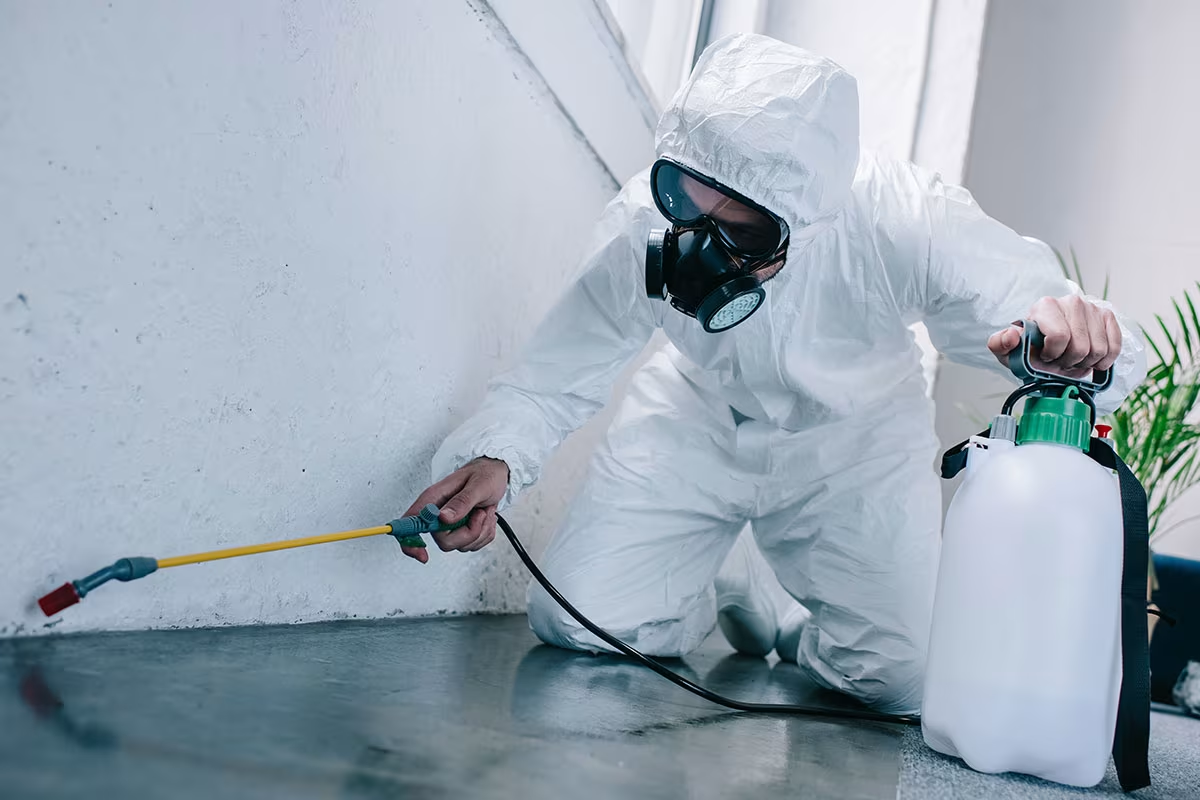
Exposure to asbestos at work is dangerous and can affect the health of a worker. There are many jobs that require workers to touch asbestos fibers.
A CDC report stated that the number of malignant mesothelioma cases in the United States in 2022 is 2,669. In addition to this, it is also mentioned in the report that most mesotheliomas arise due to inhalation of asbestos fibers. The incidence rate in the country in 2022 is 0.6 per 100,000.
There are several things to consider if a worker gets an asbestos-related illness. This includes their work history, exposure, and choices for taking legal action or workers' compensation.
According to a Florida mesothelioma lawyer, when you or a family member is diagnosed with mesothelioma, a mesothelioma lawyer can help determine your legal options and claim compensation for this disease.
Understanding how workplace exposure can contribute to illness is an important first step. Let’s take a closer look.
Asbestos Causes More Than One Disease
The National Cancer Institute has provided additional information in its summary regarding the discussion of the topic. Asbestos can cause cancers of mesothelium, lungs, larynx, and ovaries. In addition to this information, there is also information available regarding the relation of asbestos to stomach, pharynx and colon cancers.
Asbestos causes asbestosis in addition to pleural plaques and thickening in the absence of cancer.
The importance of this range lies in the fact that when someone tries to build up his/her employment history, then one asbestos exposure could be followed by various health problems after decades passed.
The Lung Cancer Nobody Attributes to Work
The attribution process falls apart for lung cancer. According to the National Cancer Institute, there is evidence for synergy as smokers exposed to asbestos have an increased risk for lung cancer that is greater than the sum of the two independent risks.
The practical consequence follows quickly. A doctor seeing lung cancer in a retired boilermaker who smoked for thirty years may record it as a smoking case, and the asbestos side of the history can go unrecorded unless someone asks about the patient's work.
Workplace injury practices cover the sites where both kinds of harm happen.
According to a workplace accident lawyer from New York, when workplace injuries happen, you may need the legal professionals to ensure your case is handled following critical steps to protect your rights and strengthen your claim.
The Exposure That Followed Workers Home
The members of the household never made it to a company payroll. In its research on mesothelioma, the National Cancer Institute reports findings that the family members of workers heavily exposed to asbestos have higher chances of getting affected by asbestos fibers brought home on clothes and shoes.
This transforms the identity of the injured party. A wife who spent twenty years shaking off coveralls in a laundry room inside the household premises never entered the plant premises, never signed a timesheet, and does not have any occupational record at all. The case in such a scenario depends almost wholly upon proving the nature of work done by the worker.
The same logic reaches coworkers. A welder working twenty feet from an insulator stripping pipe lagging breathed the same air without ever touching the material, and a payroll record describing him as a welder says nothing about it. Exposure of that kind leaves no trace in the one document most likely to survive.
The Records That Were Supposed to Exist
Federal workplace safety rules require an employer to run a medical surveillance program for employees working at or above the asbestos exposure limits.
Those examinations have to capture a medical and work history, a chest X-ray, and pulmonary function testing covering forced vital capacity and forced expiratory volume, at no cost to the employee, with periodic repeats keyed to age and years of exposure.
When these records survive, they can be one of the most detailed sources on a worker's exposure history. When there has never been a monitoring program, that absence is part of the story as well.
Annual asbestosis deaths began declining in 2001, which reads as progress and largely is. It also reflects exposures that ended rather than exposures that never happened. The illnesses reaching clinics this year belong to jobs worked in the 1970s and 1980s, and the same arithmetic applies to the work happening now.