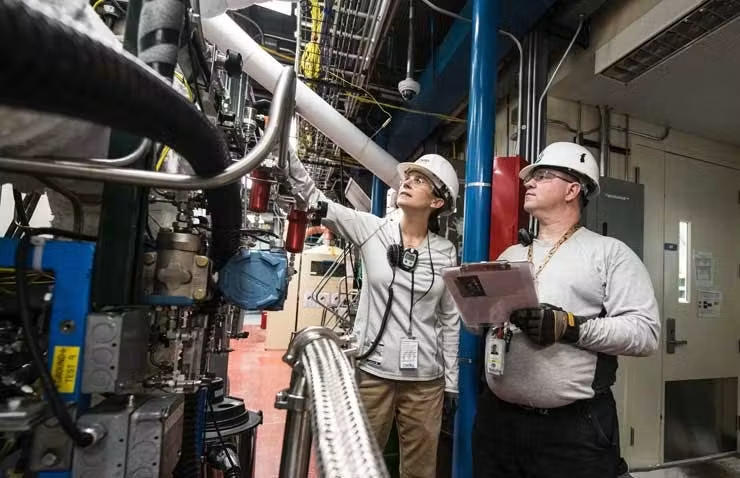
A new starter in manufacturing usually receives a lot of information in a short space of time: payroll details, shift patterns, quality rules, production targets and several names that may not stick on day one. In that rush, health and safety training can easily become another item to tick off.
Treating it that way wastes one of the best opportunities to set safe expectations before shortcuts and assumptions have time to settle in.
The First Days Establish What Normal Looks Like
Manufacturing environments can contain moving machinery, vehicles, stored energy, chemicals, noise, manual handling and task-specific PPE requirements. New employees may not yet know which hazards are routine, which are unusual and which should stop the job.
Onboarding is the point at which employers can make those boundaries clear. Site induction should explain local rules and emergency arrangements, while role-specific training should cover the hazards and controls that apply to the work the person will actually perform.
Generic safety messages can set common expectations, while role-specific training makes the content relevant to the work. A machine operator, maintenance technician and warehouse worker face different hazards, and new starters notice when training feels disconnected from the job they have been hired to do.
PPE Needs More Than a Handout
Personal protective equipment is a good example. Issuing gloves, eye protection or hearing protection does not by itself ensure that PPE will protect the person wearing it. HSE guidance says workers need sufficient information, instruction and training where PPE is required.
The training should explain the hazard the equipment controls, when it is required, how it should fit, what signs of damage matter and where it should be stored. PPE Training for Industry can provide a useful foundation, with site-specific instruction added for the actual equipment and hazards in use.
Face Fit Is Personal
Respiratory protective equipment needs even more care. A tight-fitting respirator depends on a good seal to the wearer's face. Different face shapes, facial hair, eyewear and the model of mask can all affect that seal.
A face fit training certificate can support people who need to understand face fit testing. During onboarding, employers should make clear that tight-fitting respiratory protection has to suit the individual wearer and cannot be handed out as a one-size-fits-all item.
Early Training Makes Speaking Up Easier
New employees often hesitate to ask questions because they do not want to look inexperienced. Manufacturing can make that hesitation costly. An unfamiliar control panel, missing guard, unexpected jam or change in material may need clarification before work continues.
Onboarding should tell people who to ask when they are unsure, which work requires authorisation, when a machine must be stopped and how defects are reported. Clear routes for questions make speaking up part of the job and reduce the pressure on a new starter to make a difficult call alone.
Supervisors Need a Role in Onboarding Too
HR may coordinate the process, while supervisors and experienced colleagues bring the practical detail. They know which tasks cause confusion, where production pressure builds and which controls new starters are most likely to misunderstand.
A good onboarding programme therefore combines structured learning with supervised practice. The worker hears the rule, sees how it applies and gets feedback while the task is still new.
Check Competence After the Training
A completed module or signed induction record shows that training has been delivered. Employers may still need evidence that the person can perform the task safely without support.
Manufacturing employers may need to check understanding, observe practical performance and increase responsibility gradually. Some work also requires specific competence, instruction or authorization beyond general awareness training.
Keep Learning Going After Onboarding
Safety training should begin at onboarding because timing matters. The first days show workers what the organisation pays attention to and which standards are expected during normal production.
Learning then needs to continue through refresher training, toolbox talks, supervision, incident learning and retraining after changes. A strong first week gives those later controls a clearer base to build on.
Make the Training Fit the Shift
Manufacturing onboarding can look complete on paper while missing the realities of the shift. A worker who starts on days may later move to nights, when staffing is thinner and support functions are less visible. Weekend production may use different maintenance cover or delivery arrangements. If the risks or response routes change with the shift, the onboarding needs to reflect that rather than assuming one induction covers every working pattern.
The same applies when workers rotate between departments. Someone moving from packing to production may be familiar with the site but unfamiliar with the machinery, energy sources or access rules in the new area. A short transfer briefing can prevent previous experience from being mistaken for competence in a different task.
Temporary and Agency Workers Need the Same Clarity
Manufacturers often rely on temporary or agency staff during busy periods. These workers may arrive with useful experience from other sites, but local arrangements still need to be explained. Similar machines can have different controls, pedestrian routes can vary and emergency procedures are specific to the workplace.
Rushing this group through a shortened induction can create avoidable gaps. Employers and labour providers should be clear about who covers which parts of training, who checks understanding and what a worker is allowed to do before additional instruction is complete. The aim is straightforward: nobody should have to guess because their contract happens to be temporary.
A Better First Week Reduces Guesswork Later
Onboarding works best when it gives people enough information to work safely without overwhelming them with material they cannot yet place in context. Some subjects can be covered before a worker reaches the production area. Others make more sense beside the equipment, with a supervisor able to show how the rule applies.
A useful first week also leaves room for follow-up. Ask what was unclear, check whether the person has encountered anything different from the induction and correct misunderstandings early. New starters will still need experience, but they should not have to build that experience by trial and error. When safety training is treated as part of learning the job, rather than paperwork that sits beside it, the expectations are far more likely to carry into everyday production.