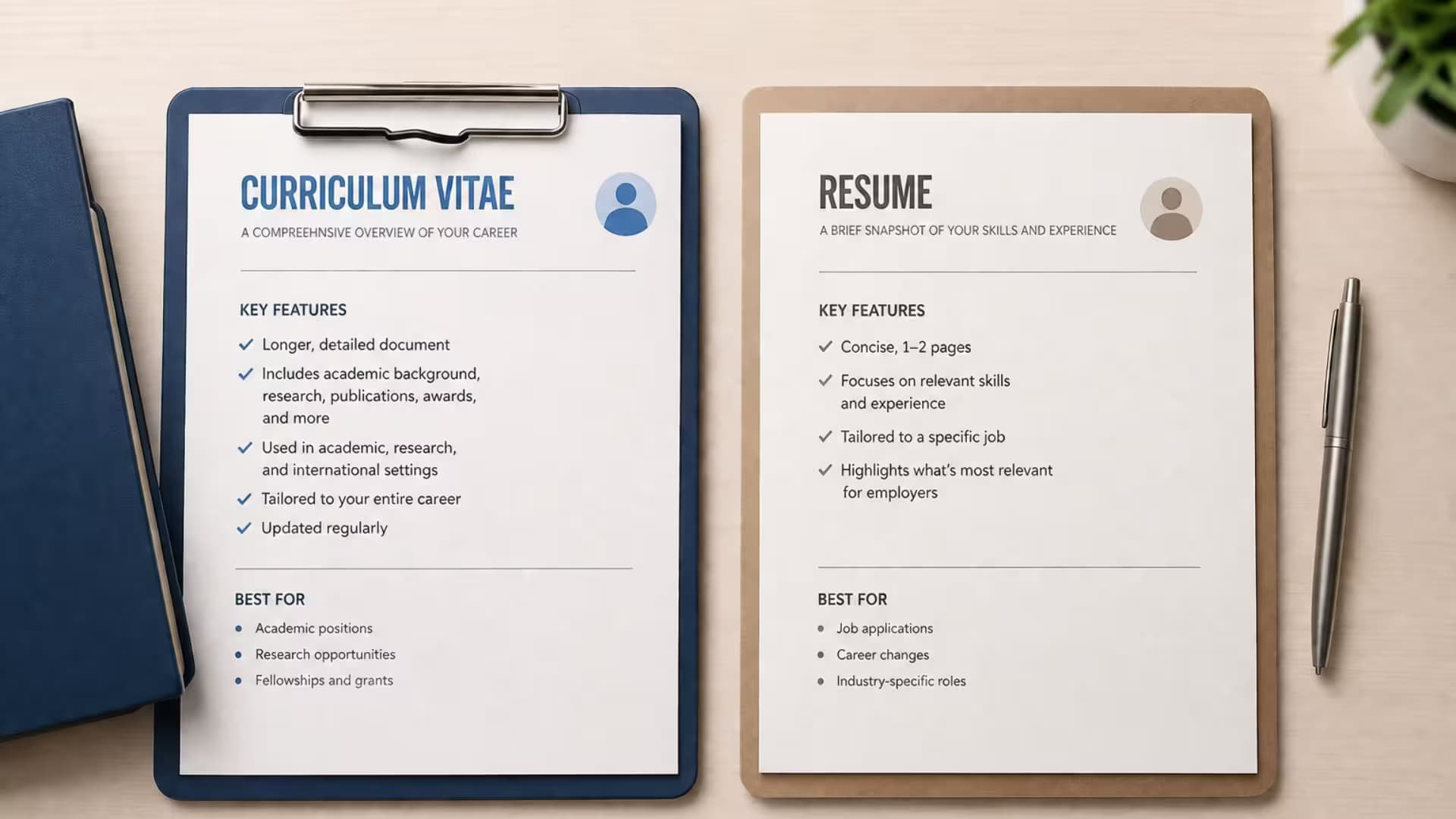
A Salesforce administrator resume is a one or two page document that proves you can configure, secure, automate, and scale the Salesforce platform for a business. Hiring data, applicant tracking research, and recruiter scanning studies all converge on the same conclusion. Candidates land interviews when they document measurable platform impact, certifications, and business outcomes, not duties.
Most resumes written for this role get the order wrong. They open with an objective statement, list every Salesforce feature the candidate has ever touched, then bury the work that actually matters near the bottom. The result is a document that looks like a job description, not a record of value. The thinking behind this default is reasonable. People assume hiring managers want to see breadth, then depth, then impact. The evidence on how recruiters actually read resumes says the opposite. Recruiters read the top third first, decide whether to keep reading within seconds, and only look at duties when the impact has already convinced them.
The Salesforce ecosystem makes this gap worse, not better. The platform employs over 9 million people across customer roles, and the Salesforce economy continues to add hundreds of thousands of jobs each year. That growth is good news for candidates but it also means hiring managers see hundreds of resumes that look identical. The articles you have read about Salesforce administrator resumes mostly recycle the same advice. This one rebuilds the resume from the evidence about what actually predicts callbacks.
What is a Salesforce administrator resume?
A Salesforce administrator resume is a structured document that summarizes your ability to manage the Salesforce platform, including user setup, security models, data architecture, automation, reporting, and stakeholder collaboration. It is read first by an applicant tracking system, then by a recruiter, then by a hiring manager. Each reader needs different information surfaced quickly. The resume must satisfy all three within roughly the same one page or two page footprint.
The role itself is broader than most candidates frame it. Salesforce administrators are the people who translate business problems into platform configuration. They build flows, manage profiles and permission sets, design reports, and protect data. The official Salesforce administrator credential overview describes the role as a trusted business leader who deeply understands how their company operates, who delivers the platform to support business objectives. A strong resume reads as proof of that brief, not as a list of buttons clicked.
What is the role of a Salesforce administrator?
A Salesforce administrator is responsible for the daily configuration, support, maintenance, and improvement of the Salesforce platform. The role spans technical work, such as building automation and managing security, and business work, such as gathering requirements and training users. Strong administrators reduce platform debt, accelerate sales and service workflows, and translate complex business needs into native Salesforce solutions.
How long should a Salesforce administrator resume be?
A Salesforce administrator resume should be one page for candidates with fewer than 5 years of relevant experience and two pages for senior administrators, certified application architects, or those moving toward consulting roles. Length is a function of evidence density, not seniority alone. If the second page is filled with weak content, drop it.
The myth that all resumes must fit on a single page comes from a different hiring era, when documents were physically faxed and printed. Recent surveys of recruiters suggest the rule does not hold uniformly. A multi year analysis of recruiter behavior reported by recruiter scanning research found that recruiters spend roughly 7.4 seconds in the first pass on a resume, regardless of whether it is one page or two. Length matters less than where the most important information sits. The first 20 percent of the document does most of the work.
What does the evidence actually say about resume format and content?
Resume format is a research question, not a style preference. Decades of personnel selection studies indicate that resumes operate as low fidelity samples of work, and that recruiters infer applicant traits from format choices in ways that influence callback rates. A foundational review of resume screening published in Personnel Psychology found that recruiters draw inferences about conscientiousness and motivation from resume structure, even when the underlying content is similar. The inferences recruiters make from resume content alone explain part of why two candidates with similar skills receive different responses.
Three structural findings are settled enough to act on. First, reverse chronological format outperforms functional or skills first format for candidates with continuous employment. Second, achievements written with action verbs and quantified outcomes outperform passive descriptions of duties. Third, name and contact bias is real and measurable. A landmark study on labor market discrimination by the National Bureau of Economic Research showed that resumes with traditionally white sounding names received 50 percent more callbacks than identical resumes with traditionally African American names. This is not a reason to alter your identity. It is a reason to remove every other variable that could be used as a filter, including photographs, dates of birth, marital status, and home addresses.
The deeper point is that the resume is a probabilistic document. You will not control every decision a reader makes. You can control the signals you place in the top third, the verbs you choose, and the numbers you attach to your work. Personnel selection research summarized in the Annual Review of Psychology reports that structured, evidence based hiring decisions outperform unstructured ones, but most first pass screening remains unstructured. Your job is to write a resume that survives an unstructured first scan and then performs well in a structured second look.
Which Salesforce administrator skills should appear on your resume?
A Salesforce administrator resume should list the technical and business skills that map directly to the platform tasks employers hire for. The strongest resumes group skills into four clusters: platform configuration, automation and integration, data and analytics, and stakeholder enablement. Each cluster signals a different kind of value to a different reader.
Platform configuration skills cover user management, profiles and permission sets, role hierarchies, sharing rules, object and field management, page layouts, record types, and global organizational settings. Automation and integration covers Flow, Approval Processes, validation rules, scheduled jobs, Data Loader, and basic understanding of platform application programming interfaces. Data and analytics covers report types, dashboards, list views, data quality processes, and reporting snapshots. Stakeholder enablement covers requirements gathering, change management, user training, and release coordination.
A practical filter helps. If a skill does not appear in any Salesforce job description you have read in the past 90 days, do not list it. If a skill appears in 7 out of 10 job descriptions you would apply to, treat it as mandatory. The hiring market signals what to surface. Resume keyword studies cited by the Society for Human Resource Management show that applicant tracking systems often score resumes against the job description language itself, which makes mirroring the posting language a measurable advantage rather than a stylistic choice.
What are the most in demand Salesforce administrator skills?
The most in demand Salesforce administrator skills in 2026 are Flow automation, Sales Cloud configuration, Service Cloud setup, Lightning Experience administration, security and sharing model design, data management with Data Loader, and reporting and dashboard creation. Stakeholder facing skills, especially requirements gathering and user training, are frequently undervalued by candidates and frequently overvalued by hiring managers.
Which certifications matter most on a Salesforce administrator resume?
The Salesforce Certified Administrator credential is the baseline qualification for most administrator roles. The Advanced Administrator certification signals depth in complex security models, change management, and platform optimization. Platform App Builder is the most useful second certification for administrators who want to demonstrate declarative development skills. Service Cloud Consultant and Sales Cloud Consultant credentials are differentiators for administrators applying to companies that lean heavily on either cloud.
List certifications in their own section near the top of the resume, directly under your summary. Use the official credential name. Include the year completed. Do not pad the section with unrelated certifications that signal noise. If you have completed multiple Trailhead Superbadges, list the most relevant 2 or 3, not all of them. Recruiters read certification density as a proxy for commitment to the platform; they read certification clutter as a proxy for misjudgment.
How should you write the work experience section?
The work experience section should describe what you did in the active voice, what you changed, and what changed because of you. Each bullet equivalent statement should follow a simple sequence: action verb, system or process touched, outcome with a number. The number is the lever. Without it, a recruiter cannot tell whether you saved an hour or saved a quarter.
Compare two ways of writing the same achievement. Weak version: responsible for user setup and security across the Salesforce platform. Stronger version: redesigned the security model across 12 profiles and 38 permission sets, reducing access exceptions by 71 percent and shortening new hire access provisioning from 5 business days to 1. The second version answers the question the recruiter is silently asking on every line: so what?
When you have not measured the outcome, estimate honestly. If you do not know exactly how many flows you built, count from your change sets. If you do not know exactly how many users you supported, count from the user list. Estimated numbers framed with words like roughly or approximately are stronger than no numbers at all. The principle is that hiring managers are buying judgment, and judgment is invisible without quantified evidence. Research synthesized in the Journal of Applied Psychology on the predictive validity of resumes finds that specific, verifiable achievements predict job performance more reliably than general statements about responsibilities.
A complete Salesforce administrator resume example
The example below is structured for a mid level administrator with 4 to 6 years of experience and two certifications. Adapt the structure rather than copying the words. Names, employers, and metrics are illustrative.
Sarah Mitchell
Salesforce Administrator | Certified Advanced Administrator
Austin, Texas | sarah.mitchell@email.example | linkedin.com/in/example
Professional Summary
Salesforce administrator with 5 years of experience leading platform optimization across Sales Cloud and Service Cloud environments. Reduced average sales cycle time by 18 percent through Flow automation. Manages a daily user base of 420 across 6 business units. Holds the Salesforce Certified Administrator and Advanced Administrator credentials.
Certifications
Salesforce Certified Advanced Administrator, 2024. Salesforce Certified Administrator, 2022. Trailhead Ranger, 240 plus badges, 16 Superbadges.
Experience
Senior Salesforce Administrator, Bright Hill Software, 2023 to present
Led the consolidation of 3 legacy Salesforce orgs into a single global instance for 420 active users, completing the program 6 weeks ahead of plan and within budget. Reduced manual data entry by 31 percent through 14 Flow automations covering quote approval, opportunity stage transitions, and case escalation. Redesigned the security model across 12 profiles and 38 permission sets, cutting access exceptions by 71 percent. Built a quarterly platform health review process that has been adopted as the company standard for all internal systems.
Salesforce Administrator, MedNorth Health, 2021 to 2023
Supported a Service Cloud environment of 180 case agents, maintaining a 99.6 percent uptime across all critical processes. Designed and shipped a clinical handoff workflow that reduced patient transfer errors by 24 percent over 9 months. Trained 60 new hires across 3 cohorts, with post training survey scores averaging 4.7 out of 5. Cleaned and reloaded 240,000 patient records through Data Loader during a managed data migration, with a defect rate below 0.2 percent.
Junior Salesforce Administrator, Cedar Retail Group, 2019 to 2021
Owned daily user administration for 95 internal users across 4 retail brands. Built 22 dashboards used in weekly executive reviews. Reduced report request backlog from 14 days to 2 days through self service dashboard adoption.
Education
Bachelor of Business Administration, University of Texas at Austin, 2019.
What about applicant tracking systems?
An applicant tracking system is software employers use to receive, store, and rank job applications. For most administrator roles you apply to, your resume will be parsed by this system before any human sees it. The system does not read the resume the way a person does. It extracts text, matches keywords to the job posting, scores the match, and sometimes filters out resumes that score below a threshold.
The practical implications are concrete. Use the exact terminology from the job posting, including punctuation and casing where natural. If the posting says Sales Cloud, write Sales Cloud, not Salesforce Sales product. If the posting says Lightning Experience, do not write LEX. Avoid columns, tables, headers in image format, and graphics with embedded text, all of which break parsing in older systems. Save the file as a .docx or .pdf, not as an image. Independent analyses of applicant tracking system parsing by the Harvard Business School Project on Workforce have found that overly engineered formatting and excessive use of graphics are common reasons qualified candidates fail to surface in employer searches.
Do Salesforce admin resumes need keywords?
Salesforce administrator resumes need keywords because most employers use applicant tracking systems that rank resumes by keyword match to the job description. The strongest keywords are job specific platform terms, certification names, and business outcomes. List them in context within your work experience and summary, not in a standalone keyword stuffing section, which most modern systems either ignore or penalize.
How much do Salesforce administrators earn?
Salesforce administrator salaries in the United States range from approximately $70,000 at entry level to over $150,000 for senior or lead administrators in high cost markets. The United States Bureau of Labor Statistics groups much of this work under computer systems analysts, which reported a median annual wage of roughly $103,800 in its most recent annual update. Pure Salesforce administrator survey data from the platform community typically reports higher medians because certifications and platform specialization raise pay.
Salary differences cluster around three factors. First, certifications. Administrators with the Advanced Administrator credential and one consultant certification consistently earn more than single certified peers. Second, industry. Financial services, healthcare, and technology employers tend to pay above the median because the platform sits at the center of revenue or compliance operations. Third, geography. Hybrid and remote work has compressed the geographic premium since 2020, but coastal United States markets still pay 10 to 20 percent above the national median for equivalent roles.
Is being a Salesforce administrator a good career?
Being a Salesforce administrator is a strong career for people who enjoy problem solving, business analysis, and platform work, with steady demand across industries, structured certification ladders, and clear paths into consulting, architecture, and product roles. The role consistently appears in labor market reports as one of the most accessible technology careers for non engineers, because it rewards declarative skills and business judgment over coding.
What mistakes hurt your chances?
The most common mistakes on a Salesforce administrator resume are predictable and fixable. Candidates over describe duties and under describe outcomes. They use the same passive verbs across every line. They list certifications candidates assume are impressive but recruiters consider table stakes, while burying differentiators near the bottom. They forget to write for two readers at once, the applicant tracking system and the human.
A second pattern is harder to spot. Many candidates write resumes as if they are applying for the role they currently hold, not the role they are applying to. The fix is to read 5 to 7 job postings for the role you want, identify the 8 to 10 terms that recur across all of them, and ensure those terms appear naturally in your summary and work experience. The exercise takes 30 minutes and influences how aggressively your resume is surfaced by automated systems and by humans alike. Research published by Indeed Hiring Lab on job search behavior consistently finds that targeted, role specific resumes outperform generic ones in interview conversion rates.
Key Takeaways
1. Salesforce administrators win interviews by documenting platform impact in numbers, not duties. Every line in the work experience section should answer the question, what changed because of you.
2. Length is less important than placement. Recruiters scan the top third of the resume first. Surface your strongest certifications and most quantified outcomes within the first 200 words.
3. Reverse chronological format outperforms functional formats for candidates with continuous employment. Functional formats raise suspicion because they obscure timelines.
4. Certifications signal commitment to the platform. The Salesforce Certified Administrator credential is the baseline. The Advanced Administrator credential and a consultant credential differentiate.
5. Applicant tracking systems read keywords, not character. Mirror the language of the job posting, avoid heavy formatting, and save the file as a .docx or .pdf.
6. Salary ranges for the role span roughly $70,000 to $150,000 in the United States, with certifications, industry, and geography explaining most of the variation.
7. The fastest way to improve a Salesforce administrator resume is to add a number to every existing statement, then cut the lines that still have none.
Implications for Practice
Begin by listing every Salesforce project you have touched in the past 3 years and writing one outcome sentence for each, with a number. Even rough numbers count. This list becomes the raw material for your work experience section. Most candidates struggle with the resume because they try to write the resume first; the resume is the last thing to write, not the first.
Next, read 5 to 7 job postings for the level above your current role. Highlight the terms, certifications, and outcomes that appear in at least 4 of the 7 postings. Those are the signals your target market is buying. Rewrite your summary using the language those postings use, in your own voice. Do not copy phrases verbatim; you are mirroring vocabulary, not impersonating job descriptions.
Then audit your certifications. If you have only the Salesforce Certified Administrator credential and you have been in the role for over 3 years, scheduling Advanced Administrator or Platform App Builder is the highest leverage investment you can make in your next callback rate. Both credentials are listed publicly on the Salesforce credentials catalog and can be prepared for with declarative skills alone.
Finally, run your resume through an applicant tracking system simulator or paste it as plain text into a notepad. If your bullet structure breaks, your tables collapse, or your headings disappear, the parsing risk is real. Reformat until the plain text version still tells the same story. The best Salesforce administrator resume is one that survives parsing, holds a recruiter for more than the standard 7.4 second scan, and gives a hiring manager three reasons to bring you in.
Related Reading on The Human Capital Hub
Resume templates and proven formats sit alongside related articles on competency based interviews, the psychology of hiring decisions, and structured selection methods. Each one supports a different stage of the application journey.