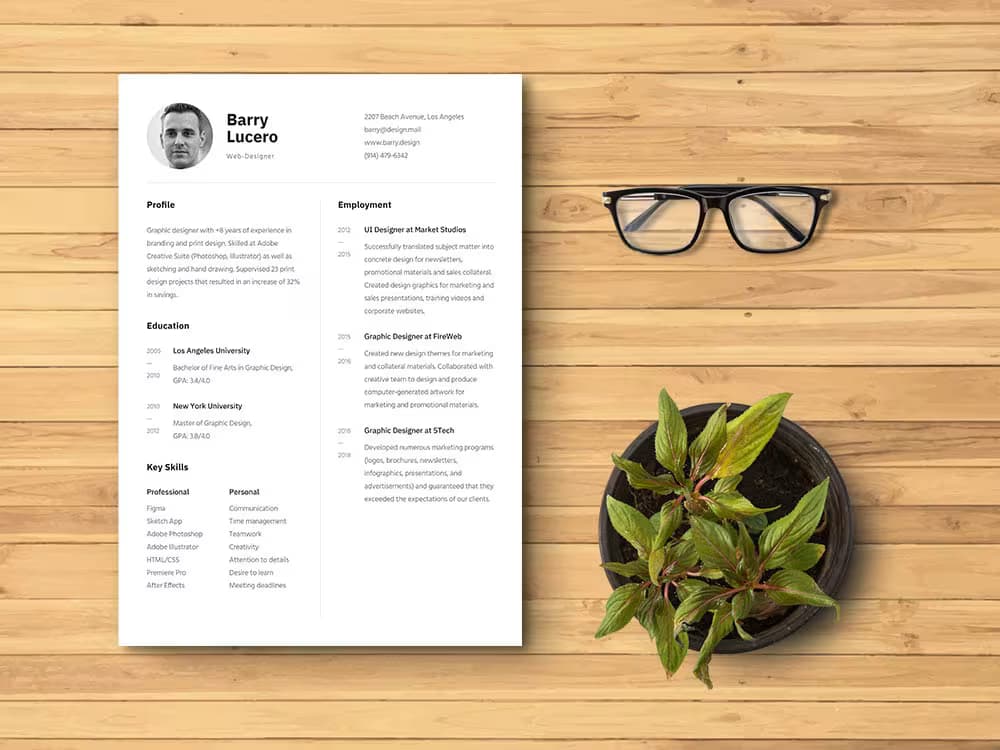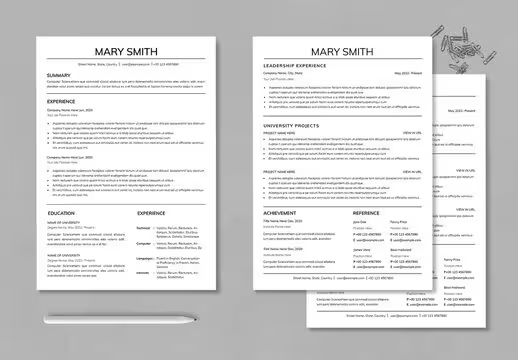
Most career advice on resume length is recycled opinion dressed up as fact. You have probably read that recruiters spend six seconds on your resume. Or that one page is always better. Or that two pages will get you thrown out. The problem? Much of this advice comes from blog posts citing other blog posts, with the original source being a single study from 2012 that tracked just 30 recruiters.
The actual research tells a different story. A ResumeGo study of 482 hiring professionals found that recruiters were 2.3 times more likely to prefer two page resumes over one page resumes. A TalentWorks analysis of over 6,000 applications found that resumes between 475 and 600 words got double the interview callbacks. And a more recent data study of 4,289 resume reviews across 312 recruiters showed the average initial scan is actually 11.2 seconds, not six.
So the one page rule is mostly myth, and the six second stat is outdated at best. This guide breaks down what the research actually says about how long a resume should be, what a resume should look like, and how to format it so both humans and software can read it.
Related: Mastering Resume Skills: How to Showcase Your Abilities and Land Your Dream Job
The One Page Myth: What Recruiters Actually Prefer
For decades, the standard advice was simple: keep your resume to one page. Career counselors repeated it. University career centers posted it on their walls. And millions of job seekers squeezed their entire professional history into shrinking margins and tiny fonts to make it fit.
But the data does not support this rule. The ResumeGo study put 482 recruiters, hiring managers, HR professionals, and C suite executives through a hiring simulation. Out of 7,712 resumes selected during the exercise, 5,375 were two pages long. That means the hiring professionals chose two page resumes at a rate of 2.3 to 1 over single pagers.
Even for entry level positions, the results challenged conventional thinking. Recruiters were 1.4 times more likely to prefer two page resumes for junior roles. For mid level and senior positions, the preference was even stronger. Two page resumes also scored 21% higher on a 10 point rating scale for their ability to communicate a candidate's credentials.
The time recruiters spent reading also tells a story. In the same study, hiring professionals spent an average of 4 minutes and 5 seconds reviewing two page resumes, compared to 2 minutes and 24 seconds for one pagers. They were not skimming and tossing the longer ones. They were reading them.
A separate survey from Criteria found that 53% of hiring professionals think a resume should be two pages. And data collected by Resume Genius showed that 54% of hiring managers outright prefer two page documents.
None of this means you should pad your resume just to reach two pages. A bloated second page full of irrelevant details will hurt you. The point is that the one page rule is not a rule at all. It is a preference that most recruiters have moved past.
The Word Count Sweet Spot
Page count is one measure of resume length. Word count is a better one. A tightly formatted one page resume might contain 500 words. A loosely formatted one page resume might have 300. The page count alone does not tell you much.
TalentWorks analysed over 6,000 real job applications and found a clear pattern. Resumes between 475 and 600 words produced an interview rate roughly double that of resumes outside this range. Resumes with fewer than 475 words did not contain enough substance. Resumes over 600 words started losing effectiveness, with a 43% drop in perceived hireability according to Forbes reporting on the same dataset.
Here is the catch: only 23% of resumes in their database fell within this sweet spot. More than three quarters of job seekers were either writing too little or too much. That is a competitive opportunity. If you land in the 475 to 600 word range with targeted, relevant content, you are already ahead of most applicants.
The word count guideline also helps settle the page count debate. A well formatted resume with 475 to 600 words will typically land between one and two pages depending on layout choices. Let the content dictate the length, not some arbitrary page limit.
How Long Should a Resume Be by Career Stage
Less Than 5 Years of Experience: One Page
If you are a recent graduate or early in your career, one page is almost always the right call. You likely have one or two jobs, an education section, and some skills to list. Stretching this to two pages will result in filler content that tells recruiters you cannot edit yourself.
Focus on your strongest achievements rather than listing every duty from every job. Three to five bullet points per role is enough. Cut the high school details if you have a college degree. Remove that summer internship from four years ago unless it is directly relevant to the job you want.
5 to 15 Years of Experience: One to Two Pages
This is where most professionals land, and this is where the research is most clear. If you have meaningful experience that supports the role you are targeting, two pages is not just acceptable. It is often preferred.
The ResumeGo data showed the strongest preference for two page resumes at the mid career level. These candidates had enough track record to fill two pages with real accomplishments, not filler. Recruiters responded to that substance.
Focus on the last 10 to 15 years of your career. Coursera's career guide recommends that once you pass 10 to 15 years of experience, you should start shedding earlier roles. Use that space for more recent achievements, certifications, or professional development instead.
15 Plus Years or Executive Level: Two Pages
Senior professionals and executives should almost always use two pages. You have a deep track record, and recruiters expect to see it. Cramming 20 years of leadership experience onto one page signals that you are not taking the application seriously.
For academic positions, government roles, or federal applications, a curriculum vitae (CV) rather than a resume is standard. CVs can run three pages or more and include publications, research, grants, and conference presentations.
Related: 5 Resume Mistakes That Can Cost You a Job (and How to Avoid Them)
What a Resume Should Look Like: Format and Layout
Getting the length right is only half the battle. What your resume looks like matters just as much. Research from Boston University using eye tracking technology found that recruiters spent nearly 80% of their review time focused on just a few sections: your name, current and previous job titles, start and end dates, and education. Everything else got scanned quickly.
That means your layout needs to make these sections easy to find instantly. Here is what the research and recruiter feedback consistently point to.
Use a Clean, Single Column Layout
Fancy two column designs and sidebar layouts might look good in a PDF, but they cause problems with applicant tracking systems (ATS). Research shows that 98% of large organizations use ATS software to screen resumes before a human sees them. About 75% of resumes sent to larger companies get rejected by these systems before reaching a recruiter.
A single column, top to bottom layout is the safest choice. It reads properly on screens, prints cleanly, and parses correctly through ATS software. Save the creative designs for your portfolio, not your resume.
Choose the Right Font and Size
According to Resume Genius, a 2023 survey of hiring managers found Arial to be the most popular resume font. Calibri, Helvetica, and Times New Roman are also safe choices. The key is readability. Avoid decorative fonts, and stick to 10 to 12 point for body text and 12 to 14 point for section headings.
Standard Margins and Spacing
Margins between 0.5 and 1 inch work well. Anything narrower than 0.5 inches looks cramped and can cause ATS parsing issues. Line spacing of 1.0 to 1.15 keeps the document readable without wasting space. Consistent spacing between sections creates visual order that helps recruiters scan quickly.
The Sections Every Resume Needs
A strong resume includes these sections in roughly this order: contact information at the top (name, phone, email, LinkedIn URL, city and state), a brief professional summary or objective of about 15 words according to hiring manager research, work experience in reverse chronological order, education, and a skills section. Optional sections include certifications, awards, volunteer work, and professional memberships.
The reverse chronological format is what most hiring managers recommend because it puts your most recent and relevant experience first. Data from recruitment studies shows that recruiters spend 65% of their reading time on the work experience section. Put your best content there.
Related: 15 Resume Advice You’ve Never Heard Before
Tailoring Your Resume: The Biggest Missed Opportunity
The length and format of your resume matter. But neither matters as much as whether your resume matches the job you are applying for. CareerBuilder research found that 54% of candidates do not tailor their resume to the job description. That is a huge missed opportunity.
Tailoring is not about rewriting your resume from scratch for every application. It means adjusting your bullet points, skills section, and summary to echo the language in the job posting. If the job ad mentions "project management" and your resume says "oversaw initiatives," you are making the ATS and the recruiter work harder than they should.
StandOut CV research reports that 63% of recruiters prefer resumes tailored to the specific job. On average, a recruiter will only consider a resume if it matches at least 50% of the requirements in the job posting. And TalentWorks data suggests that including numbers to quantify your achievements increases your interview chances by 40%.
So before worrying about whether your resume should be one page or two, ask yourself a more useful question: does every line on this resume support my case for this specific job? If the answer is no, cut it. If the answer is yes, keep it, even if it takes you to a second page.
The ATS Factor: Why Formatting Can Make or Break You
Your resume might be the perfect length with the perfect content, but if it cannot get through the ATS, none of that matters. These systems scan resumes for keywords, format structure, and section headings before a human ever sees the document.
According to Onrec research, 98% of large organizations use applicant tracking systems. And roughly 75% of resumes are rejected by ATS before reaching a recruiter. That is three out of four applications never getting a human review.
ATS software does not care about your resume's page count. It cares about keywords, clear section headings, and parseable formatting. A two page resume with strong keyword alignment will outperform a one page resume that lacks the right terms.
To pass ATS screening, use standard section headings like "Work Experience," "Education," and "Skills." Avoid headers in text boxes, images, or tables. Submit in .docx or .pdf format as requested. And make sure your contact information is in plain text at the top of the document, not buried in a header or footer that ATS software often cannot read.
Related: Employment Gap on Your Resume: What You Need to Know and Why
The LinkedIn Connection Most People Ignore
Here is a stat that should change how you think about your resume. A ResumeGo field experiment involving 24,570 job applications found that candidates who included a link to a comprehensive LinkedIn profile on their resume received a 13.5% callback rate. That is 71% higher than the 7.9% callback rate for candidates with no LinkedIn profile listed.
But there is an important distinction. Having a bare bones LinkedIn profile actually performed worse than having no profile at all (7.2% vs 7.9% callback rate). A half finished LinkedIn page signals to recruiters that you do not pay attention to details.
Yet fewer than half of job seekers include a LinkedIn link on their resume, according to industry data. This is one of the easiest wins available. Build a complete LinkedIn profile, include the URL on your resume, and you immediately separate yourself from the majority of applicants.
Related: Skills vs. Abilities: Why Both Matter on Your Resume
Common Resume Mistakes That Waste Space and Cost Interviews
If your resume is too long, the problem is usually not that you have too much experience. It is that you are including content that does not earn its place. Here are the most common space wasters that add pages without adding value.
Listing every job duty instead of achievements is the biggest one. Recruiters do not need to know that you "answered phones" or "attended meetings." They want to see results. "Reduced client complaints by 35% in six months" tells them something. "Handled customer inquiries" tells them nothing.
Including outdated experience is another common problem. That retail job from 15 years ago is unlikely to help you land a marketing director position. Career experts consistently recommend limiting your resume to the most recent 10 to 15 years of relevant experience.
Objective statements are mostly dead weight. A 2019 Jobvite survey found that making your summary or objective too long or filling it with cliches has a negative impact on recruiters about 29% of the time. If you use a summary, keep it to two or three lines that highlight your strongest selling points.
Other space wasters include references ("available upon request" is assumed and takes up a line), full mailing addresses (city and state are enough), irrelevant hobbies, and graphics or icons that ATS cannot read.
A Practical Checklist for Getting Your Resume Right
Before you send your next application, run through this checklist.
First, check the word count. Aim for 475 to 600 words. If you are well under, you probably need to add more substance. If you are well over, you need to cut. Open your document in any word processor and check the count.
Second, check relevance. Read every bullet point and ask: does this support my case for this specific job? If not, remove it. One strong, relevant bullet point is worth more than three generic ones.
Third, check for numbers. Quantified achievements get noticed. "Increased sales by 22%" is always stronger than "improved sales." Research estimates that including numbers on your resume boosts interview chances by about 40%.
Fourth, check your formatting. Standard fonts, clean layout, no graphics or text boxes. Test your resume in an ATS simulator if possible. Several free tools exist online for this purpose.
Fifth, include your LinkedIn URL. Make sure the profile is complete and matches the experience on your resume.
Sixth, proofread. MIT Sloan research found that job seekers with over 99% accurate spelling were hired almost three times more frequently than those with less than 90% accuracy. And 77% of hiring managers reject resumes with typos or grammatical errors on the spot.
Related: Resume Writing: Everything You Need to Know While Applying for a Job
What the Evidence Actually Says
The resume length debate has been going on for years, but the research is fairly clear at this point. One page is fine for early career professionals with limited experience. Two pages is not just acceptable for experienced candidates; it is what most recruiters prefer. And word count matters more than page count.
But length is only one piece of the puzzle. What your resume looks like, how it is formatted, whether it passes ATS screening, and whether it is tailored to the job all matter at least as much. A perfectly sized resume that is not targeted to the role will still end up in the rejection pile.
The candidates who get interviews are the ones who treat their resume as a marketing document, not a career autobiography. Every word should earn its place. Every bullet point should answer the question: why should this employer want to talk to me? Get that right, and the page count takes care of itself.