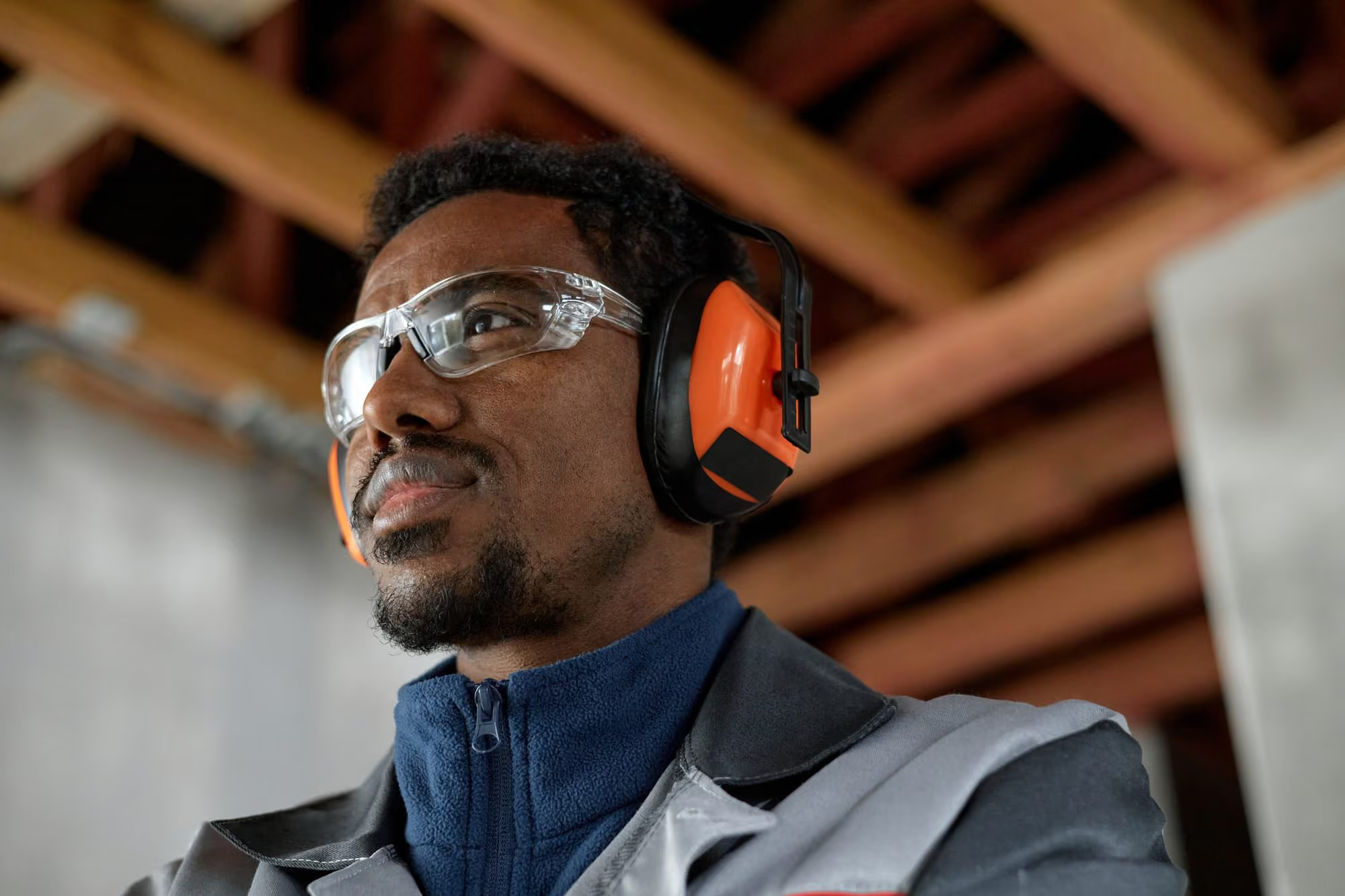

Attracting top talent requires more than competitive salaries. Forward-thinking companies are overhauling employee protection to improve workplace stability.
In an increasingly competitive job market, attracting and retaining elite talent requires significantly more than an attractive base salary. Modern Human Resources leaders and executive teams recognize that standard compensation packages are no longer sufficient to guarantee loyalty or long-term workforce stability. Instead, forward-thinking organizations are overhauling their approach to employee protection, recognizing that holistic security and proactive risk management are essential drivers of organizational resilience.
According to data from the Chartered Institute of Personnel and Development (CIPD), average employee turnover in the UK sits at approximately 34% across major industries, with replacement costs often running into thousands of pounds per lost employee. By aligning individual protection with corporate liability mitigation, businesses create an environment where top performers feel secure, valued, and empowered to stay for the long haul.
Building a Resilient Workforce Strategy
Securing a workforce over the long term requires moving beyond generic benefits and establishing a cohesive, robust protection ecosystem. Navigating these complex risk frameworks effectively often calls for guidance from experienced industry specialists. To properly evaluate coverage options and address potential risk exposure, organizations can partner with UK Sure, an FCA-regulated specialist insurance broker, to design tailored protection strategies. By doing so, companies can build comprehensive frameworks that address both human capital needs and broader operational vulnerabilities.
The Strategic Shift: From Basic Compensation to Holistic Security
For decades, the standard employment offer centered on a straightforward financial transaction: work performed in exchange for a salary, standard annual leave, and baseline statutory benefits. Today, this traditional formula falls short of meeting employee expectations. Modern workers navigate complex socio-economic realities, making long-term stability and comprehensive safety nets far more appealing than minor salary increments elsewhere.
A shift toward holistic security expands the traditional concept of benefits into a multi-layered support system. This framework incorporates:
Financial Protection: Robust life insurance, income protection, critical illness cover, and pension schemes.
Health and Well-being: Private medical insurance, mental health support programs, and preventive healthcare services.
Operational Risk Relief: Safeguards that protect employees against workplace hazards, professional liability exposure, and operational disruptions.
When employees perceive that an enterprise invests heavily in their well-being and long-term financial security, organizational trust increases. This sense of institutional protection builds psychological safety, reduces voluntary turnover, and strengthens overall engagement across teams.
Identifying Gaps in Traditional Corporate Coverage
Despite offering standard benefit packages, many corporate policies suffer from unseen vulnerabilities. These coverage gaps leave both the employee and the business exposed to unnecessary risks. The Financial Conduct Authority (FCA) regularly emphasizes operational resilience and financial safeguards across enterprise structures, highlighting how unmitigated liabilities can quickly escalate into systemic business challenges.
Common blind spots in traditional corporate benefit structures include:
Outdated Coverage Limits
Many legacy policies fail to keep pace with modern economic conditions, inflation, or specialized healthcare costs. Employees who encounter major life events may find that basic company provisions cover only a fraction of their actual financial needs.
Rigid, One-Size-Fits-All Models
A diverse workforce demands flexible coverage options. Early-career professionals, working parents, and senior executives require distinct forms of protection. Standardized packages often fail to address these varying needs, leading to lower perceived value among staff.
Unaddressed Corporate Liability Exposures
A benefit package is only as strong as the risk infrastructure supporting it. Without comprehensive liability and protection structures, unexpected organizational disruptions, such as legal disputes, management liability issues, or operational losses, can destabilize corporate finances and directly impact employee security.
Recognizing these gaps allows HR professionals and finance directors to re-evaluate their policies, ensuring their protection frameworks are both modern and comprehensive.
Designing Policies That Protect Human Capital and Corporate Liability
To construct a benefit program that genuinely drives retention, companies must strike a balance between personal employee protection and strategic risk management. A comprehensive strategy protects human capital while simultaneously safeguarding the organization against corporate liabilities.
Strategy Focus | Key Objectives | Impact on Retention & Stability |
Comprehensive Health & Life Care | Provide extensive medical, income protection, and critical illness options. | Enhances employee peace of mind, reduces sick leave, and increases long-term loyalty. |
Integrated Risk Management | Combine benefit administration with broader corporate liability coverage. | Protects company resources from unforeseen operational crises and legal claims. |
Flexible & Tailored Coverage | Allow employees to customize tiers based on their individual career stage and lifestyle. | Maximize perceived benefit value across diverse workforce demographics. |
When businesses actively address operational, financial, and personal risks, they establish an organizational culture rooted in mutual care and institutional strength.
Ultimately, investing in modern, well-structured employee protection packages goes beyond fulfilling administrative duties. It serves as a powerful retention engine, safeguarding human capital while ensuring long-term corporate viability, workforce stability, and sustainable business growth.