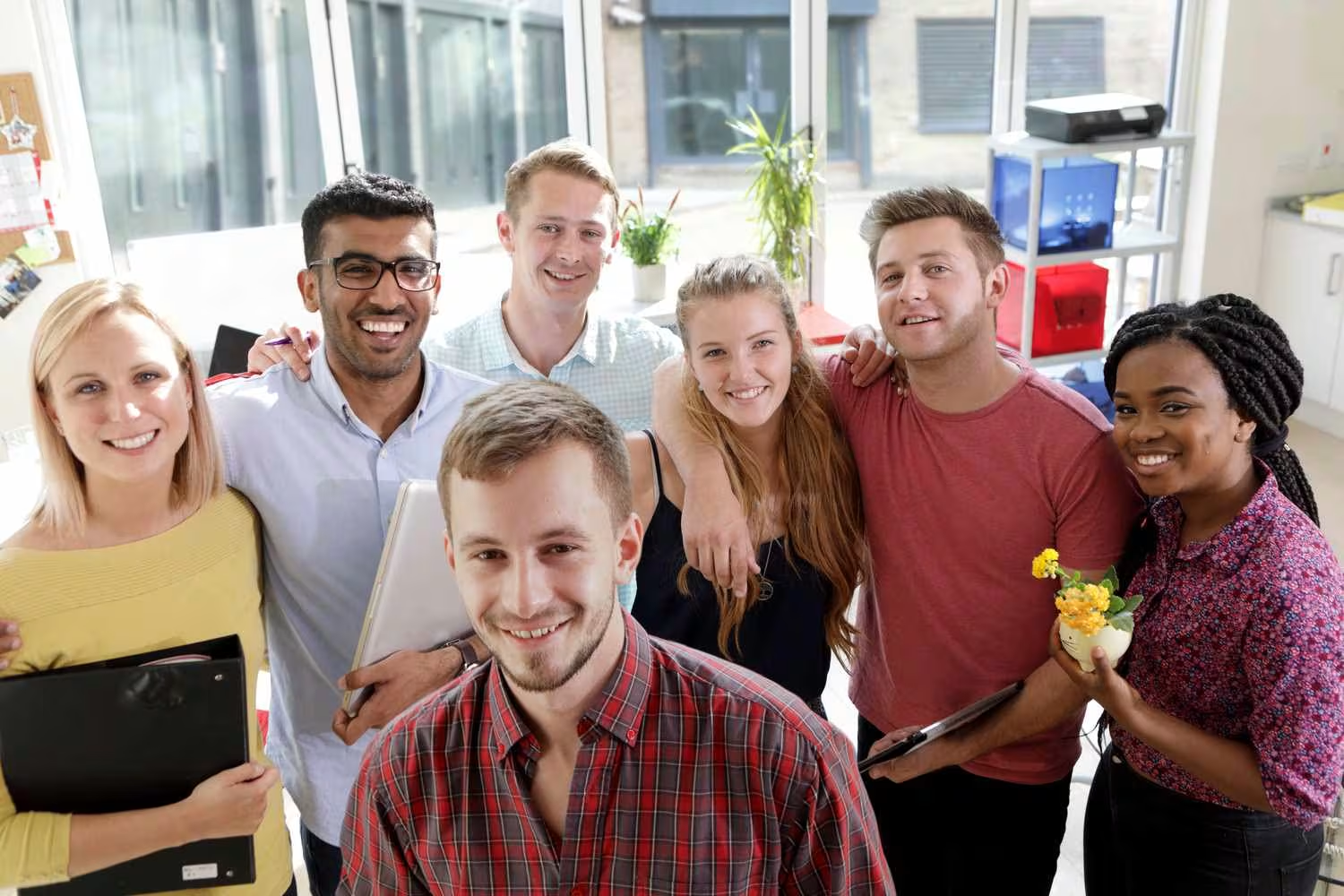
A career page lives or dies on its visuals, and most HR teams genuinely know it, yet very few have a photography budget that keeps pace with how often that page actually needs refreshing. An AI Photo Generator is genuinely becoming part of how HR teams close that gap, provided every generated visual genuinely reflects the real culture and environment candidates will actually experience once hired.
Why Does This Matter So Much for HR Teams Right Now?
The stakes here are genuinely practical for anyone responsible for employer branding. A career page is one of the most significant touchpoints with potential applicants, and compelling images are explicitly part of what makes that page work, but most HR teams don't have a standing photography budget to keep that visual content current. This matters because employer branding is measured in real business outcomes, a strong employer brand can meaningfully reduce turnover and cut cost-per-hire, and a career page that looks dated or generic undermines that effort before a candidate even reads the actual job description, a genuine gap Higgsfield's image generation tools are specifically built to close.
What Does the Brand-Consistent Color Control Feature Actually Solve?
Given how visual content typically gets produced for HR teams, this addresses a genuinely real limitation for employer branding specifically. The tool lets a team input exact Hex or RGB color codes so generated visuals match brand guidelines directly, backgrounds, design elements, and accent colors stay genuinely on-brand across every image. This matters because employer branding depends on visual consistency across every touchpoint, a career page, a LinkedIn post, a job posting graphic, and inconsistent visual style across those channels genuinely undermines the coherent brand story employer branding is supposed to tell.
This distinction genuinely matters more for HR-produced content than for many other kinds of visual marketing, since HR teams rarely have a dedicated designer maintaining brand consistency across every recruiting touchpoint the way a marketing department might. A recruiter posting a job opening on LinkedIn, an HR coordinator updating a careers page, and a talent acquisition lead building a campaign deck are often three different people without a shared design workflow, and a tool that locks in exact brand colors from the start removes a genuine, recurring source of visual inconsistency across a company's actual recruiting presence.
Why Does This Matter So Much for How HR Teams Should Actually Use This Kind of Tool?
Given that real capability, the appropriate use for an ai photo generator in employer branding is producing genuinely on-brand visual content at a volume traditional photography can't support, never generating imagery that implies a workplace environment, culture, or amenity that doesn't actually exist. This distinction matters enormously for an HR team's real credibility, since a candidate who accepts a role based on a misleading visual impression and then experiences a genuinely different reality is a documented driver of early attrition, exactly the kind of costly turnover employer branding is meant to prevent.
This distinction is genuinely worth treating as a firm editorial rule rather than a vague aspiration. An HR team that generates career page visuals strictly from real company references, its actual office space, its actual team, its actual real amenities, faces essentially no risk of the expectation gap that damages new-hire retention, while a team tempted to generate an idealized workplace that doesn't match reality is quietly setting up the exact first-week disappointment that drives early departures and negative word of mouth among candidates.
What Happens When an HR Team Needs Fresh Career Page Visuals but Has No Photography Budget?
This is a real, common constraint for HR teams specifically, and it shows up regardless of company size or industry. A team might have a genuinely strong employer brand story to tell, but without a standing budget for professional photography, that story often gets communicated through the same handful of stock or outdated images across every job posting and career page section.
This constraint tends to be most visible precisely where it matters most, the career page itself, which the site's own guidance names as one of the most significant candidate touchpoints in the entire recruiting process. A team that genuinely understands its employer brand story but can't visually represent it in a fresh, specific way is leaving real value on the table, since candidates researching a company before applying are actively looking for exactly the kind of authentic visual signal a stagnant, generic career page fails to provide.
What Are the Traditional Options for Producing Employer Branding Visuals?
Commissioning a professional photoshoot is one option, and it produces genuinely authentic, on-location imagery. Relying on generic stock photography is the more budget-friendly alternative, but it often fails to actually communicate anything specific or genuine about a particular company's real culture.
Both traditional approaches carry genuine, real trade-offs worth naming directly. A professional photoshoot captures genuinely authentic imagery of a real workplace and real employees, but the real cost and scheduling coordination required mean most HR teams can only justify one every year or two, leaving long stretches where career page visuals simply don't reflect current reality, a new office, a new team, a changed culture. Generic stock photography is inexpensive and available instantly, but the real gap in specificity means it communicates nothing genuinely unique about the actual company, and candidates researching potential employers increasingly recognize stock imagery on sight, which can undercut authenticity rather than build it.
Where Do These Traditional Options Fall Short for Regular Career Page Updates?
The constraint is cost and specificity together. A professional photoshoot produces genuinely authentic imagery of a real workplace, but the real cost and scheduling requirements mean most HR teams can only commission one every year or two, leaving career pages visually stagnant between shoots. Stock photography is inexpensive and immediate, but the real gap in specificity means it says nothing genuinely unique about the actual company, and candidates increasingly recognize generic stock imagery for what it is.
This constraint genuinely explains why so many career pages across the recruiting landscape look interchangeable, the same generic smiling-team stock photos, the same handshake imagery, regardless of what actually makes a given company's culture genuinely distinctive. The barrier has historically been production capacity rather than a lack of genuine employer branding ideas, and that gap has quietly made it harder for smaller employers without dedicated marketing budgets to compete visually against larger companies for the same candidate attention.
Professional photoshoot | Generic stock photography | AI Photo Generator | |
Cost | A real, often significant expense per shoot | Minimal, but generic | Included in a subscription |
Reflects the real, specific company | Yes, fully authentic | No, generic and unspecific | Yes, when built from real references |
Brand color and style consistency | Depends on direction given | Rarely consistent | Controllable via exact color codes |
Best suited for | An annual brand refresh | Simple, low-stakes placeholder use | Regular career page and posting updates |
How Does This Kind of Tool Actually Fit Into an HR Team's Workflow?
An ai photo generator, available through Higgsfield, lets an HR team generate on-brand visual content for career pages, job postings, and social recruiting within minutes, without commissioning a new photoshoot every time a page needs refreshing. For a team managing employer branding across a career site, LinkedIn, and job boards, that accessibility makes it realistic to keep visual content current rather than relying on the same aging photoshoot for years at a time.
What Must Every AI-Generated Employer Branding Visual Genuinely Represent?
This is the single most important point in this entire article. A generated career page or employer branding visual has to genuinely reflect the real workplace, culture, and environment a candidate will actually experience, never a version implying an amenity, setting, or atmosphere the company doesn't actually have. A feature within Higgsfield's platform should be used to present a real employer brand more consistently and vividly, never to create an idealized version that sets expectations reality can't meet. This matters because the same research on employer branding shows candidates who have a poor onboarding experience, often triggered by a mismatch between expectation and reality, are genuinely twice as likely to start looking for another job almost immediately after starting the role.
What Can an HR Team Actually Build Beyond a Single Career Page Image?
Beyond one visual, the same approach can support a consistent employer branding presence across an entire recruiting funnel, complementing the kind of detailed, statistics-backed guidance already covered in The Human Capital Hub's guide to why employer branding matters, which explicitly names compelling images as a core part of an effective career page strategy alongside video, staff testimonials, and the company's core principles. Higgsfield AI is a native AI creative suite, which offers advanced AI image, video, and voice generation, editing, and upscaling tools. This means a team could also produce supporting video content from the same brand references in one workspace.
Does This Replace the Actual Company Culture Behind a Genuinely Strong Employer Brand?
No, and this matters as much here as anywhere. What actually makes an employer brand genuinely strong is the real culture, real employee experience, and real workplace behind it, not the polish of any single image representing it. A tool built into Higgsfield's suite speeds up presenting that real culture more consistently and vividly. It does not create genuine company culture, improve actual employee experience, or replace the real workplace practices that determine whether an employer brand is actually earned rather than manufactured through polished visuals alone.
This distinction matters because employer branding, however it's visually communicated, is fundamentally a reflection of something real that has to exist first. A genuinely weak workplace culture dressed up in polished imagery will still show its true colors once candidates actually start the job, while a genuinely strong culture benefits from clear, consistent visual representation regardless of whether that representation came from a photographer or an AI generation tool.
What Should an HR Team Look for in an AI Photo Generator for This Kind of Use?
A few things matter more here than for general marketing visuals. Brand color and style consistency matters most, given how much employer branding depends on a coherent visual identity across every candidate touchpoint they might actually encounter. The ability to work from real company references matters, since the goal is representing an actual workplace, not generating a generic idealized one. And team collaboration features matter for HR departments where multiple people, recruiting, marketing, and leadership, typically need to review and approve employer branding content together.
What Are the Key Takeaways for HR Teams Considering This Approach?
Exact Hex and RGB color code input keeps generated visuals genuinely on-brand across career pages, job postings, and social recruiting content across every channel a candidate might actually see.
An ai photo generator like the one in Higgsfield helps HR teams keep employer branding visuals current without commissioning a new photoshoot for every single update needed.
Every AI-generated employer branding visual must genuinely reflect the real workplace, never implying an amenity or culture that doesn't actually exist at the company.
This kind of tool speeds up presenting a real employer brand consistently but does not replace the actual culture and workplace practices that make that brand genuinely earned over time.
What Are Some Frequently Asked Questions About AI Photo Generators for Employer Branding?
Can an AI photo generator be used to show workplace amenities or a culture the company doesn't actually have?
This should never be done. The tool should be used to present a real employer brand more consistently, never to create an idealized version that sets candidate expectations reality can't meet once they actually start the job.
Does this replace the need for real employee photos and testimonials?
No. Genuine employee photos and testimonials remain some of the most trusted employer branding content, since candidates specifically want to hear from and see actual employees before applying.
Do HR teams need design experience to use this kind of tool?
No. Describing the visual and providing brand color codes is enough to produce usable, on-brand content without prior design experience of any real kind.
Is this only useful for career pages, or does it help with other HR content too?
It helps with other content too, since the same brand-consistent approach applies to job posting graphics, social recruiting content, and internal communications visuals across every HR touchpoint.