Free resume templates are pre built document layouts that job seekers download and fill in with their own information. The evidence shows they only improve hiring outcomes when the underlying format is simple, the content is tailored to the job, and the template parses cleanly through the applicant tracking software that 99% of large employers now use.
Most people pick a free resume template the way they pick a wedding invitation. They scroll, they like the colors, they download. The thinking is that a colorful template will help them stand out. The evidence suggests the opposite is closer to the truth. The most visually striking templates, the ones with sidebars, photo circles, icon driven skill bars, and bold color blocks, are also the most likely to be misread by the software that filters resumes before any human sees them. A clean template that the software can parse without confusion outperforms a beautiful one that breaks at the first column.
There is also another assumption worth examining. Many job seekers believe that the template carries the resume. It does not. The template is the wrapper. What goes inside, the specific words, numbers, and ordering, is what determines whether a recruiter spends 7 seconds on it and moves on, or pauses long enough to read the second page. This article walks through what the research actually shows about resume formats, length, content, photos, fonts, and applicant tracking software, and how to use a free template without falling into the traps that most templates quietly create.
How long do recruiters actually spend reading a resume?
Recruiter attention is short, but not as short as the popular figure suggests. The first eye tracking study of recruiter behavior, conducted by Ladders in 2012, found an average initial screen of about 6 seconds per resume. A follow up by the same group in 2018 measured the average at 7.4 seconds. Recruiters spent that time on a narrow set of items: name, current title and company, previous title and company, dates of employment, and education. Everything else on the page was, at best, glanced at.
That 7 second figure refers only to the initial pass. When a resume survives that pass, recruiters read more carefully. A simulated hiring study by ResumeGo, which tested 7,712 resumes with 482 recruiters, found participants spent an average of 2 minutes 24 seconds on one page resumes and 4 minutes 5 seconds on two page resumes once they were engaged. The 7 second window is the gate. Time spent reading after the gate is where decisions are actually formed.
The practical implication for choosing a template is this: the first third of the first page does almost all the work. A free template that buries job titles, dates, and a current company under decorative headers, photos, or sidebars is fighting the way recruiters actually scan.
What does the evidence say about resume length?
Resume length is one of the most contested questions in career advice, and most of the contest is between opinion and data. The most rigorous available evidence runs against the traditional one page rule for anyone past entry level.
The ResumeGo simulated hiring study mentioned earlier found that recruiters were 2.3 times more likely to prefer two page resumes over one page resumes across all job levels. Two page resumes also scored 21% higher on average when rated for how well they summarized a candidate's credentials, with a mean score of 8.6 versus 7.1 out of 10. The preference held even for entry level jobs, where recruiters were 1.4 times more likely to prefer two pages. For mid level roles the ratio rose to 2.6 to 1, and for managerial roles 2.9 to 1.
More recent data shows the shift continuing. A 2024 report by Criteria found that 53% of recruiters now expect two page resumes while 43% still prefer one page. The trend reflects a structural change. Resumes used to be physical documents reviewed by hand, and filing cabinets had limits. Today resumes are digital files parsed by software and viewed on screens, where flipping a page costs nothing.
None of this is an argument for padding. A two page resume that fills space with generic responsibilities reads worse than a one page resume packed with quantified results. The question is not how many pages but how many pages of genuinely relevant evidence the candidate has to present.
Should freshers and recent graduates use a one page or two page template?
For someone with limited work experience, one focused page reads as confident and well edited. Trying to fill a second page usually means padding with coursework, minor projects, or non essential skills that dilute the signal. The exception is when a recent graduate has significant internship experience, published research, or a portfolio of substantial side projects. Free resume templates designed for freshers should default to one page with a clean reverse chronological layout, leaving room to expand later in the career.
Which resume format do recruiters actually prefer?
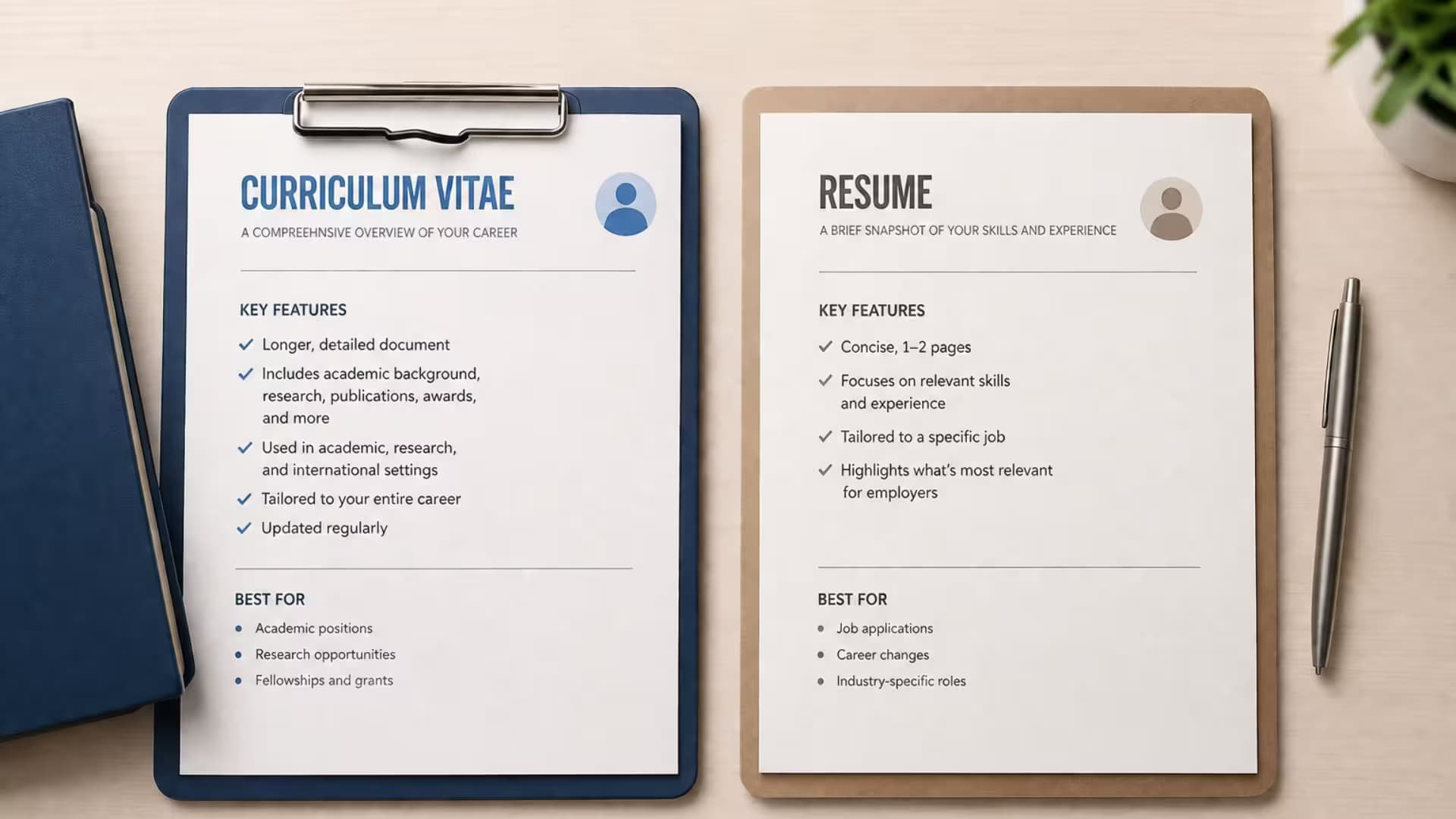
There are three resume formats in common use: reverse chronological, which lists jobs from most recent to earliest; functional, which groups achievements under skill headings and de emphasizes dates; and combination or hybrid, which leads with a short skills summary and follows with reverse chronological work history.
The reverse chronological format dominates the evidence. Research analyzing recruiter preferences reports that 77% of recruiters prefer the chronological format. The reason is mechanical. Recruiters are trying to verify what the candidate did most recently, how long they did it, whether responsibility levels increased, and whether the skills are current. Chronological order makes those four questions instantly answerable. Functional resumes obscure all four.
Applicant tracking software reinforces the preference. The software is trained to extract structured fields: job title, company, dates, then bullet points underneath. When a functional resume groups bullets under skill headings instead of jobs, parsers often fail to connect specific accomplishments to specific employers, which lowers relevance scores. A free template marketed as functional or skills based may look modern, but it is fighting both the software and the people who will see it.
The combination format offers a middle path. It opens with a short skills or achievements summary at the top, then settles into reverse chronological work history. This works well for career changers who need to flag transferable skills upfront while still satisfying both the software and the recruiter expectations that follow.
How does applicant tracking software change which template you choose?
Applicant tracking software is the software employers use to receive, sort, filter, and rank job applications. According to the Harvard Business School Hidden Workers report, 99% of Fortune 500 companies now use one. The report surveyed more than 8,000 workers and 2,250 executives across the United States, Germany, and the United Kingdom, and found that 88% of executives said their applicant tracking software was screening out qualified candidates because resumes did not exactly match the criteria the software was set to look for.
The same report identified a specific filter worth knowing about. Almost 50% of United States employers using applicant tracking software apply a continuity of employment filter that automatically excludes any resume showing an employment gap of more than 6 months. This filter, set by the employer rather than the software itself, eliminates large groups of qualified candidates including caregivers, people recovering from illness, military spouses, and parents returning to work.
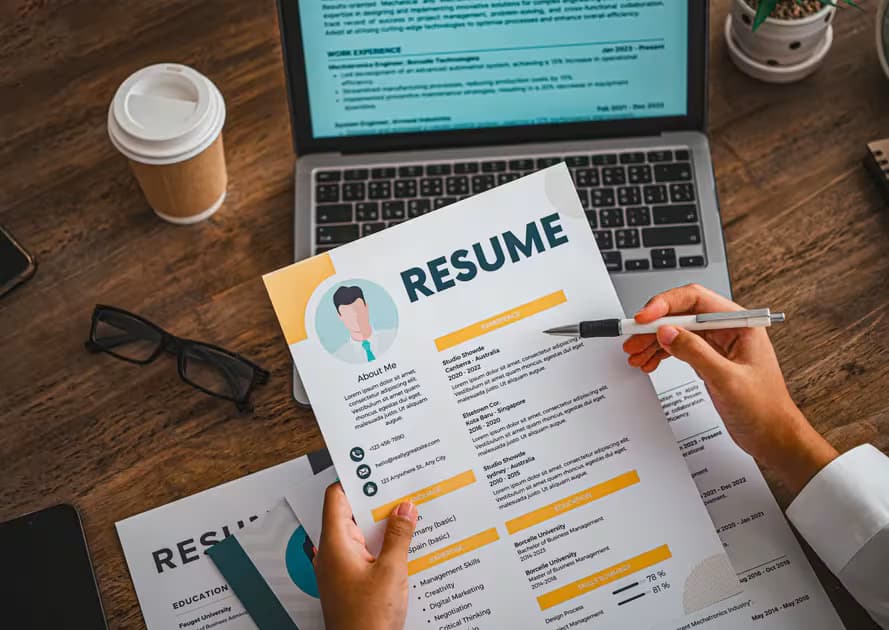
For template selection, the practical question is parsing reliability. Software parsers struggle with multi column layouts, text inside image objects, sidebars, decorative headers, custom icons used as section markers, and tables used to position content. A template that looks crisp on screen can produce garbled extracted text inside the employer's database. The free template that wins is almost always the one that looks plainest. Single column. Standard section headings. Standard fonts. Standard date formats.
What file format should you submit your resume in?
Word documents in .docx format tend to parse most reliably across applicant tracking systems. PDF preserves layout perfectly for human readers but some older parsers strip formatting in ways that scramble the text order. The safest practice when the job advertisement does not specify a format is to submit a .docx file, unless the posting explicitly requests PDF, in which case the PDF should be exported from the same source document rather than scanned from a printed copy.
Does putting a photo on your resume help or hurt?
A resume photo is a headshot of the candidate placed at the top of the document. In some countries it is expected; in others it creates legal and bias risk. The evidence cuts in different directions depending on geography and gender.
A field experiment by researchers at Ben-Gurion University in Israel sent 5,312 CVs to 2,656 job openings, pairing identical resumes with and without photos. Attractive men received a callback rate of 19.9% with photos versus 9.2% without. The result reversed for women: no photo resumes received 22% more callbacks than resumes that included a photo of an attractive female candidate. The bias is real, measurable, and gendered.
In the United States, the Equal Employment Opportunity Commission has explicitly warned that asking for or accepting photos on resumes can be used as evidence of discrimination, since photos reveal protected characteristics such as race, gender, age, and ethnicity before any qualifications are reviewed. Many companies will not consider a resume containing a photo because of this exposure. Free resume templates that include a photo slot are designed for European markets or for industries such as acting and modeling where appearance is part of the job requirement. For most office, technical, and professional roles outside those exceptions, the photo box is best left empty or removed entirely.
What content matters most in a resume regardless of template?
The single largest gap between weak and strong resumes is quantification. A resume that lists responsibilities reads like a job description. A resume that lists results reads like a track record. The difference shows up in callback rates.
A Jobscan recruiter survey found that 58% of recruiters said measurable achievements were the single feature that made a resume stand out most. The same survey found that 55% of recruiters said tailored resumes were more impressive than generic ones. The two findings reinforce each other. Quantified accomplishments are persuasive precisely because they are specific, and specificity requires knowing what the target job actually values.
A field experiment on writing quality reported in a 2023 paper on algorithmic writing assistance and hiring outcomes found that each 1 percentage point increase in the error rate on a resume was associated with a 3% decrease in the probability of being hired. The relationship persisted in a randomized field experiment, suggesting the effect was causal rather than correlational. Writing quality is not just cosmetic. It functions as a signal of conscientiousness, attention to detail, and professional credibility, regardless of which free template the text sits inside.
Why does tailoring a resume to each job matter more than the template?
Resume tailoring means rewriting the summary, reordering the skills, and adjusting the bullet points so they match the specific job advertisement. Applicant tracking software ranks resumes by keyword and phrase overlap with the job description. Recruiters then read the top ranked resumes first, with everyone below the cutoff rarely seen.
A review of tailoring evidence across recruiter surveys and field studies found consistent gains: candidates who tailored their resumes received noticeably more callbacks than candidates who submitted identical generic versions to multiple roles. Tailored resumes align with both the software ranking and the human reader's mental model of what a good candidate looks like for that specific role. A free template that is easy to edit, with clearly separated sections and no decorative obstacles to changing the text, is the template that supports tailoring. A template that is built as a fixed design with limited editing flexibility actively works against it.
How many keywords from the job description should your resume include?
Aim for 70 to 80% overlap between the key terms in the job advertisement and the language on your resume. Matching every single phrase reads as unnatural and may flag the application as keyword stuffing. Falling below 60% means the ranking score is unlikely to put the resume in front of human readers. Keywords should appear naturally inside the work history bullets and skills section, not concentrated in a separate keyword block.
Which fonts and visual elements actually work?
Font choice is a small decision with measurable effects on readability. The available evidence and recruiter practice converge on a short list of safe options: Arial, Calibri, Helvetica, Cambria, Georgia, and Garamond. These are universally installed, parse cleanly, and look professional at sizes between 10 and 12 points for body text and 14 to 16 points for headings. Decorative fonts, light or thin weight variants, and any font that does not render reliably across systems should be avoided.
The Ladders 2018 eye tracking study found that resumes captured more recruiter attention when they used simple layouts with clear section headings, bold job titles, and an E or F shaped reading pattern that moved the eye naturally down the left side of the page. Resumes that performed worst featured cluttered layouts, lack of white space, multiple columns, long sentences, and missing section headers. Free resume templates marketed as creative often violate every one of those findings.
What does name bias on resumes mean for template choice?
Resume audit studies have produced some of the most replicated findings in labor economics. The Bertrand and Mullainathan field experiment published in the American Economic Review in 2004 sent nearly 5,000 fictitious resumes to help wanted advertisements in Boston and Chicago. The resumes were identical except for the names assigned to them. Resumes with names typically associated with White applicants received 50% more callbacks than resumes with names typically associated with Black applicants. The gap was uniform across occupations, industries, and employer sizes.
A meta analysis covering 28 field experiments conducted between 1989 and 2015 found that the level of discrimination against Black applicants in callback rates had not decreased over that 26 year period. The pattern persists. Template choice cannot eliminate this bias. What it can do is avoid amplifying it. Photos compound the problem. Templates that prominently feature personal details unrelated to the job, such as marital status, religion, or nationality, create additional surfaces for bias to act on. A template that puts the candidate's qualifications first and personal details last is doing the candidate a small but real favor.
What this means when you sit down to choose a template
The case for a clean, simple template is not aesthetic. It is operational. A template that the applicant tracking software can parse is a template that reaches a human reader. A template that the human reader can scan in 7 seconds is a template that survives the initial screen. A template that supports tailoring, quantification, and a clean reverse chronological structure is a template that does the work it is supposed to do.
Free resume templates are tools, not strategies. The strategy is the content that goes inside: specific job titles, dates, quantified accomplishments, keywords pulled from the job advertisement, and a writing style that is precise and free of typos. The template that wins is the one that makes that content easy to insert, easy to read, and easy for the software to extract. Anything fancier is decoration that may cost you the interview.
Key takeaways
- Free resume templates only help when the underlying format is clean, single column, and parseable by the applicant tracking software that 99% of Fortune 500 companies now use.
- Recruiters spend about 7.4 seconds on the initial scan but 2 to 4 minutes on resumes that survive that screen. The first third of the first page does almost all the work.
- Two page resumes are now preferred by the majority of recruiters across entry, mid, and managerial level roles, with one page reserved for very early career or limited relevant experience.
- The reverse chronological format is preferred by 77% of recruiters and parses most reliably through applicant tracking systems. Functional resumes trigger suspicion and parsing failures.
- Quantified achievements are cited by 58% of recruiters as the single feature that makes a resume stand out. Generic responsibility lists do not work.
- Photos on resumes increase bias risk in most markets, expose employers to discrimination claims in the United States, and reduce callback rates for women in field experiments.
- Tailoring a resume to each job application, with 70 to 80% keyword overlap with the job advertisement, produces meaningfully higher callback rates than submitting identical generic versions.
Implications for practice
Choose a single column reverse chronological template. Confirm that section headings are plain text rather than images, that there is no sidebar, and that contact details sit at the top in standard line spacing rather than inside a colored header block. If a template has a photo box, delete it before adding content unless applying in a country or industry where photos are explicitly expected.
Write the content before worrying about the design. Build a master version of the resume containing every relevant job, every quantified accomplishment, and every skill, in plain text. The master version is the source. Each job application becomes a tailored extract from it, with bullet points reordered, the summary rewritten, and the keywords adjusted to match the specific advertisement.
Quantify every accomplishment that can be quantified. Numbers, percentages, time saved, money generated or saved, team sizes managed, project scope, and customer counts all carry weight that generic responsibility statements do not. Where exact figures are not available, conservative estimates anchored in concrete activity are still stronger than vague claims.
Submit the resume as a .docx file unless the posting requests PDF. Use 10 to 12 point Arial, Calibri, or Cambria for the body and 14 to 16 point for headings. Keep line spacing between 1.0 and 1.15. Run the document through at least one applicant tracking compatibility check before submitting. Read the final draft aloud to catch the writing errors that quietly reduce hiring probability by 3% for each percentage point of error rate.
Treat the resume as the document that gets you past the first 7 seconds, not the document that gets you hired. Hiring happens in interviews. The resume's only job is to make sure the interview happens.
Related reading on The Human Capital Hub
For additional context, see 15 Resume Advice You've Never Heard Before, which covers practical resume details that complement the evidence above. Job seekers preparing a full application package should also read Cover Letter Samples: 7 Proven Templates That Actually Get You Interviews for evidence on how cover letters and resumes work together, and How to Write a Cover Letter: 10 Tips for Success for the writing principles that apply to both documents.