Personal development is one of those phrases that has been emptied out by overuse. It can mean reading a book, taking a course, going to a workshop, hiring a coach, doing a meditation app, or just thinking vaguely about getting better. Some of these change what you can do. Most of them don't.
This is a long read because the topic is bigger than any single technique. Done well, personal development compounds over decades and quietly becomes one of the most valuable things you ever do. Done poorly, it becomes a shelf of unread books and a track record of half-finished courses.
Learning is not the same as improving
The single most important distinction in this whole topic is between learning and improving.
Learning is acquiring information — reading, watching, listening, absorbing. It feels productive. It's measurable in pages, hours, certificates.
Improving is changing what you can actually do. It's measurable only in the work itself.
These are related but they're not the same thing. You can learn an enormous amount about, say, public speaking, and still be a worse speaker than someone who has just spoken in public 200 times. You can read 50 books on management and still struggle to give a direct report difficult feedback. The same gap shows up in personal skills work, where reading lists multiply faster than actual behaviour change.
This isn't an argument against learning. Information is useful — sometimes essential — as scaffolding for improvement. But the centre of gravity should be doing the thing, not learning about it.
Picking what to develop
The biggest single lever in personal development is choosing what to work on. Most people skip this step and default to whatever is fashionable, available, or being pushed by their employer.
A useful frame: pick something that sits at the intersection of three properties.
It's high-leverage — getting better at it would meaningfully change the work you can do or the roles you can take.
It's uncomfortable — you've been avoiding it, perhaps without admitting it, which is usually why it's still a gap.
You can practise it in real work — not just in workshops or simulations.
The combination matters. High-leverage but comfortable means you'd already be doing it. Uncomfortable but low-leverage means you're being busy. Practiseable but irrelevant is hobby territory. The sweet spot is the one that ticks all three.
A short test
If you can't articulate, in one sentence, why developing this skill will change what you can do in the next 12 months — pick something else.
Deliberate practice at work
Deliberate practice is the most reliable way to actually improve at a skill. It has a few specific properties.
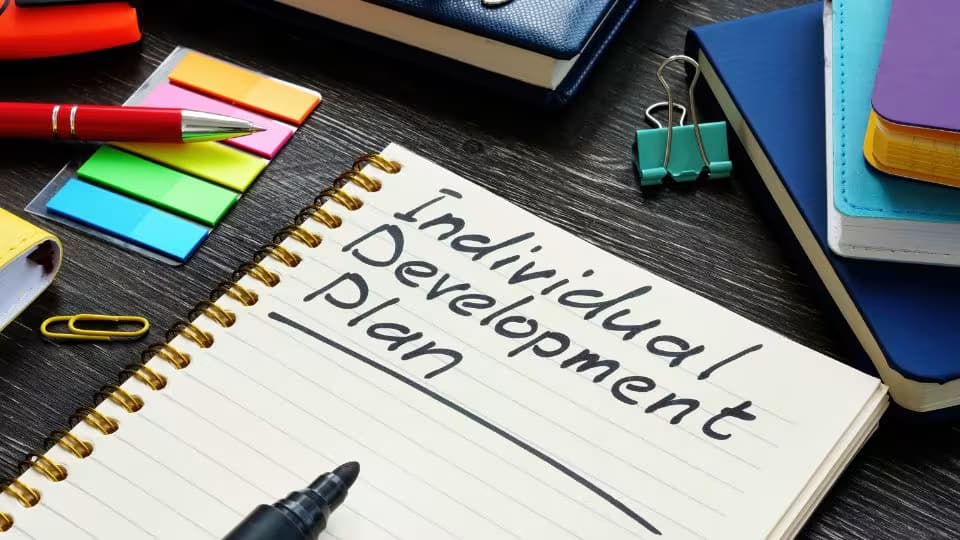
It's targeted at a specific weakness. Not "I'm going to practise being a better manager," but "I'm going to practise giving direct, specific feedback in the moment instead of softening it." The same principle drives any serious professional development plan worth running.
It's slightly outside your current ability. If it's easy, you're not learning. If it's impossibly hard, you're not learning either. The right zone is uncomfortable but achievable.
It includes feedback. Without feedback, you'll groove in your existing habits — including the bad ones. Feedback can come from a coach, a peer, a recording, or simply a deliberate self-review.
It's repeated. One attempt isn't practice. Twenty is.
The challenge at work is finding the reps. Some skills practise easily — writing, presenting, analysis. Others — strategic thinking, organisational politics, executive presence — are harder to isolate. The trick is to find proxies. A weekly write-up forces clearer thinking. A short post-meeting reflection ("what did I do, what would I change") creates feedback loops where there were none.
Habits that compound
The professionals who keep getting better over decades almost all share a small set of habits. Not because the habits are magical, but because the compounding is.
A regular review
Some kind of weekly or monthly check-in with yourself — what did I do, what am I learning, what's next. It can be 15 minutes. It can be on paper. The point is not the format; it's the noticing. If you want a structured version, a science-backed goal-setting worksheet gives the review some shape.
Writing things down
Writing forces clarity. People who write about their work — even just internal notes — tend to think more clearly about it. Writing is also how you remember what you learned. Most lessons are forgotten without it.
Reading deliberately
Not reading as a chore or a status game, but reading aimed at specific questions. A few books read closely with notes will change how you work more than 30 books skimmed.
Conversations with smart, honest people
Some of the highest-leverage hours in any career are spent in real conversation with people who know more than you and will tell you the truth. Cultivate these relationships. Show up for them when it's their turn.
Sleep and movement
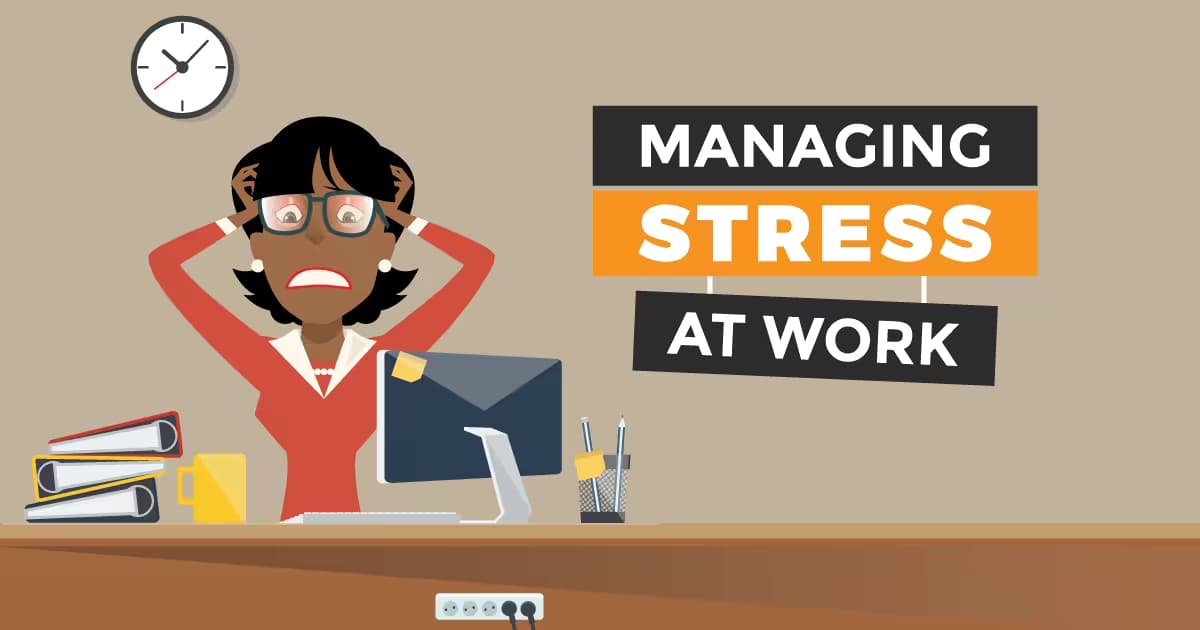
Easy to dismiss as a lifestyle topic, but the evidence is overwhelming: cognitive performance depends on sleep and physical activity. The professionals who sustain output over decades almost always pay attention to both, and they have working strategies to manage workplace stress before it eats their week.
Mindset traps
There are a few common patterns of thinking that quietly hold people back.
Confusing busy with productive
Working hard at the wrong thing is one of the most common career failures. Periodic step-backs to ask "is this still the right thing to be working on" prevent it.
Treating feedback as judgment
Treating critical feedback as an attack — rather than as information — shuts down the loops you need to improve. The skill is hearing the content, separating the signal from the delivery, and acting on what's useful.
Imposter syndrome and overconfidence
Both are distortions of the same map — your actual ability versus your perceived ability. Imposter syndrome reads the gap as "I'm not good enough." Overconfidence reads it as "I'm better than I am." The cure for both is feedback from people who'll tell you the truth, and a working familiarity with the imposter syndrome symptoms that quietly distort self-assessment.
"I'll start when..."
Waiting for the right course, the right book, the right time, the right manager. The right time is now, with what you have.
Comparison to other people's curated trajectories
Watching peers from a distance and feeling behind. You don't see their setbacks. The comparison that matters is to your own trajectory.
Learning networks
Almost no one gets significantly better at their craft alone. The people you spend professional time with are one of the biggest variables in your development.
A useful structure has three layers.
Mentors — people clearly ahead of you who'll spend occasional time. Two or three is plenty. Be specific in what you ask for.
Peers — people at roughly your level who'll talk to you honestly. The single most undervalued category. Peer groups that meet regularly to discuss real work — not just network — are rare and powerful, and they tend to demand real active listening rather than the surface kind.
Mentees — people you help. Teaching is one of the fastest ways to learn, and at some point in your career it stops being optional.
These relationships compound. Five years of regular conversations with the same handful of people will shape you more than any course.
Common personal development mistakes to avoid
- Collecting courses and certificates without changing what you actually do
- Picking development goals based on what's available rather than what would matter
- Working on weaknesses while ignoring the strengths that drive your real value
- Treating self-improvement as a private project — most growth happens in conversation
- Confusing reading with practising — the book is the easy part
- Going too fast on too many things at once — concentrate the effort
Where to go next
Personal development is a long game and a slow game. Pick the one article below closest to your current frustration and read it before adding anything else to your list.
- For a concrete starting plan, see ten ways to kickstart a self-development journey — useful when you have energy but no structure.
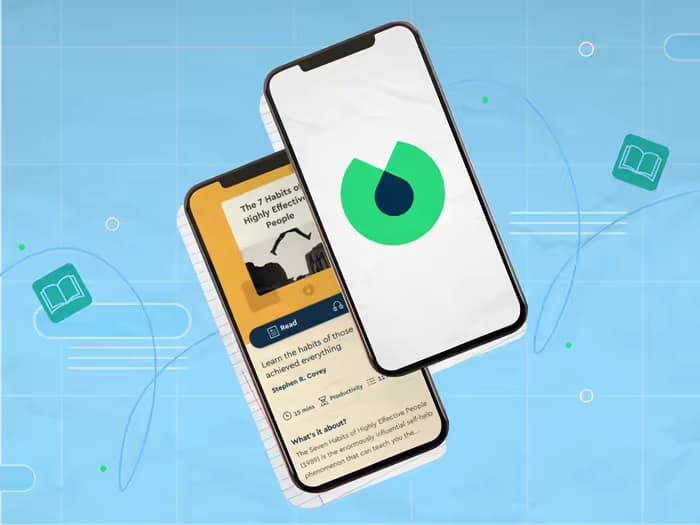
- For the habits that quietly drive long careers, the piece on habits of highly effective people is a good companion to this guide.
- For the soft side of the work, emotional intelligence in professional development covers what the technical books usually skip.
- For the personality side, what the Big Five actually tell you is the most reliable framework worth your time.
Get more guides like this
One email a week with the latest HR guides, frameworks, and templates. Unsubscribe anytime.


























































.avif&w=3840&q=75)

.avif&w=3840&q=75)






.avif&w=3840&q=75)




.avif&w=3840&q=75)