
If you are a business owner, facility manager, or decision maker thinking about going solar, the first question is not “should we install solar?”
The real question is: Which type of solar solution is right for our building?
In 2026, the market offers several solar options. Not every system works the same way. Not every roof can handle every panel type. Before selecting commercial PV panels, you must first understand your building type, roof structure, and operational conditions. This is a common area where businesses encounter errors.
Today, we will break it down clearly and help you decide.
Step One: Understand Your Roof Type
Commercial buildings can generally be divided into two categories:
●
Buildings with flat roofs
●
Buildings with tiled, curved, or load-sensitive roofs
Each category has different limitations.
Buildings with Flat Roofs
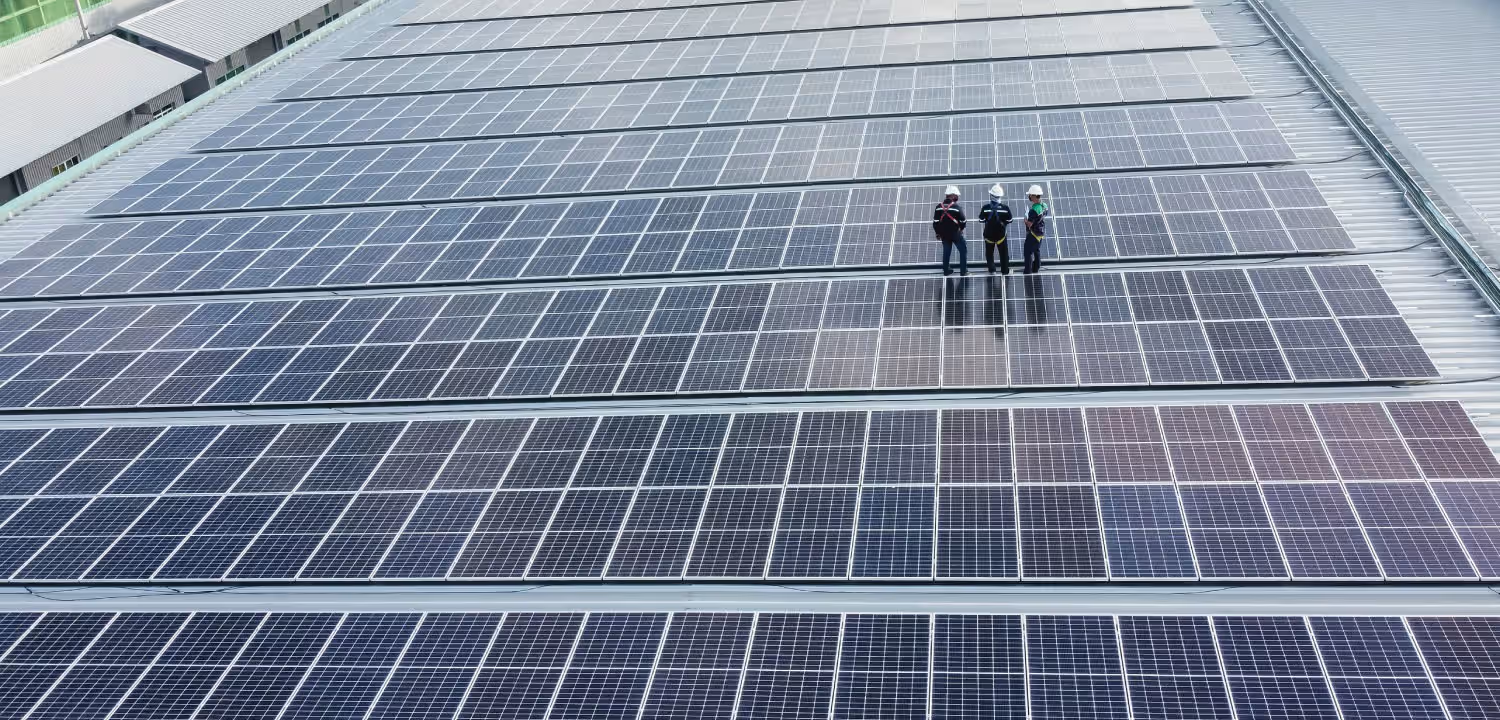
Flat roofs are common in warehouses, factories, shopping centers, and office buildings.
In many cases, traditional glass commercial rooftop panels can be installed here, but there are conditions.
Glass panels are heavy. They require mounting structures and proper tilt frames. Sometimes, roof reinforcement is necessary if load capacity is limited.
Installation usually involves:
●
Heavy metal structures
●
Drilling
●
Waterproof sealing
●
Labor teams
●
Construction time
In some businesses, installation may disturb operations below. In factories or commercial centers, partial work stoppage may occur during installation for safety reasons.
Glass commercial PV panels work well on strong, flat concrete roofs, but they bring structural and operational considerations.
Buildings with Tiled, Curved, or Lightweight Roofs
Some commercial buildings have:
●
Curved metal roofs
●
Tiled roofs
●
Lightweight industrial sheds
●
Roofs that cannot handle heavy loads
For these buildings, traditional glass panels become complicated.
Heavy panels increase structural stress. Mounting structures become complex. Labor costs increase, and engineering approval may be stricter.
Sometimes the building simply cannot support the weight of traditional commercial rooftop panels.
This is where lightweight and flexible solar panels become a practical solution.
Flexible and Lightweight Solar Panels for Commercial Use
Flexible solar panels are thin and lightweight. They often do not require heavy mounting frames and can be installed directly on suitable roof surfaces with minimal structural support.
Even if the roof is slightly curved, flexible panels adapt better than rigid glass panels. This opens solar possibilities for buildings previously considered unsuitable.
For businesses, this means:
●
Less structural modification
●
Faster installation
●
Lower labor cost
●
Minimal disruption to daily operations
When installing commercial PV panels in active commercial environments, reducing downtime is critical. Flexible systems help shorten installation time compared to heavy glass systems that require scaffolding and structural frames.
Comparing Glass vs Lightweight Commercial Panels
Traditional Glass Panels
Best for:
●
Strong flat concrete roofs
●
Buildings designed for heavy loads
Limitations:
●
Heavy weight
●
Requires metal structures
●
Higher labor involvement
●
Possible work disruption
●
Not suitable for curved roofs
Flexible and Lightweight Panels
Best for:
●
Curved roofs
●
Lightweight industrial sheds
●
Load-sensitive structures
●
Businesses seeking faster solar installation timelines
Advantages:
●
Lightweight
●
Adaptable to roof shape
●
Reduced labor cost
●
Faster project completion
●
Less structural stress
For many modern commercial buildings, flexibility is becoming more important than maximum panel rigidity alone.
Cost and Operational Impact
When businesses evaluate commercial rooftop panels, total project cost includes:
●
Structural reinforcement
●
Labor
●
Installation time
●
Operational downtime
●
Engineering approval
Heavy glass systems may increase total project cost due to additional structural requirements. Lightweight solar panels reduce many of these indirect costs.
For decision makers, the goal is not only to install solar but to do so efficiently, safely, and without disrupting business continuity.
Final Guidance for Decision Makers
Before selecting commercial PV panels, ask these questions:
●
Is our roof flat or curved?
●
Can our roof handle heavy loads?
●
Can we afford operational downtime?
●
Do we want minimal structural modification?
If your building has a strong flat concrete roof and no load limitations, traditional glass panels can work.
But if your roof is curved, lightweight, tiled, or structurally sensitive, flexible and lightweight solar panels are often the better solution.
In 2026, solar technology is not one-size-fits-all. The smart approach is to match the panel type with your roof condition and business operation needs.
For many commercial buildings today, lightweight and flexible solar systems are the practical and scalable solution because they reduce labor cost, minimize disruption, and expand solar access to roof types that were previously limited.
This is how businesses should evaluate solar strategically: not just by panel type, but by building condition and operational impact.
FAQs
1. Are lightweight solar panels reliable for commercial use?
When properly designed and installed, lightweight panels provide stable performance for commercial applications. Selecting the right system based on building conditions is the critical factor.
2. Why is roof load capacity important when choosing commercial PV panels?
Heavier systems add structural stress. If the roof has load limitations, lightweight panels may reduce the need for reinforcement and simplify the overall project.
3. Will installing commercial rooftop panels interrupt business operations?
It depends on the system type and installation method. Traditional glass systems may require more construction work, while lightweight solutions are generally faster to install and can reduce operational disruption.