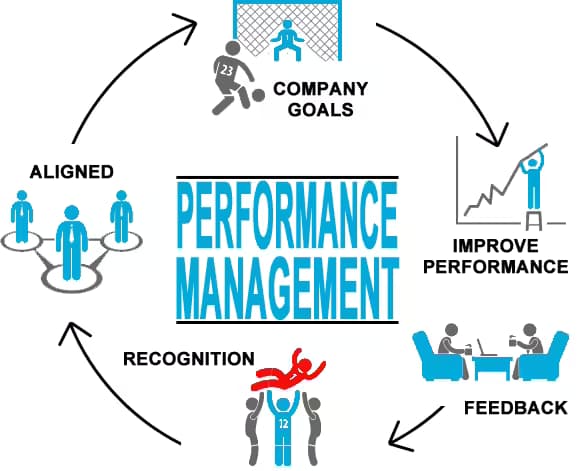

The biggest performance gains do not come from chasing wins. A synthesis of 27 sport studies shows that process goals boost performance by an effect size of 1.36, while outcome goals like win reach only 0.09. That evidence comes from a systematic review and meta-analysis and it reframes what effective cascading management should optimize: not just aligned targets, but aligned ways of working. Pair that with a meta-analysis in public organizations showing performance management has only a small average effect unless supported by best-practice management, and the message is clear. The cascade must connect strategy to daily methods and feedback. Otherwise the benefits stay small.
Understanding Cascading Management
Cascading management is the disciplined practice of translating enterprise strategy into connected objectives for functions, teams, and individuals. When you do it well, you create a clear line of sight from corporate ambition to today’s task priorities. You reinforce execution with feedback, learning, and course correction. The strongest research signals say you should emphasize process alignment as much as metric alignment. Across those 27 studies, process goals outperformed performance goals (effect size 0.44) and outcomes by a wide margin. The same research reported the largest gains when interventions followed self-regulation theory, an adaptive cycle of setting strategy, monitoring, and adjusting (effect size 1.53).
You can use cascading management as an operating system for performance. A century-spanning review of appraisal and performance management found that organizations have made little progress perfecting ratings. The real opportunity lies in the management part, which includes goal clarity, coaching, and ongoing conversations. That conclusion from a literature review supports a shift from rating forms to the rhythm of execution.
You gain strategic clarity, faster prioritization, less duplication, and a shared cadence for learning. However, the Gerrish meta-analysis of 49 studies warned that systems alone deliver only modest gains. Results scaled when leadership used best practices. These include manager capability, clear signals of priority, and quality feedback mechanisms. This means people drive cascading management and systems help them go faster.
Compared with other frameworks, cascading management is agnostic to tools (OKRs, balanced scorecards, Hoshin). Its differentiator is disciplined alignment plus feedback. Where traditional goal-setting overvalues specificity, the sport meta-analysis found no significant difference between specific and “do your best” goals. Complex knowledge work often needs flexibility in how you frame goals, as long as the feedback loop stays strong.
Implementing Cascading Management
Start by translating strategy into a small number of top-level outcomes and the processes that will produce them. Set no more than 3 to 5 enterprise objectives and pair each with a handful of process goals that explain how you will win. To run the cascade, a practitioner tool such as Gartner’s Strategic Goals Cascade Dashboard can help maintain line-of-sight from corporate objectives to functional and team targets. The real lift comes from managers who coach methods and provide timely feedback.
Practical steps and measures:
- Define top-level goals with dual emphasis - Outcomes: “Increase gross margin by 200 bps.” - Processes: “Reduce cycle-time in order-to-cash by 25% via defined workflow changes.” - Set short-term milestones alongside longer-term aims. The sport synthesis found that short-term and combined short or long-term goals improved performance, while only long-term goals did not. In practice, keep quarterly checkpoints tied to monthly sprints. Ensure each sprint has a clear hypothesis, test, and review.
- Translate to departments through controllable levers - Finance: “Automate variance analysis for top-5 cost drivers. Achieve 95% on-time closes.” - Sales: “Adopt a two-call discovery framework. Lift qualified pipeline by 20%.” - For each, make the process goal explicit. Train managers on the method with job aids, examples, and call scripts or templates.
- Cascade to teams and individuals with self-regulation built in - Managers co-create plans that specify strategies. They then schedule biweekly reviews to inspect both results and adherence to methods. In the sport meta-analysis, goals only improved performance when feedback was present. Without feedback, effects were not significant. Build the feedback loop into the cascade cadence with a consistent 30-minute agenda. Review progress against plan, what you tried, and what you will change next.
- Align metrics and KPIs with controllability - Tie each metric to a behavior or process the team can influence. Avoid placing too much weight on outcome goals like market share that depend on external factors. The evidence shows outcome focus has minimal effect. Process alignment drives change. When outcomes are required, pair them with leading indicators teams can directly move.
- Communicate and socialize the cascade - Hold a CEO-led kickoff that explains the few must-win outcomes and the process shifts that will get you there. Publish a one-page map from enterprise to team goals. Then enable two-way dialogue so teams can localize process goals to their reality. Capture open questions and dependencies in a shared tracker.
Implementation tip: Treat managers as the primary performance technology. Upskill them to coach process, not only count results. The public-sector meta-analysis showed that when best-practice management was present, the effect of performance management moved from small to substantially larger. That same principle applies here. Your cascade's power scales with manager capability.
Optimizing Cascading Management
Foster agility and adaptability by using self-regulation as the operating principle. Early in a new initiative, keep attention on process goals such as techniques, checklists, scripts, and playbooks. As teams gain proficiency, shift weight toward performance and then outcome goals. This dynamic shift reflects how skills consolidate over time. It is also why flexibility in goal framing can rival rigid specificity in complex domains, as the sport synthesis observed.
Leverage technology to automate visibility and feedback. Use simple dashboards to track both process adherence and results. Make dashboards the start of a conversation, not the end. In your weekly or biweekly reviews, ask three questions. What did we try? What did we learn? What will we change next sprint? Time-box the discussion, capture actions in a shared document within 24 hours, and confirm owners and due dates.
Align cascading management with change management. When you introduce new process goals, provide enablement that includes training, job aids, and peer practice. Make adoption measurable. For example, “80% of managers conduct monthly process coaching sessions. 90% of teams use the new intake workflow.” Tie these adoption metrics to business KPIs to reinforce that process is not theater. It is a lever.
Drive engagement and accountability by clarifying ownership and reducing anxiety. The sport meta-analysis reported that self-referenced goals improve psychological outcomes such as self-efficacy. Ego or normative goals can raise anxiety. Design goals teams can control. Avoid public leaderboard comparisons that pit peers against each other. Replace gotcha reviews with coaching-focused check-ins. This strengthens psychological safety and performance at the same time.
Measure and optimize the cascade itself. Track:
- Cascade coverage: % of departments, teams, and individuals with aligned goals.
- Feedback cadence health: % of managers holding timely reviews and time-to-feedback after key events.
- Process adoption: usage of defined methods, tools, or scripts.
- Learning velocity: number of process experiments run per quarter and percentage yielding improvements.
- Impact: movement on leading indicators tied to process goals, such as cycle time, error rates, and conversion at specific funnel stages, that precede movement on outcomes.
If these health metrics stagnate, simplify the cascade with fewer goals, retrain managers, and tighten the feedback loop. The evidence base is unequivocal. Without feedback, even well-articulated goals underperform.
Case Studies and Best Practices
Intel used cascading management to execute a high-risk pivot from memory chips to microprocessors. The problem was existential misalignment. Leadership defined a single top objective, dominate microprocessors, and cascaded key results like capturing 80% of the PC CPU market and reducing production costs by 20% annually. The solution paired outcome clarity with process shifts in R&D prioritization and manufacturing. The impact was decisive. The Pentium line reportedly reached roughly 90% market share within three years, demonstrating how a disciplined cascade can mobilize a company at scale. Source
Google adopted OKRs in 1999 to maintain alignment during hypergrowth. The problem was coordinating hundreds of fast-moving teams without diluting focus. The objective to improve YouTube’s mobile experience cascaded into key results such as cutting video load times by half and raising mobile watch time by 30%. Engineering, UX, and marketing teams aligned on shared measures and methods. They produced a 40% reduction in buffering and a 25% increase in mobile engagement within two quarters. This shows how cascading management turns strategy into a cross-functional execution engine.
A global financial institution needed to slash customer service costs without eroding quality. The problem was cross-departmental fragmentation. Using a unified objective to streamline customer-service efficiency and a single north-star metric, cost per interaction, leadership cascaded key results such as automating 70% of manual steps and cutting average handle time from 15 to 7 minutes. By aligning squads on the same measures and interdependent processes, teams resolved dependencies 40% faster and halved service costs over 18 months. This shows that cascading management gains compound when the cascade unifies ways of working across silos.
In each case, outcomes improved because the cascade paired measurable targets with explicit, teachable process changes. Teams reinforced those changes through short-term milestones and frequent feedback.
The research perspective complements these stories. The public-sector meta-analysis emphasized that management quality multiplies system impact. The sport synthesis showed that process goals and self-regulation deliver the largest performance gains. The century review urged leaders to invest in performance management as a living process, not a static appraisal form. Together they describe the backbone of successful cascading management, which is clarity, controllability, coaching, and continuous adjustment.
The essence is straightforward. Cascading management works when it creates line-of-sight to strategy, focuses teams on controllable processes, bakes in feedback, and equips managers to coach. If you focus too much on any single component, whether software, specificity, or stretch outcomes, the effect shrinks. Balance them and you unlock a repeatable system for execution and learning.
Frequently Asked Questions
What is cascading in management?
It is the practice of translating enterprise strategy into connected objectives, process goals, and feedback loops at every level so individuals can see exactly how their work advances priorities.
What are the benefits of cascading management?:
It strengthens alignment, clarifies ownership, reduces duplication, accelerates learning through feedback, and improves performance when paired with high-quality management.
How do you implement a cascading strategy?:
Set a few enterprise goals, pair each with process goals, translate to department levers, cascade to teams and individuals, and institute biweekly feedback on both method and results.
What are some common challenges with cascading management?:
Placing too much weight on outcome goals, too many objectives, weak manager capability, and missing feedback cadences. All reduce the impact of the cascade.
How does cascading management differ from other goal-setting frameworks?:
It is tool-agnostic. Its advantage is disciplined alignment plus a feedback-led focus on controllable processes, not only numerical targets.