
Can three letters after your name change your career, as a rigorous cross-sectional study of 10,116 HR professionals and 1,618 matched supervisors in the United States found, with certified practitioners earning more and rated as stronger performers? In that large-scale survey, senior certificants out-earned peers by an estimated $19,712 annually, showed roughly half a standard deviation higher supervisor-rated performance, reported higher career satisfaction, and still saw no promotion-rate advantage and even lower post-certification promotions than before. Although the study evaluates HRCI’s PHR/SPHR rather than CIPD, it is the strongest empirical proxy we have. Combined with CIPD’s own market data, roles asking for CIPD pay up to £4,400 (around 16%) more, people professionals with a CIPD qualification earn on average 12% more, and employer demand for CIPD has grown by 115% over a decade, as reported on the CIPD qualifications page. The evidence points to a nuanced answer. If you are asking “Is CIPD worth it,” the best-supported view is that it is a powerful earnings and credibility signal, but not a guaranteed promotion engine. This article lays out what that means in practice for HR leaders and ambitious practitioners.
What is CIPD and Why Does It Matter?
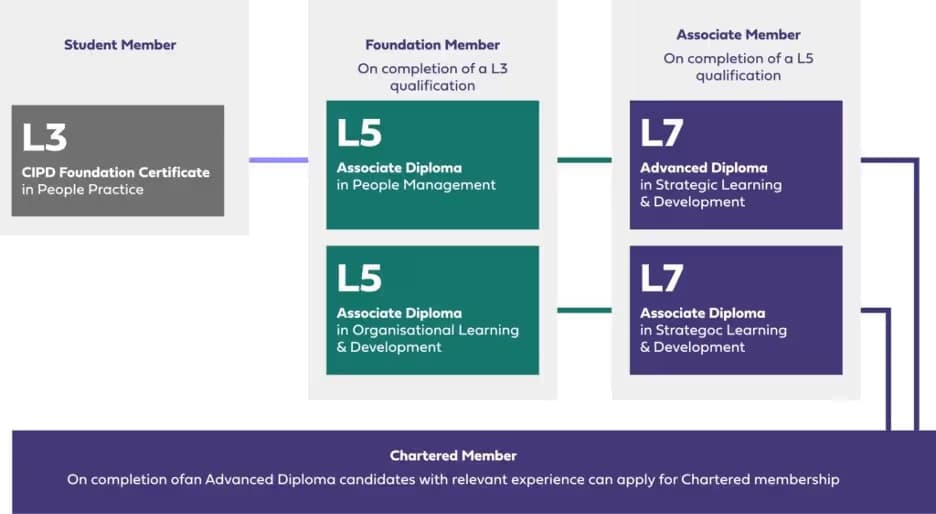
CIPD is the UK’s professional standard-setter for HR and people development. The qualifications ladder runs from Foundation (Level 3) to Associate (Level 5) to Advanced (Level 7). These levels align with early-career, mid-level, and strategic HR roles. If your question is “Is CIPD worth it,” start by clarifying what “worth” means. It could be higher pay, a stronger performance signal, structured capability building, or faster promotions. The strongest independent evidence we have supports the first three.
A seminal theoretical paper in Human Resource Management Review set out a multi-level framework to evaluate certification’s value. It covered individual pay and performance, department reputation, and firm outcomes. That research agenda underscored a science and practice gap. Certification is widely adopted, but credible, peer-reviewed evidence of organizational impact remains thin. Years later, a follow-on commentary by the same authors challenged the profession to fund robust, independent studies and to embrace evidence-based HR. Their call for evidence-based practice is crucial context for anyone weighing “Is CIPD worth it” today. Use the best available research, combine it with your organizational data, and decide deliberately.
So, how does CIPD matter in day-to-day HR impact? Look at how high-performing HR functions operate and the capabilities they depend on. You need data literacy, change navigation, talent mobility, and ethical, evidence-grounded decisions. Public-sector case examples curated by CIPD show HR leading measurable transformation when these capabilities are present. In Southend-on-Sea, HR rebranded as People and OD, ran culture workshops, introduced a coaching framework, and reframed redundancy risk into a positive talent pool. The council moved from struggling to save £1 million to consistently saving £10 million per year and won national recognition, as documented in the CIPD innovation case studies. Sunderland’s internal jobs market and SWITCH programme reshaped services and reduced headcount from 8,500 to 6,500 with no compulsory redundancies. Sutton’s shared HR service delivered 20% efficiencies and multi-year savings across boroughs. These are not “CIPD caused” outcomes. They exemplify the strategic, systems-level capabilities that the CIPD curriculum develops.
If your internal bar for “Is CIPD worth it” is whether it equips you to drive change like this, the alignment is clear. The qualification is not a magic wand. It is structured scaffolding that turns good intent into repeatable, evidence-based practice.
Is CIPD Recognized Globally?
“Is CIPD worth it” often hinges on portability. In the UK and across much of Europe and the Middle East, CIPD is the reference standard for HR. Multinationals with UK or EMEA hubs commonly ask for it, and in certain sectors it functions as a baseline signal of capability and ethics. In North America, SHRM and HRCI dominate hiring specifications. Employers respect CIPD, but they require it less often. Practically, that means CIPD is highly portable across the UK, Ireland, and many international employers with European footprints. It is also selectively recognized in APAC and the Gulf. In the United States and Canada, it helps as a credibility marker but often works best when you pair it with local certifications or clear project outcomes.
If you are planning mobility, treat the “Is CIPD worth it” question as two sub-questions. Will it open the right doors in your target market, and will it help you secure the compensation you expect? The HRCI study offers a cautionary but useful signal. The senior credential’s income premium was notably larger in the private sector than in the public sector, where the difference was roughly $12,500 smaller. That private and public split, reported in the same large-scale US study linked above, suggests two practical takeaways for global movers. First, pay attention to sector because the market’s willingness to pay for a credential varies. Second, if you are moving into markets where CIPD is not the dominant credential, compensate by foregrounding business impact in your CV and by translating CIPD content into local language and regulations.
For transferring CIPD internationally, the mechanics are straightforward. Maintain your membership grade, curate a portfolio that evidences the competencies mapped to your level, and translate modules into country-relevant outcomes. If your next role is outside CIPD’s core markets, supplement with local employment law coursework or an additional credential that aligns with regional expectations.
Practical Considerations for Pursuing CIPD
When leaders ask “Is CIPD worth it” from a practical standpoint, they are weighing study mode, cost, and time. Delivery options now include self-paced online, tutor-supported cohorts, and blended models. Choose the one that fits your constraints and how you learn. Fast individual learners thrive with on-demand models. Those who want accountability benefit from scheduled cohorts and tutor feedback.
Costs vary by provider and level, and many offer instalment plans. Rather than fixate on sticker price, quantify likely payback in your context. Build a simple ROI case tied to salary bands you can access post-qualification and the probability of securing them in your organization or market. If your target band is £8,000 higher and you assign a 50% probability of landing it within a year of completion, your expected-value payback is £4,000 in year one. This is exactly how senior decision makers evaluate investments. Answer “Is CIPD worth it” in their language.
Time commitment depends on level and whether you study while working. Most learners succeed by protecting a fixed weekly study block, aligning assignments with live projects, and securing manager support before enrolling. CIPD assessments are practical and assignment led rather than purely exam based. This means you can convert coursework into in-role improvements. For instance, a data-led wellbeing module can underpin a live survey and targeted interventions, as seen in West London NHS Trust’s evidence-based approach where 32% of lower-paid estates and facilities staff reported skipping meals. That insight prompted a free breakfast intervention for that group and improved morale. That figure comes from the CIPD West London NHS case study, and it illustrates how to turn learning into impact.
Finally, plan stakeholder management. Tell your manager what you will learn by when, how it supports team goals, and what evidence of improvement you will bring back. That alignment often makes the difference between a qualification that gathers dust and one that fast-tracks your credibility.
Career Advancement with CIPD
The strongest empirical case for professional HR certification, and therefore the strongest proxy for answering “Is CIPD worth it,” comes from the HumRRO analysis for HRCI already noted. In that one-time, controlled comparison across more than ten thousand practitioners and over a thousand supervisors, certification status correlated with higher pay, steeper annual income growth, stronger supervisor-rated performance, greater HR technical expertise, and higher career satisfaction. The study estimated annual pay differences at $4,547 for mid-level certificants and $19,712 for senior certificants, with annual income growth running $292 and $938 higher respectively. Supervisors rated certified professionals about 0.4 to 0.5 standard deviations stronger overall and roughly 0.3 to 0.6 standard deviations higher on HR expertise. Career satisfaction also ticked higher. These are meaningful, real-world differences, even after accounting for experience, education, and demographics.
However, and this is key to an honest “Is CIPD worth it” analysis, the same study found no promotion-rate advantage after controls and even reported lower promotion rates after certification than before. That counterintuitive pattern may reflect timing effects. Many professionals pursue certification when they have already reached higher levels, where promotions are less frequent and more time-bound. It also reminds us that certification is a market signal, not a mandate for advancement. If your primary goal is a faster title change, certification alone will disappoint.
This is where CIPD’s own market intelligence helps interpret “Is CIPD worth it.” On its qualifications page, CIPD reports that roles asking for CIPD pay up to 16% more, that people professionals with a CIPD qualification earn on average 12% more, and that the number of jobs requesting CIPD has grown by 115% over a decade. When pay bands and employer demand move in this way, the credential functions as a pricing signal. Practically, you use it to access higher-paying roles and to negotiate. Anchor your conversation on published bands, not generic claims.
What about beyond HR? A frequent “Is CIPD worth it” angle concerns versatility. The capability stack at Level 5 and Level 7, which spans workforce planning, OD, analytics, employment law, and reward, translates directly into roles in operations, change, and people analytics. The local-government case studies showed HR leading shared services, workforce reshaping, and coaching-led culture change at scale, with seven- and eight-figure savings and service improvements. Those outcomes reinforce the idea that a CIPD-shaped toolkit travels well across problems and sectors, especially when you evidence it through projects, not only a credential on your CV.
Practical Tips for Succeeding with CIPD
If you are still weighing “Is CIPD worth it,” use these evidence-based, field-tested practices to ensure it is.
- Choose the right level by mapping your current responsibilities to the competency demands of each level. If you often craft policy and lead cross-functional initiatives, Level 5 is likely the floor. If you shape people strategy and influence the executive agenda, look to Level 7.
- Build a live portfolio. Convert each module into an in-role deliverable such as an evidence-based policy, a dashboard, or a workforce plan. Treat your CIPD as a product development cycle for your function.
- Negotiate manager sponsorship up front. Specify what you will deliver each quarter, how it ties to team KPIs, and what decisions your learning will inform. This shifts the internal view from study leave to capability investment.
- Measure ROI like a finance partner. Track pay changes, role seniority shifts, and responsibility scope over 12 to 24 months. Use market-rate data to quantify the premium you capture. This is how you answer future “Is CIPD worth it” questions with your own baseline.
- Use the pay signal deliberately. The strongest empirical effect sits on compensation, not promotion. Target roles and organizations that price in CIPD, and enter those processes with a crisp narrative about your applied impact.
- Do not over-index on letters after your name. The academic agenda-setting work on certification value emphasizes that practice impact, not credential possession, changes outcomes. Put your case studies front and center, such as Southend-style culture shifts, Sunderland-scale redeployments, and Sutton-level shared services, because impact travels better than acronyms.
- Expect promotions to follow results, not coursework. The HRCI study found no promotion-rate uplift. Plan your advancement through stretch assignments and visible wins.
If you are asking “Is CIPD worth it,” this is how you tip the odds in your favor. Integrate, apply, measure, and market your outcomes.
Ultimately, “Is CIPD worth it” depends on your objective and context. The best available large-scale evidence supports certification as a strong signal for higher pay, stronger supervisor perceptions of performance and technical expertise, and greater career satisfaction. CIPD’s labor-market data aligns with that picture, with growing employer demand and salary premiums attached to the qualification. At the same time, there is no independent evidence that a professional certification by itself will accelerate promotions. Treat CIPD as a capability and credibility accelerator, then pair it with high-impact, measurable work that your stakeholders care about. That path turns a qualification into compounding career equity.
Frequently Asked Questions
Which is better, SHRM or CIPD?:
Neither is universally “better.” In North America, SHRM and HRCI are more common in job specs. In the UK and much of EMEA, CIPD is the reference standard. If your goal is higher pay, the best available empirical study showed strong income effects for certification holders in the US market in roles where those credentials are recognized, as detailed in the large-scale survey linked above. Choose based on geography, sector, and where you plan to work.
Is CIPD recognized in America?:
Yes, but not as widely as SHRM or HRCI. Many US multinationals respect CIPD, yet employers require it less often. If the question is “Is CIPD worth it” for a US move, it can help signal capability, but pairing it with a local credential or clear, quantifiable project outcomes is usually the pragmatic route.
Can I work in HR without CIPD?:
Yes. Employers hire for achievements, commercial awareness, and problem solving as much as for credentials. However, if your market prices in CIPD, especially in the UK, holding it can expand your eligible roles and strengthen your pay negotiations. Think of it as an amplifier, not a gate.
Is CIPD credible?
CIPD sets widely respected professional standards and an applied curriculum. At the same time, leading scholars have called for more independent, rigorous research on certification’s organizational impact, as captured in the research agenda linked earlier. That is why the “Is CIPD worth it” answer should blend external evidence with your own outcome data.
How long does it take to complete a CIPD qualification?:
It varies by level and study mode. Most professionals studying alongside work complete a level in months rather than weeks. Plan by protecting consistent weekly time, aligning assessments to live projects, and agreeing sponsorship with your manager to keep momentum.